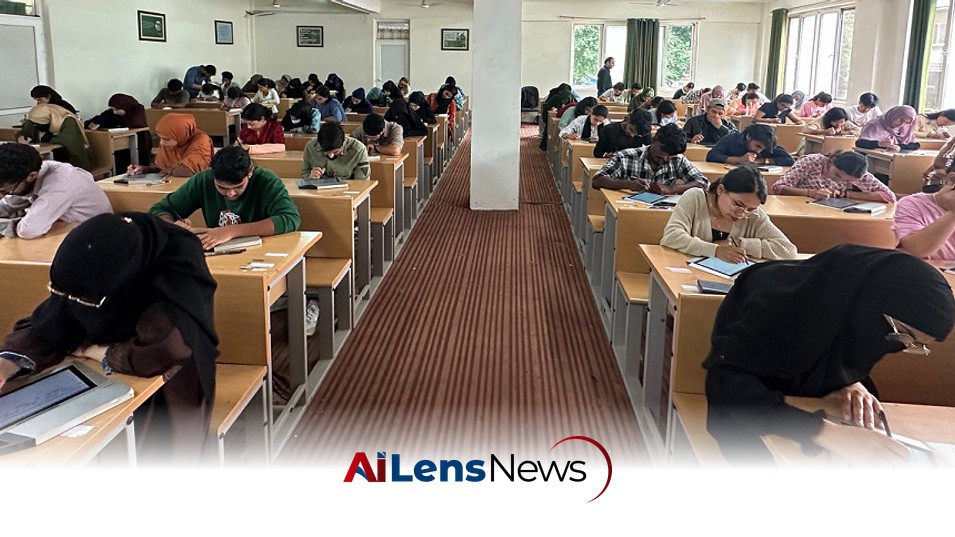


SKUAST-K has made history as the first university in Kashmir to conduct paperless postgraduate examinations, marking a significant shift in educational practices.
Leh, India Jul 26, 2026 ALN: The Sher-e-Kashmir University of Agricultural Sciences and Technology of Kashmir (SKUAST-K) has achieved a remarkable milestone by becoming the first university in the region to conduct paperless postgraduate examinations. This innovative approach not only enhances the examination process but also aligns with global trends towards digitalization in education. The decision to implement a paperless examination system is part of a broader movement within academic institutions worldwide to leverage technology for improved educational outcomes.
On the day of the examination, students utilized digital tablets to complete their assessments, a move that aims to streamline the examination process and reduce the environmental impact associated with paper usage. The initiative reflects SKUAST-K's commitment to embracing technology and improving educational standards. With the increasing importance of digital literacy in today's job market, this transition also prepares students for a future where technological proficiency is essential.
The transition to paperless exams offers several advantages that extend beyond mere convenience. These benefits are crucial for both students and the educational institution:
The implementation of this paperless system required extensive preparation, including training for both students and faculty. The university invested significant resources in ensuring that all stakeholders were well-equipped to handle the new technology. Students expressed a mix of excitement and apprehension about the new format. Many appreciated the convenience of using tablets, while others were concerned about potential technical issues that could arise during the examinations.
To ensure a smooth experience, the university conducted mock examinations prior to the actual tests. These practice sessions allowed students to familiarize themselves with the technology and the examination format. Feedback from these trials was used to make necessary adjustments to the system, demonstrating SKUAST-K's commitment to continuous improvement. The university also provided technical support on the day of the examinations to address any issues that might arise, further ensuring a seamless experience for students.
SKUAST-K's initiative is expected to set a precedent for other educational institutions in the region. As technology continues to evolve, the university plans to explore further innovations in teaching and assessment methods. This could include integrating artificial intelligence for personalized learning experiences or utilizing virtual reality for practical training in agricultural sciences.
This pioneering step not only enhances the learning experience for students but also positions SKUAST-K as a leader in educational reform in Kashmir. The successful execution of paperless examinations could inspire other universities to adopt similar practices, ultimately benefiting the educational landscape of the region. As more institutions move toward digital solutions, the overall quality of education may improve, leading to better outcomes for students.
In conclusion, SKUAST-K's transition to paperless postgraduate examinations marks a significant advancement in the educational sector, reflecting a broader commitment to modernization and sustainability. This initiative serves as a model for how educational institutions can harness technology to improve processes and outcomes. As the world continues to embrace digital transformation, the steps taken by SKUAST-K may very well pave the way for a future where technology is seamlessly integrated into education, making learning more efficient, accessible, and environmentally friendly.
The implications of this transition extend beyond the immediate benefits for students and faculty. By adopting a paperless examination system, SKUAST-K is contributing to a larger discourse on the role of technology in education, and how it can be leveraged to create a more sustainable and effective learning environment. As other universities look to SKUAST-K's example, the potential for widespread change in the educational sector becomes apparent, highlighting the importance of innovation in meeting the challenges of modern education.
The shift towards digital examinations is not unique to SKUAST-K or even to Kashmir; it is part of a global trend where educational institutions are increasingly adopting technology to enhance learning experiences. The COVID-19 pandemic accelerated this transformation, forcing many universities worldwide to transition to online learning and digital assessments. This necessity highlighted both the potential benefits and challenges associated with digital education.
Globally, institutions have reported various advantages from digital assessments, including improved engagement among students and enhanced feedback mechanisms. The ability to analyze student performance data in real-time also allows educators to tailor their teaching strategies to better meet the needs of their students. Furthermore, as educational paradigms shift towards competency-based learning, digital assessments can provide more accurate measures of student understanding and skill acquisition.
Despite the numerous benefits, the transition to paperless examinations is not without its challenges. One significant concern is the digital divide that exists in many regions, including parts of Kashmir. Access to reliable internet and digital devices can be a barrier for some students, potentially exacerbating existing inequalities in education. SKUAST-K's administration must consider these factors to ensure that all students can participate fully in this new examination format.
Moreover, there are concerns about data privacy and security. As educational institutions increasingly rely on digital platforms, ensuring the confidentiality of student information becomes paramount. SKUAST-K will need to implement robust cybersecurity measures to safeguard against data breaches and unauthorized access.
In summary, SKUAST-K's pioneering move to conduct paperless postgraduate examinations not only reflects a commitment to innovation and sustainability but also positions the university at the forefront of educational reform in Kashmir. The benefits of this initiative are manifold, including enhanced efficiency, reduced environmental impact, improved accessibility, and increased security. However, it is essential for the university to address the challenges associated with this transition, particularly regarding access and data privacy. As SKUAST-K continues to lead by example, it has the potential to inspire other educational institutions in the region and beyond to embrace digital transformation, ultimately enriching the educational landscape for future generations.
To learn more about the latest developments in Education News, stay updated with our exclusive reports and analyses on AiLensNews.

