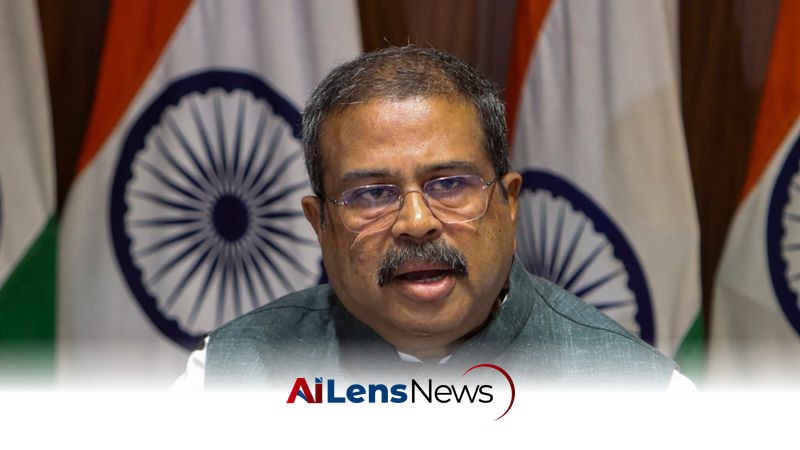


In response to ongoing protests led by the Cockroach Janta Party, Union Education Minister Dharmendra Pradhan emphasizes the need for educational reforms rather than outrage.
Leh, India Jul 22, 2026 ALN: Union Education Minister Dharmendra Pradhan has addressed the ongoing protests initiated by the Cockroach Janta Party (CJP), which are demanding his resignation. Speaking publicly for the first time since the protests began, Pradhan stated that students deserve reforms rather than outrage. He emphasized the government's commitment to providing necessary changes in the education sector.
Pradhan's comments come as the CJP has mobilized students and supporters across various campuses, calling for accountability and changes in educational policies. The protests have gained traction, with many students expressing their dissatisfaction with current educational frameworks and governance. This situation highlights a growing discontent among the youth regarding the state of education in the country, a sentiment echoed by various student organizations and activists.
In his address, Pradhan outlined several key areas where the government is focusing its reform efforts. He highlighted that the aim is to create a more inclusive and effective educational environment that caters to the needs of all students. The emphasis on reform is not merely a reaction to the protests but part of a broader agenda to modernize the educational landscape in India.
Pradhan reiterated that the government is listening to the voices of students and is committed to implementing changes that will benefit the educational landscape in India. This commitment is crucial in a country where education is seen as a key driver of economic growth and social mobility.
The protests led by the CJP have sparked a broader conversation about student rights and educational reforms in India. Many students have expressed their frustrations over issues such as high fees, inadequate facilities, and outdated curricula. These concerns are not new, but the current protests have brought them to the forefront, compelling the government to take notice and act.
While the protests have been characterized by some as disruptive, Pradhan urged students to engage in constructive dialogue rather than resorting to outrage. He believes that collaboration between the government and student bodies is essential for meaningful reform. This call for dialogue reflects a recognition that the issues at hand are complex and require cooperation among all stakeholders, including students, educators, and policymakers.
As the situation continues to evolve, the government is expected to take further steps to address the concerns raised by students and activists. Pradhan's commitment to reform may play a crucial role in shaping the future of education in India. The potential for reform is significant, given the government's recent initiatives aimed at enhancing the quality of education and accessibility for all students.
Moreover, the protests have highlighted the importance of student activism in shaping educational policies. Historically, student movements have played a vital role in advocating for change, and the current protests may lead to a renewed focus on student rights and representation in decision-making processes related to education. The ability of students to mobilize and voice their concerns reflects a growing awareness of their rights and responsibilities as active participants in the educational system.
In a broader context, the protests are indicative of a larger trend in which students across the globe are becoming increasingly vocal about their educational experiences and expectations. The rise of social media has empowered students to organize and share their grievances more effectively, allowing for a rapid dissemination of information and solidarity among various student groups. This has led to a more interconnected student body that can draw on experiences and strategies from one another, potentially amplifying their impact on policy discussions.
Furthermore, the implications of these protests extend beyond immediate educational reforms. They raise important questions about the role of government in education, the prioritization of funding and resources, and the balance between traditional educational values and the need for innovation. As the government navigates these challenges, it must also consider the diverse needs of students from various backgrounds, including those from marginalized communities who may face additional barriers in accessing quality education.
In conclusion, the ongoing protests serve as a reminder of the urgent need for educational reform in India. With leaders like Dharmendra Pradhan advocating for change, there is hope for a more equitable and effective educational system. The outcome of these protests may well determine the trajectory of educational policies in the coming years, influencing not only the current generation of students but also future ones. As the government navigates these challenges, the collaboration between students and policymakers will be pivotal in achieving a sustainable and inclusive educational framework that meets the needs of all learners. The active participation of students in this dialogue is essential, as it ensures that their voices are heard and considered in shaping the educational landscape of the future.
To learn more about the latest developments in Education News, stay updated with our exclusive reports and analyses on AiLensNews.

