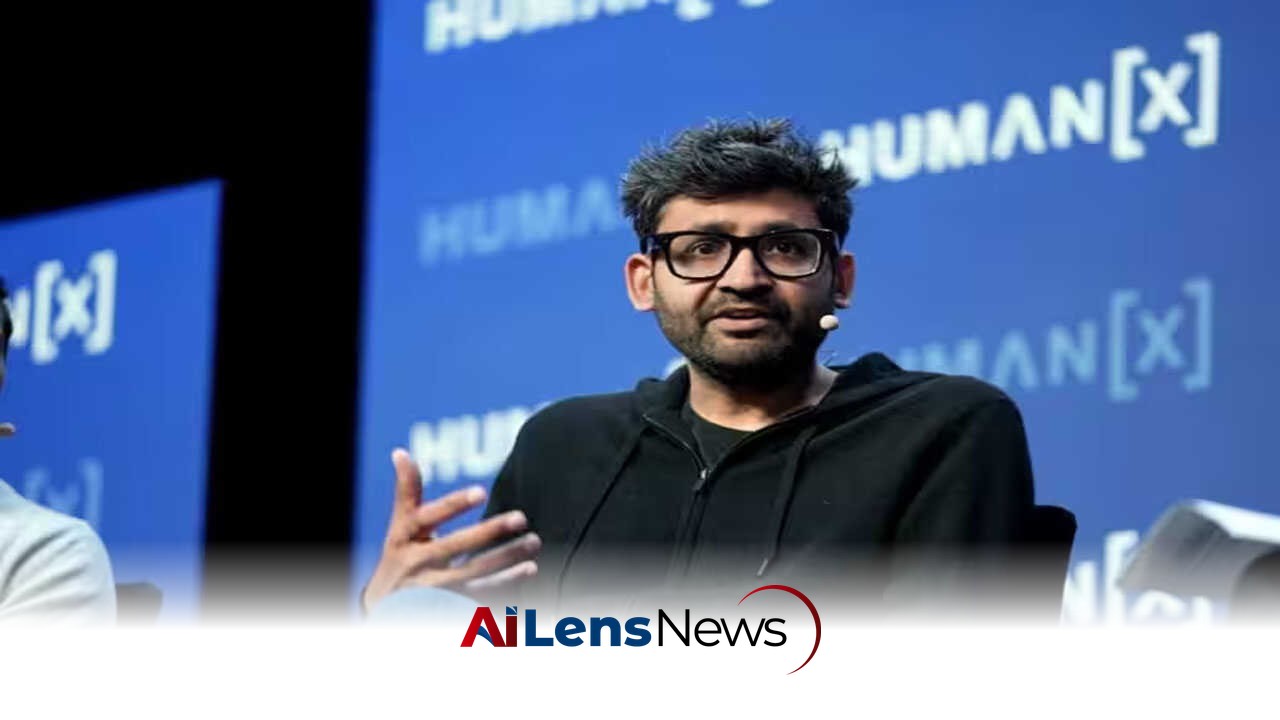


IIT Bombay alumnus Parag Agrawal has built an AI startup valued at around $2 billion, two years after stepping down as Twitter CEO following Elon Musk's acquisition of the company.
New Delhi, India Jul 9, 2026 ALN: IIT Bombay alumnus Parag Agrawal has made headlines by establishing an AI startup valued at approximately $2 billion. This achievement comes two years after he stepped down as CEO of Twitter, a position he held until Elon Musk acquired the company. Agrawal's transition from a high-profile executive role to entrepreneurship is not only notable for its financial success but also for the implications it has on the tech industry and the evolving landscape of artificial intelligence.
Agrawal's academic journey began with a strong performance in the Joint Entrance Examination (JEE), where he secured an All Rank (AIR) of 77. This competitive examination is one of the most challenging in , serving as a gateway for students aspiring to enter prestigious engineering institutions. His success in the JEE allowed him to pursue a degree in Computer Science at the n Institute of Technology (IIT) Bombay, one of the foremost engineering colleges in the country. At IIT Bombay, Agrawal not only honed his technical skills but also developed a network of peers and mentors who would influence his future career.
After completing his undergraduate studies, Agrawal went on to earn a PhD from Stanford University, a leading research institution known for its contributions to technology and innovation. His doctoral research focused on machine learning and artificial intelligence, areas that would later become central to his work at Twitter and his current startup. Agrawal's academic credentials and experience in the tech industry positioned him well for leadership roles, culminating in his appointment as CEO of Twitter in November 2021. He succeeded Jack Dorsey, one of the co-founders of the platform, and was tasked with guiding the company through a period of significant change and scrutiny.
During his tenure at Twitter, Agrawal focused on enhancing the platform's technological capabilities and user experience. He was instrumental in initiatives aimed at combating misinformation and improving the safety of users on the platform. However, following Musk's takeover, which was characterized by a dramatic shift in company direction and strategy, Agrawal stepped down from his role. This marked a significant transition in his career, as he shifted from overseeing one of the world's most influential social media platforms to launching his own venture in the highly competitive field of artificial intelligence.
In 2023, Agrawal founded Parallel Web Systems, an AI startup that aims to innovate in the fields of AI infrastructure and large-scale computing technologies. The startup quickly gained traction, attracting significant investment from venture capital firms and tech industry leaders, and achieving a valuation of around $2 billion. This rapid growth can be attributed to the increasing demand for advanced computing solutions, particularly in the context of AI, where the need for powerful infrastructure is paramount for training and deploying machine learning models.
Parallel Web Systems is set to play a crucial role in the evolving landscape of artificial intelligence. The company's focus on AI infrastructure positions it to address the challenges faced by businesses and researchers in harnessing the full potential of AI technologies. As organizations across various sectors seek to integrate AI into their operations, the need for reliable and scalable computing resources becomes increasingly important. Agrawal's vision for the company reflects his commitment to pushing the boundaries of technology and fostering innovation, as well as his understanding of the market's needs.
As the tech industry continues to evolve, Agrawal's journey serves as an inspiring example for aspiring entrepreneurs and tech enthusiasts. His ability to pivot from a high-profile role at a major social media platform to leading a successful startup highlights the dynamic nature of the technology sector. It underscores the importance of adaptability and resilience in a field that is constantly changing and where new challenges and opportunities arise regularly.
Moreover, Agrawal's success with Parallel Web Systems also reflects broader trends in the tech industry, particularly the increasing emphasis on artificial intelligence and machine learning. As businesses and governments invest heavily in AI research and development, there is a growing recognition of the importance of infrastructure that can support these technologies. This shift is not only reshaping the competitive landscape but also influencing how companies approach innovation and product development.
In conclusion, Parag Agrawal's story is a testament to resilience and innovation in the face of change. His contributions to the field of AI and computing are likely to have a lasting impact on the industry. As he continues to build Parallel Web Systems, the tech community will be watching closely to see how his vision unfolds and what new advancements emerge from this promising startup. Agrawal's journey serves as a reminder of the potential for individuals to effect change and lead innovation, even after experiencing significant transitions in their careers. The future of AI and technology remains bright, with leaders like Agrawal at the forefront of these developments.
The significance of Agrawal's new venture goes beyond just financial metrics; it speaks to a broader narrative within the technology sector, where the convergence of AI and infrastructure is becoming increasingly critical. The rise of AI technologies is transforming industries, from healthcare to finance, and the demand for robust AI infrastructure is paramount. Organizations are now recognizing that in order to leverage AI effectively, they need not just algorithms but also the computational power to support these algorithms at scale.
Parallel Web Systems aims to bridge this gap by providing the necessary infrastructure that can support the burgeoning needs of AI applications. As businesses scramble to adopt AI solutions, the ability to process vast amounts of data efficiently and reliably is becoming a competitive advantage. Agrawal's startup is poised to cater to this growing market, which is expected to expand exponentially in the coming years. Investors are increasingly looking at companies that can provide innovative solutions to these challenges, and Agrawal's background in AI positions him well to lead such initiatives.
Furthermore, Agrawal's experience at Twitter, where he dealt with complex data challenges, equips him with unique insights into the intricacies of managing large-scale data systems. His time at the helm of Twitter allowed him to understand the critical importance of data privacy, user security, and the ethical implications of AI technologies. These experiences are likely to inform his approach at Parallel Web Systems, where ethical considerations in AI deployment will be paramount.
As Agrawal embarks on this new journey, it will be interesting to observe how he leverages his network of industry contacts and his deep understanding of technology to build a company that not only meets market demands but also sets new standards in the tech industry. The collaborative nature of the tech ecosystem means that partnerships and alliances will play a crucial role in the growth of Parallel Web Systems. Agrawal's ability to forge strategic relationships with other tech companies, research institutions, and investors will be key to his startup's success.
In summary, Parag Agrawal's journey from CEO of Twitter to founder of a $2 billion AI startup encapsulates the evolving nature of the tech industry. His story is not just about personal success; it reflects the larger trends shaping the future of technology and innovation. As AI continues to permeate various sectors, the demand for infrastructure that can support these advancements will only grow. Agrawal's vision for Parallel Web Systems positions him at the forefront of this transformation, and his contributions are likely to resonate throughout the tech community for years to come.
To learn more about the latest developments in Jobs & Careers, stay updated with our exclusive reports and analyses on AiLensNews.

