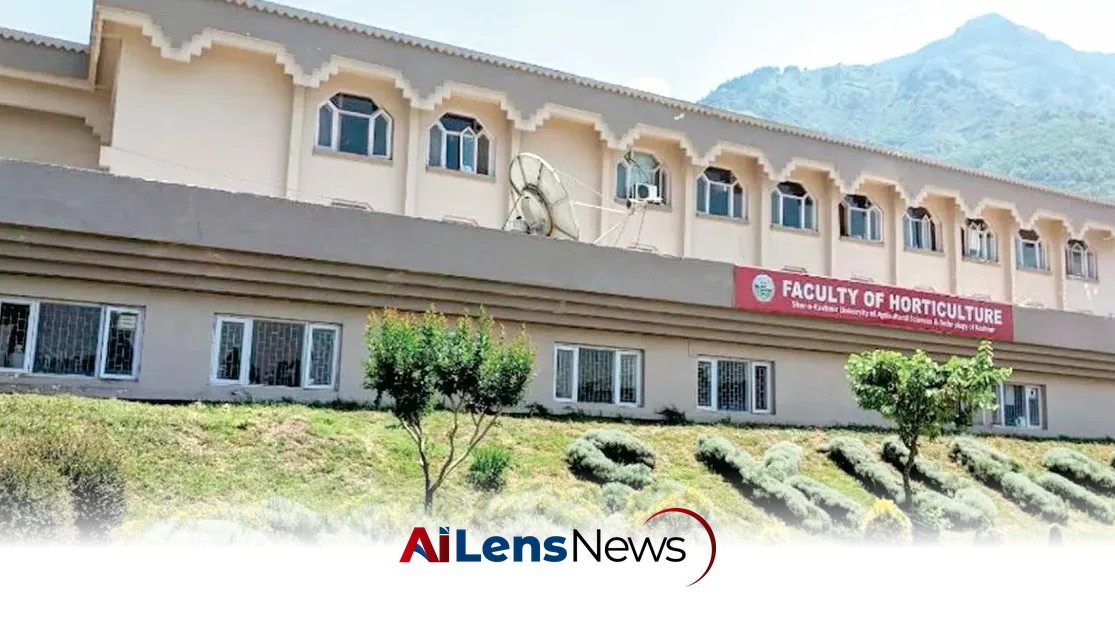


Prof. Raihana Habib Kanth of SKUAST-K visited KVK Bandipora-1 to assess agricultural innovations aimed at enhancing farmer productivity and sustainability.
Leh, India Jul 12, 2026 ALN: In a significant move aimed at enhancing agricultural practices in the region, the Director Extension of the Sher-e-Kashmir University of Agricultural Sciences and Technology of Kashmir (SKUAST-K), Prof. Raihana Habib Kanth, visited the Krishi Vigyan Kendra (KVK) Bandipora-1 on Saturday. This visit was part of a broader initiative to review and assess the research, frontline demonstrations, and agricultural extension programmes that are specifically designed to bolster farmer-centric innovations within the district.
The KVK Bandipora-1 plays a crucial role in the agricultural landscape of the region, serving as a hub for research and development. Established with the aim of bridging the gap between agricultural research and practical application, KVKs are pivotal in delivering technology and knowledge directly to farmers. Upon her arrival, Prof. Kanth was welcomed by Dr. Tariq Sultan, the Senior Scientist and Head of KVK Bandipora-1. Dr. Sultan provided a comprehensive overview of the Centre's ongoing projects, which include various research initiatives, extension activities, and technology dissemination programmes. These efforts are aimed at addressing the unique agricultural challenges faced by local farmers, such as soil degradation, water scarcity, and pest management.
During her visit, Prof. Kanth toured several demonstration plots at the Centre, including those focused on lotus and makhana cultivation, as well as water chestnut units. These crops have been identified for their potential to thrive in the local climatic conditions while also providing economic advantages. She also examined paddy research fields and high-tech greenhouses, which showcase advanced agricultural techniques. The purpose of this tour was to evaluate the effectiveness of the technologies being promoted and their potential impact on crop diversification, farm productivity, and the creation of sustainable livelihood opportunities for farmers in the district. These innovative agricultural practices can help mitigate some of the risks associated with traditional farming, which is often characterized by a lack of diversification.
One of the key aspects of Prof. Kanth's visit was her interaction with the scientists and staff at KVK Bandipora-1. She highlighted the importance of strengthening research-extension linkages, which are critical for ensuring that scientific innovations reach the grassroots level in a timely manner. Effective communication and collaboration between researchers and extension workers are essential for translating research findings into practical applications that can benefit farmers directly. Prof. Kanth emphasized the need for expanding field demonstrations and farmer capacity-building programmes. These initiatives are essential for equipping farming communities with the necessary skills and knowledge to tackle emerging agricultural challenges, such as climate change, pest outbreaks, and market fluctuations. Such capacity-building efforts can empower farmers to make informed decisions and adopt best practices that enhance their productivity and sustainability.
Furthermore, Prof. Kanth commended the Centre for its efforts in promoting location-specific technologies, particularly in the areas of lotus, makhana, water chestnut, protected cultivation, and improved paddy production. The introduction of these innovative practices has the potential to significantly diversify farming systems, enhance productivity, and ultimately improve the incomes of farmers across the district. This is particularly relevant in the context of the region's agricultural economy, which relies heavily on traditional farming methods that may not always be economically viable in the long term. By diversifying crops, farmers can reduce their vulnerability to market fluctuations and environmental challenges.
The implications of these advancements in agricultural technology are profound. By embracing modern agricultural practices, farmers can not only increase their yields but also reduce their dependence on chemical inputs, thereby promoting environmental sustainability. Sustainable agricultural practices are crucial for maintaining the health of the ecosystem, preserving biodiversity, and ensuring food security for future generations. The introduction of crops like lotus and makhana, which are not only economically viable but also ecologically beneficial, can help create a more resilient agricultural system in the region. These crops can also contribute to the local economy by attracting markets and consumers interested in organic and sustainable products.
Concluding her visit, Prof. Kanth expressed her appreciation for the high-quality research and demonstration facilities maintained by KVK Bandipora-1. She reaffirmed SKUAST-K's commitment to strengthening research and extension programmes that are vital for the agricultural development of the region. Her confidence in KVK Bandipora-1 as a model centre for technology dissemination and farmer empowerment underscores the importance of science-led, need-based interventions in agriculture. This commitment is essential for ensuring that the agricultural sector can adapt to changing conditions and continue to thrive.
The ongoing efforts at KVK Bandipora-1 are part of a larger strategy to transform the agricultural landscape of Jammu and Kashmir, a region that has faced numerous challenges in recent years, including political instability, natural disasters, and economic fluctuations. These factors have often disrupted traditional farming practices and hindered agricultural development. By focusing on farmer-centric innovations and sustainable practices, these initiatives aim to not only improve agricultural productivity but also enhance the overall quality of life for farmers and their families. The integration of modern technology with traditional knowledge can create a more robust agricultural system that is capable of withstanding external shocks.
In the context of the broader agricultural ecosystem, the role of institutions like SKUAST-K and KVK Bandipora-1 becomes even more critical. They serve as bridges between research and practice, ensuring that the latest scientific advancements are effectively communicated and implemented at the local level. This is particularly important in a region where traditional farming practices may not always align with modern agricultural demands. By facilitating knowledge transfer and providing farmers with access to innovative tools and techniques, these institutions can help create a more informed and resilient farming community.
As the agricultural sector continues to evolve, the emphasis on research, innovation, and extension services will be crucial for addressing the myriad challenges that farmers face. The commitment shown by Prof. Kanth and her team at SKUAST-K reflects a proactive approach to agricultural development, one that seeks to empower farmers through knowledge and technology. This proactive stance is essential in a rapidly changing world where agricultural practices must adapt to new challenges, including climate change, resource depletion, and shifting market dynamics.
In conclusion, the visit by Prof. Kanth to KVK Bandipora-1 highlights the ongoing efforts to promote agricultural innovation and sustainability in the region. The Centre's focus on research and extension, combined with the promotion of location-specific technologies, positions it as a leader in the agricultural development of Jammu and Kashmir. As these initiatives continue to take shape, they hold the promise of transforming the agricultural landscape, enhancing food security, and improving the livelihoods of farmers in the district. The collaboration between research institutions and local farmers is vital for fostering a sustainable agricultural future, ensuring that the benefits of innovation reach those who need it the most.
To learn more about the latest developments in Education News, stay updated with our exclusive reports and analyses on AiLensNews.

