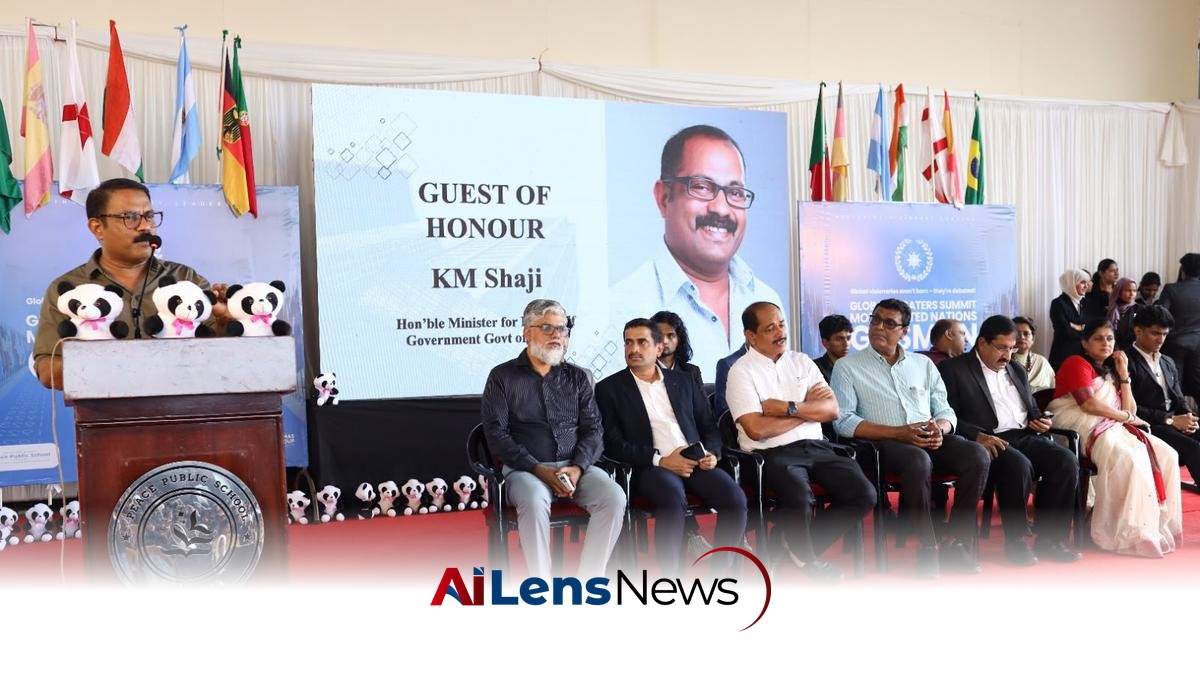


Minister K.M. Shaji encourages students at GDSMUN to engage in debates for understanding and inclusivity, emphasizing dialogue over competition.
Thiruvananthapuram, India Jul 11, 2026 ALN: Minister for Local Self Governments K.M. Shaji has urged students to view debates as a means to promote understanding, uphold human values, and build a more peaceful and inclusive world, rather than as contests to defeat opponents. His remarks were made during the inauguration of the Global Debaters Summit: All Model United Nations (GDSMUN) at Peace Public School, Kottakkal, on Saturday (July 11). In this age of increasing polarization and divisive rhetoric, the Minister's call for a shift in perspective regarding debates is particularly timely.
Debates have traditionally been seen as a way to demonstrate knowledge, articulate arguments, and persuade others. However, in recent years, the nature of public discourse has become more contentious, often focusing on winning rather than understanding. This shift has implications not only for individual interactions but also for broader societal dynamics. With social media amplifying voices and opinions, the risk of misunderstandings and conflicts has increased, making it crucial to foster a culture of dialogue and empathy.
In his address, Mr. Shaji emphasized the significance of diversity and inclusive dialogue as foundational elements in shaping a better society. He likened the contributions of individuals to the seven colors of the rainbow, suggesting that just as these colors come together to create a beautiful spectrum, every individual contributes a unique voice and perspective to society. This analogy highlights the importance of recognizing and valuing diverse viewpoints in discussions and debates. Each person’s background, experiences, and perspectives can enhance understanding and lead to more comprehensive solutions to complex issues.
Mr. Shaji's appeal is rooted in the belief that fostering an environment where dialogue is prioritized over mere victory can lead to more constructive outcomes. In contemporary discourse, particularly among younger generations, debates often devolve into confrontations where winning takes precedence over understanding. This shift in focus can stifle creativity, discourage collaboration, and create a culture of hostility rather than one of mutual respect and learning. By promoting dialogue, students can learn to appreciate different viewpoints, develop critical thinking skills, and engage in constructive conversations that lead to shared understanding.
The Global Debaters Summit attracted more than 350 students from various schools, providing them with a platform to engage in discussions on pressing global issues. Through this summit, participants had the opportunity to develop essential skills such as diplomacy, leadership, critical thinking, negotiation, and public speaking, all within the context of a simulated United Nations environment. Such skills are increasingly vital in a world that demands effective communication and collaboration across borders and cultures. The ability to articulate thoughts clearly and listen actively is fundamental to resolving conflicts and fostering cooperation.
During the event, delegates represented various committees modeled on prestigious organizations, including UNESCO and UNICEF, as well as the United Nations General Assembly. They tackled contemporary global challenges, negotiated resolutions, and engaged in structured diplomatic sessions that mirror real-world processes within these international bodies. This hands-on experience not only enhances their understanding of global issues but also prepares them for future roles as informed citizens and leaders. By simulating the workings of international diplomacy, students gain insights into the complexities of global governance and the importance of multilateral cooperation.
In addition to Mr. Shaji, the inaugural function featured notable figures such as P.A. Kabir, chairman of Almas Group of Institutions, who presided over the event. School principal M. Jouhar welcomed the attendees, setting a tone of inclusivity and encouragement. K. Unnikrishnan, the principal of Benchmarks International School, delivered the keynote address, likely providing insights on the importance of debate and dialogue in education. The presence of such distinguished guests underscores the significance of the summit and the collective commitment to fostering a culture of debate among students.
The closing ceremony of the summit was inaugurated by M. Abdul Nasser, president of the Malappuram Sahodaya School Complex. This highlights the collaborative spirit of the event, which brought together various educational institutions to foster a culture of debate and dialogue among students. Sweety S. Pulikkottil and Gopakumar K. presented awards to outstanding delegates, recognizing their efforts and achievements during the summit. Such acknowledgments not only motivate students but also reinforce the value of hard work and dedication to the art of debate. Recognizing excellence in debate encourages participants to strive for improvement and take pride in their contributions to discussions.
Ranjith Kurup, the GDSMUN director, played a crucial role in coordinating the program, ensuring that the event ran smoothly and effectively. The success of such initiatives speaks to the growing recognition of the importance of debate and dialogue in education, particularly in a rapidly changing world. As students engage with complex global issues, they are also learning to navigate differences and cultivate a sense of community. The skills developed in such environments are not only applicable to academic settings but also extend to personal and professional interactions.
The implications of Mr. Shaji's message extend beyond the confines of the summit. In a global landscape characterized by conflict and division, promoting dialogue as a tool for understanding is paramount. By encouraging students to engage in debates with the intent to learn and connect rather than to conquer, educators can help cultivate a generation that values empathy and cooperation. This approach can lead to more peaceful interactions and a greater willingness to collaborate on solutions to shared challenges.
Moreover, the skills developed through such platforms can have lasting effects on students' personal and professional lives. As they grow into adulthood, these young individuals will carry with them the ability to engage in meaningful discussions, negotiate solutions to conflicts, and advocate for positive change in their communities. The experience gained from participating in events like GDSMUN can also enhance their resumes and prepare them for future endeavors in various fields, including international relations, law, and public policy. These experiences can serve as a foundation for lifelong learning and engagement in civic life.
In conclusion, the Global Debaters Summit serves as a vital reminder of the power of dialogue in shaping a more inclusive and understanding society. Minister K.M. Shaji's call for students to embrace diversity and prioritize understanding over victory is a crucial step toward fostering a culture of respect and collaboration. As students continue to explore global challenges through debate, they are not only honing their skills but also preparing to be the leaders of tomorrow—leaders who can navigate the complexities of our world with compassion and insight. The lessons learned at such summits can resonate well beyond the classroom, influencing how future generations approach dialogue, conflict resolution, and community engagement.
To learn more about the latest developments in Education News, stay updated with our exclusive reports and analyses on AiLensNews.

