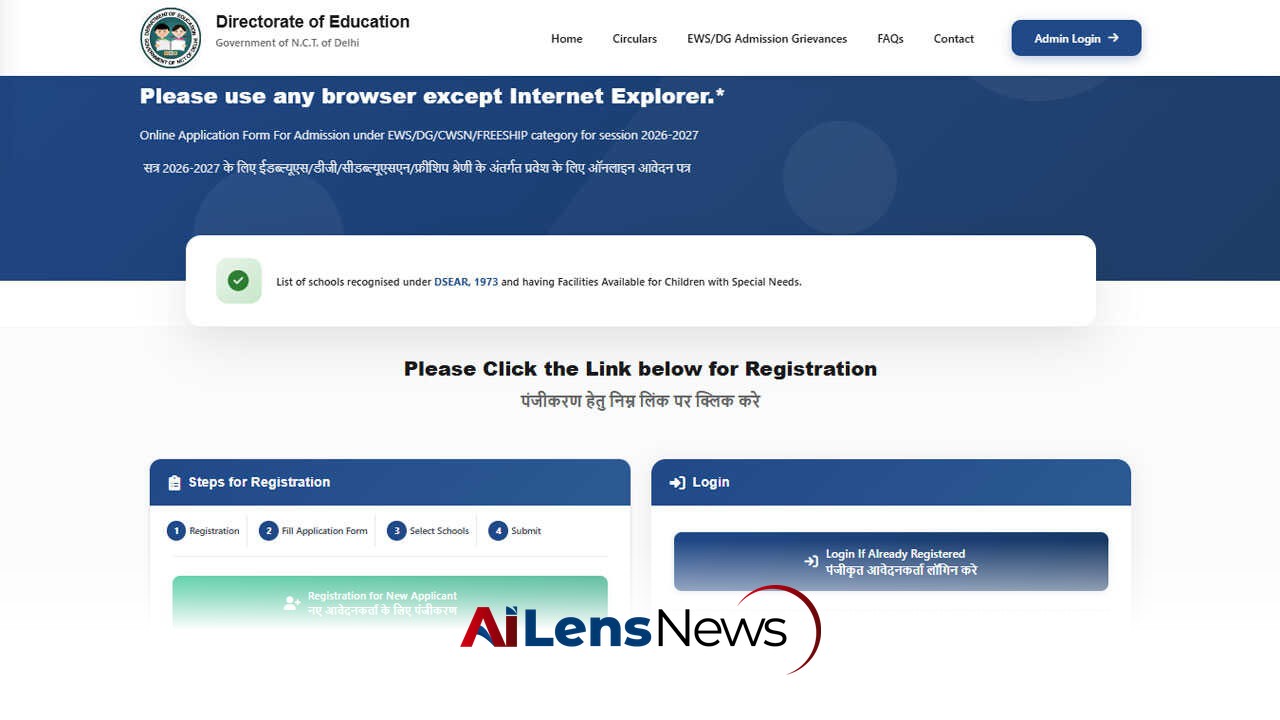


The Delhi Directorate of has released the EWS/DG admission 2026 lottery results, with details available online for parents.
New Delhi, India Jul 10, 2026 ALN: The Delhi Directorate of (DoE) has officially announced the results of the second round of the EWS/DG admission lottery for the academic year 2026. This announcement follows the completion of a computerized draw conducted on July 10, 2026, marking a crucial step in the admissions process for economically weaker sections (EWS) and disadvantaged groups in the capital. The lottery system is integral to ensuring that children from these backgrounds have an equal opportunity to access al resources, which is essential for their holistic development.
The merit list is now accessible online through the official admission portals, allowing parents and guardians to check the results for their children. Approximately 5,000 candidates have been included in the extensive 123-page result document pertaining to the admissions for the 2025-26 academic year. This significant number reflects the ongoing demand for al opportunities among disadvantaged groups, highlighting the importance of such initiatives in ensuring that all children have access to quality . The EWS admission scheme is not merely a policy; it is a lifeline for many families striving to provide better futures for their children.
Selected candidates will receive their school allotment details via SMS, ensuring timely communication of their admission status. This method of communication is particularly beneficial in a fast-paced digital age, where immediate access to information can help families make necessary arrangements quickly. It is crucial for these candidates to prepare the necessary documents, including income, residence, and category certificates, as these will be required for the upcoming document verification process. The verification step is essential to confirm the eligibility of candidates under the EWS and DG categories, ensuring that the benefits of the scheme reach the intended recipients. This meticulous process underscores the government's commitment to transparency and accountability in the admissions process.
The EWS and DG admission lottery system aims to provide equitable access to for economically weaker sections and disadvantaged groups, aligning with the government's commitment to inclusive . This initiative is part of a broader effort to bridge the al divide in society, where access to quality often correlates with socio-economic status. The government recognizes that is a fundamental right that can empower individuals and transform communities, and initiatives like the EWS admissions are pivotal in making this a reality. By fostering an environment where every child has the opportunity to learn, the DoE is not only addressing immediate al needs but also contributing to long-term societal progress.
Parents are encouraged to regularly check the official website for any updates regarding the admission process and to ensure that all required documentation is prepared in advance to facilitate a smooth verification process. The DoE has made it clear that timely submission of documents will play a critical role in the successful admission of candidates. This proactive approach not only aids in organizing the admissions but also helps to alleviate the stress that often accompanies the enrollment process for families. The emphasis on preparedness reflects a broader understanding of the challenges faced by families in navigating al systems.
As the academic year approaches, the DoE continues to emphasize the importance of timely admissions and the need for all candidates to be well-prepared for the next steps in their al journey. The transition from home to school is a significant milestone for children and their families, and the DoE aims to support this transition through clear communication and structured processes. Preparing children for school goes beyond logistical arrangements; it involves emotional and social preparation, which is vital for their overall development.
The EWS admission scheme is particularly relevant in the context of Delhi's diverse socio-economic landscape. It seeks to dismantle barriers that prevent underprivileged children from accessing quality and aims to create a more level playing field. By ensuring that children from economically weaker backgrounds are given a fair chance to enroll in schools, the government is not only investing in individual futures but also in the overall development of the nation. This investment in human capital is essential for fostering a skilled and educated workforce, which is crucial for the country's economic growth.
In recent years, the focus on inclusive has gained momentum, with various policies and programs aimed at integrating marginalized communities into the mainstream al system. The EWS admissions are a testament to this commitment, reflecting a growing recognition of the need for equitable al opportunities. This approach is essential for fostering a more inclusive society where every child, regardless of their background, has the chance to succeed. The societal benefits of inclusive extend beyond the classroom, contributing to social cohesion and reducing inequalities.
Furthermore, the implementation of a computerized lottery system for admissions is a step towards transparency and fairness in the selection process. It minimizes the chances of bias and ensures that the admissions are based solely on luck rather than connections or influence. This system has been welcomed by many as a way to instill confidence in the admissions process and to assure parents that their children have been selected based on merit. The use of technology in this context not only enhances efficiency but also builds trust in the system, which is crucial for its long-term success.
As the DoE prepares for the upcoming academic year, it is also important to consider the implications of the EWS admission scheme on the broader al landscape in Delhi. The successful integration of EWS candidates into mainstream schools can lead to a more diverse and enriched learning environment, benefiting all students. Diversity in the classroom fosters understanding and empathy among students from different backgrounds, preparing them for life in a multicultural society. This exposure is invaluable in developing social skills and broadening perspectives, which are essential in today's globalized world.
In conclusion, the announcement of the EWS/DG admission lottery results marks a significant milestone in the ongoing efforts to promote inclusive in Delhi. The process not only provides opportunities for disadvantaged children but also reinforces the government's commitment to ensuring that every child has access to quality . As families await the next steps in the admission process, the emphasis on preparedness and timely communication will be key to navigating this important transition successfully. The DoE's initiatives reflect a broader vision of an equitable al system that values every child's potential and strives to provide them with the tools they need to thrive in the future. By continuing to prioritize inclusive , the government is taking significant strides towards creating a more just and equitable society.
To learn more about the latest developments in Education News, stay updated with our exclusive reports and analyses on AiLensNews.

