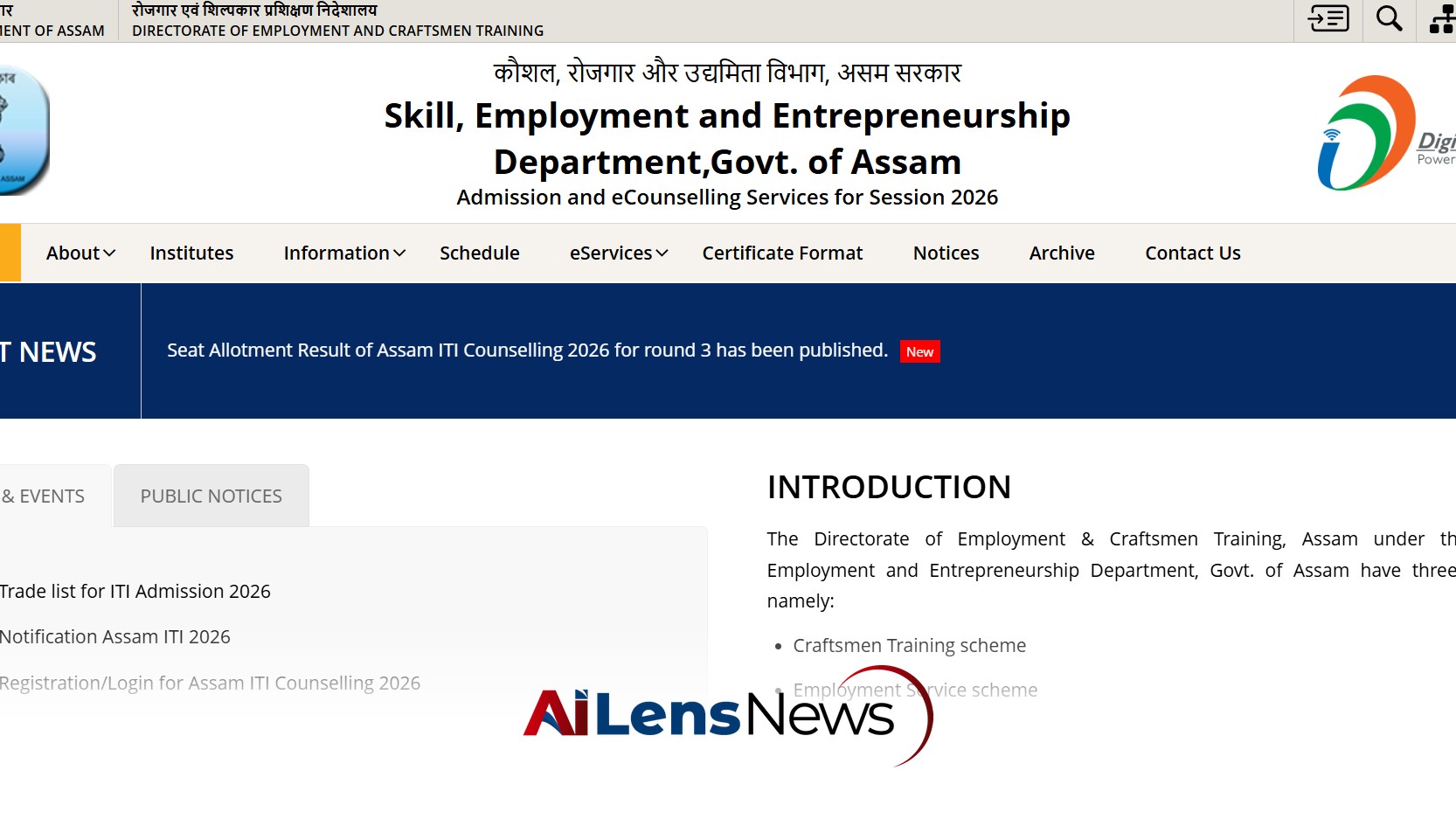


The Assam ITI Round 3 Seat Allotment Result 2026 has been announced by the Directorate of Employment and Craftsmen Training. Candidates can download their allotment letters from the official portal.
New Delhi, India Jul 3, 2026 ALN: The Directorate of Employment and Craftsmen Training (DECT), Assam has officially announced the Assam ITI Round 3 Seat Allotment Result for the year 2026. This announcement is crucial for candidates who have applied for various ITI courses in Assam, as it determines their placement in vocational training programs across the state. The Industrial Training Institutes (ITIs) play a vital role in providing skill development and vocational training, which are essential for enhancing employability in various sectors of the economy. The significance of this announcement extends beyond mere placement; it represents a gateway for many students to enter the workforce equipped with the necessary skills to thrive in their chosen fields.
To access their allotment letters, candidates are required to log in to the official admission portal. This step is essential for reviewing their admission details and ensuring that they are aware of their allotted seats. The admission portal serves as a centralized platform where candidates can not only view their allotment status but also obtain important information regarding the courses, institutions, and other necessary procedures related to their admission. It is advisable for candidates to check the portal regularly for updates and additional instructions that may arise following the seat allotment. Regular monitoring of the portal will help candidates stay informed about any changes or additional requirements that may be necessary as they proceed with their admissions.
The Assam ITI admission process is structured in multiple rounds to accommodate a large number of applicants vying for limited seats in various trades. Round 3 is particularly significant as it often includes candidates who were not allotted seats in the previous rounds, providing them with another opportunity to secure a place in their desired course. The DECT has implemented this multi-round system to ensure that all eligible candidates have a fair chance at receiving admission, thereby promoting inclusivity in vocational training. This approach is designed to maximize the utilization of available seats and ensure that no deserving candidate is left without an opportunity for skill development.
It is important for candidates who have been allotted seats to complete all required formalities within the specified timeline. Failure to do so may result in the cancellation of their admission, which underscores the importance of adhering to the deadlines set by the DECT. Candidates must be vigilant about the timeline for document submission, fee payment, and any other requirements that may be stipulated in the allotment letter. This strict adherence to deadlines is crucial, as it not only affects the individual candidate but also the overall efficiency of the admission process. The timely completion of these formalities ensures that the admission process runs smoothly and that all candidates can begin their training without unnecessary delays.
For candidates looking to secure their admission, it is advisable to act promptly and ensure that all necessary documentation and procedures are completed as instructed. This includes preparing essential documents such as academic certificates, identity proof, and any other paperwork required by the DECT. Moreover, candidates should be prepared to pay the requisite admission fees within the stipulated time frame, as this is often a critical step in confirming their enrollment in the allotted institution. The requirement for timely fee payment is a standard practice in al institutions, designed to streamline the financial aspects of the admission process and ensure that students are committed to their chosen programs.
The release of the Assam ITI Round 3 Seat Allotment Result marks a significant step for aspiring students in the state, providing them with the opportunity to pursue their desired vocational training. ITIs in Assam offer a variety of trades including electrical, mechanical, plumbing, and computer applications, among others. These programs are designed to equip students with practical skills that are directly applicable in the job market, thereby enhancing their employability and career prospects. The diversity of trades available ensures that students can choose programs that align with their interests and the demands of the local job market, thereby increasing their chances of securing employment upon graduation.
Vocational training through ITIs is particularly important in the context of Assam’s economy, which is characterized by a mix of traditional industries and emerging sectors. The skill sets developed through ITI programs are essential for meeting the demands of local industries, which often seek skilled labor to support their operations. By successfully completing an ITI program, graduates can find employment in various sectors, contribute to local economic growth, and improve their own livelihoods. The relationship between vocational training and economic development is increasingly recognized, as skilled workers are crucial for driving innovation and productivity in both established and emerging industries.
Additionally, the Assam government has been actively promoting skill development initiatives to address the growing need for a skilled workforce in the state. This aligns with national efforts to enhance vocational training, ensuring that young people are adequately prepared for the challenges of the modern job market. The ITI system is a critical component of this broader strategy, as it provides targeted training that is responsive to the needs of both students and employers. The government's commitment to skill development is reflected in various policies and programs aimed at enhancing the quality and accessibility of vocational training across the state.
As the seat allotment process progresses, it is essential for candidates to remain informed about any further developments or announcements from the DECT. This includes potential counseling sessions, orientation programs, and other activities that may be organized to assist new students in their transition to vocational training. Such initiatives are designed to help students acclimatize to their new learning environments and understand the expectations of their respective programs. Staying engaged and proactive will help candidates make the most of their allotted opportunities and ensure a smooth transition into their vocational training.
In conclusion, the Assam ITI Round 3 Seat Allotment Result not only represents a pivotal moment for individual candidates but also reflects the ongoing commitment to vocational training in Assam. By facilitating access to skill development programs, the state is taking significant steps toward building a more skilled workforce, ultimately contributing to economic stability and growth. Candidates are encouraged to take full advantage of this opportunity and embark on their journey toward a successful career in their chosen field. The emphasis on vocational is likely to yield long-term benefits for both individuals and the broader Assam economy, as a skilled workforce is essential for addressing future challenges and seizing new opportunities in the marketplace.
To learn more about the latest developments in Higher Education, stay updated with our exclusive reports and analyses on AiLensNews.

