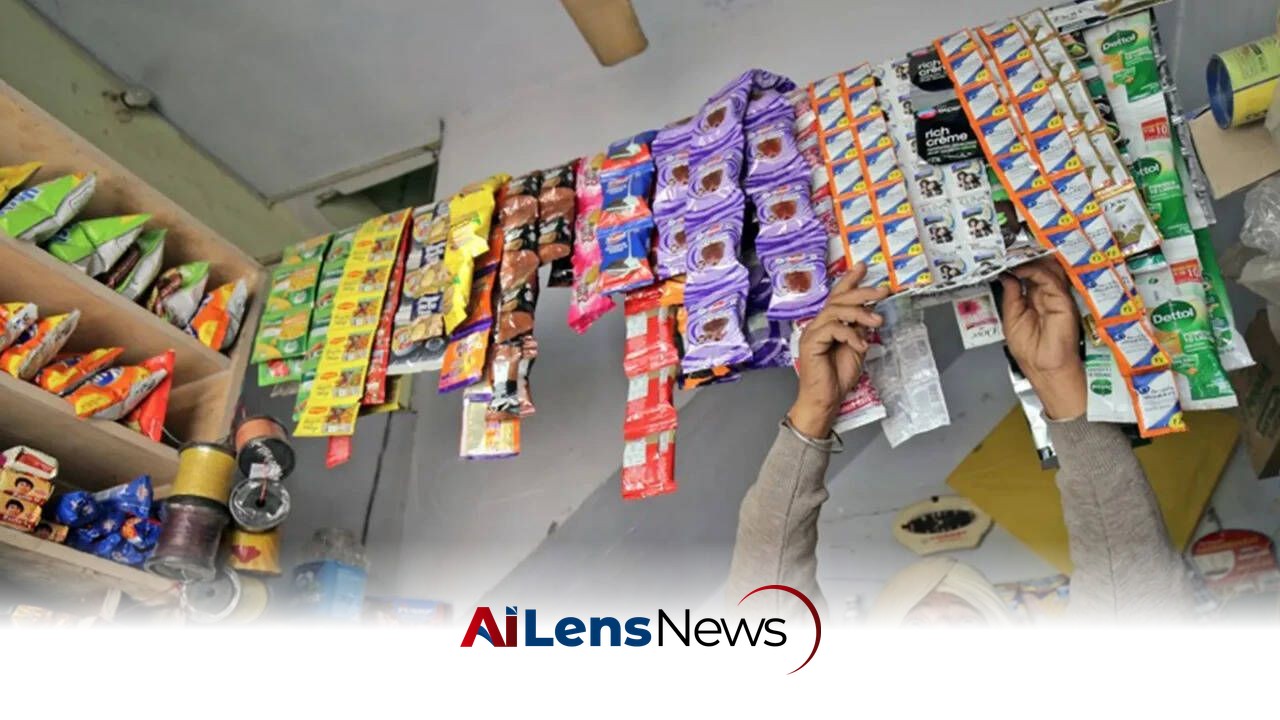


The government is considering a nationwide retail consumption survey to gather detailed data on consumer spending patterns across various retail categories. This initiative aims to enhance official statistics and track retail sales effectively.
New Delhi, India Jul 11, 2026 ALN: New Delhi: The government is considering launching a nationwide retail consumption survey to generate granular data on consumer spending patterns, people aware of the development said.
The proposed survey, to be conducted by the Ministry of Statistics and Programme Implementation (MoSPI), will cover businesses across all National Industrial Classification (NIC) codes, from utensil and machinery stores to pharmacies and apparel outlets. It is expected to track retail sales of consumer durables and non-durables, thereby providing a comprehensive overview of the retail landscape in India.
The survey is likely to capture the value and volume of goods sold through retail establishments across states. "The government is considering the survey; no timeline has been decided yet," a government official said. The lack of a defined timeline suggests that the initiative is still in the planning stages, and stakeholders will need to remain patient as details are finalized.
MoSPI is examining the time period of the survey, the official added. Unlike the Household Consumption Expenditure Survey (HCES), which records household consumption during a reference period, the proposed retail consumption survey will measure purchases at the point of sale. This distinction is critical, as it shifts the focus from consumption to actual sales data, providing a clearer picture of market dynamics.
For instance, if a household buys one kilogram of rice but consumes only 500 grams during a month, the HCES records the quantity consumed, while the retail consumption survey will capture the entire one kilogram sold by the retailer. This methodology aims to enhance the accuracy of data collected, ensuring that it reflects real-world transactions.
Digital payments data indicate robust consumer spending across retail categories. According to the National Payments Corporation of India (NPCI), transactions worth ₹79,705 crore were recorded at grocery stores and supermarkets in June. This figure highlights the significant role that grocery retail plays in consumer spending. Spending at drug stores and pharmacies totaled ₹12,428.8 crore. Men's and women's clothing stores recorded ₹11,792.9 crore in transactions, while family clothing stores accounted for ₹7,059.8 crore. The initiative aligns with MoSPI's broader strategy of producing user-centric, high-frequency statistical outputs that can inform various stakeholders.
The ministry aims to diversify official statistics by integrating survey findings with administrative and alternative data sources, while leveraging emerging technologies and partnerships to meet evolving data needs. This approach reflects a growing trend among governments worldwide to utilize a variety of data sources to create a more holistic understanding of activity.
The importance of accurately measuring consumer spending cannot be overstated. Consumer spending is a critical component of the , making up a significant portion of the Gross Domestic Product (GDP). Understanding how consumers allocate their budgets can provide insights into health and inform policy decisions. For policymakers, data on consumer spending can guide fiscal and monetary policies, helping to stimulate growth or curb inflation as necessary.
Retail consumption surveys have been implemented in various countries to enhance the understanding of consumer behavior and spending patterns. These surveys can help identify trends in different sectors, enabling businesses and policymakers to make informed decisions. For instance, if the survey indicates a surge in spending on health and wellness products, retailers may increase their stock in that category, while policymakers might consider incentives for health-related industries. Such targeted approaches can lead to more effective strategies and improved outcomes for consumers.
Moreover, by capturing data at the point of sale, the proposed survey could provide a more accurate picture of spending habits compared to traditional methods, which often rely on estimates or samples. This could lead to more reliable data that reflects the actual activity occurring within the retail sector. As the retail environment continues to evolve, having access to real-time spending data will be invaluable for both businesses and government agencies.
In addition to benefiting businesses and policymakers, the survey could also enhance consumer trust. As consumers become increasingly aware of data privacy and usage, transparency in how their spending data is collected and analyzed will be essential. The government will need to ensure that any data collected is handled responsibly and ethically, addressing concerns about surveillance and privacy. This aspect will be crucial in gaining public support for the initiative, as consumers may be hesitant to share their data without clear assurances of its protection.
Furthermore, the survey's findings could have implications for various stakeholders, including businesses, consumers, and the government. For businesses, understanding consumer preferences and spending patterns will be crucial for inventory management and marketing strategies. Accurate data can help retailers anticipate demand, optimize stock levels, and tailor their offerings to better meet consumer needs. For consumers, the insights gained from the survey could lead to better-targeted products and services that align with their preferences and spending habits.
From a governmental perspective, the data could assist in planning and development initiatives. For example, if the survey reveals that certain regions are experiencing higher retail growth, the government may consider investing in infrastructure or services to support that growth, ultimately leading to job creation and development. This proactive approach can help ensure that benefits are distributed more evenly across the country.
In the context of the post-pandemic recovery, such a survey could be particularly valuable. The COVID-19 pandemic has significantly altered consumer behavior, with many people shifting to online shopping and changing their spending priorities. By understanding these new patterns, the government can adapt its policies to better support both consumers and businesses in a changing landscape. This adaptability will be key to fostering a resilient that can withstand future shocks.
Additionally, the integration of digital payment data into the survey process is noteworthy. The rise of digital payments has transformed the retail landscape, making transactions more transparent and easier to track. This could provide a wealth of data that complements the findings of the retail consumption survey, offering a more comprehensive overview of consumer spending. The synergy between traditional retail data and digital transaction data can enhance the robustness of the insights generated.
As the government considers the implementation of this survey, it will be important to engage with various stakeholders, including businesses, consumer advocacy groups, and data privacy experts, to ensure that the survey is designed effectively and ethically. The feedback from these groups can help shape the survey's methodology and objectives, ultimately leading to more useful and reliable data. Collaborative efforts will be essential in addressing potential concerns and maximizing the survey's benefits.
In conclusion, the proposed nationwide retail consumption survey represents a significant step towards enhancing the understanding of consumer behavior in India. By capturing detailed data on retail transactions, the government aims to create a more informed landscape that benefits consumers, businesses, and policymakers alike. As the initiative develops, it will be crucial to monitor its progress and ensure that it meets the needs of all stakeholders involved. The successful implementation of this survey could pave the way for more data-driven decision-making in India's retail sector, fostering growth and innovation in the years to come.
To learn more about the latest developments in Inflation & Prices, stay updated with our exclusive reports and analyses on AiLensNews.

