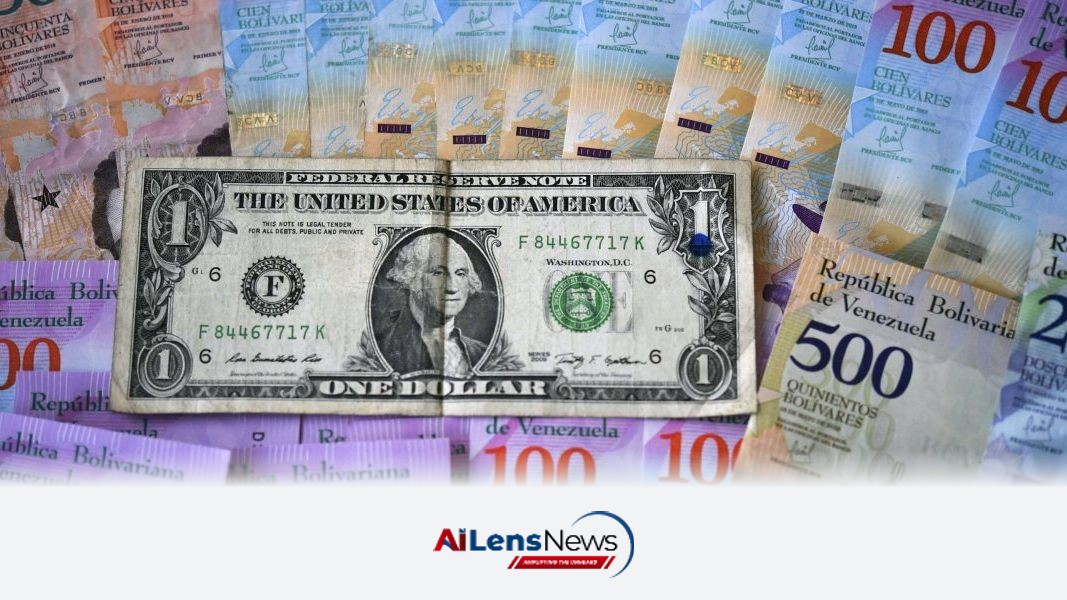



Steve Hanke advocates for Venezuela to adopt the U.S. dollar to combat hyperinflation, marking a significant currency transition since the euro's introduction.
Washington DC, United States Aug 23, 2026 ALN: Steve Hanke earned the moniker “Money Doctor” after advising governments across the globe on how to use currencies to get inflation under control. His expertise in monetary policy and economic stabilization has made him a sought-after advisor in various countries facing economic turmoil. Hanke's approach typically involves the implementation of stable foreign currencies to replace volatile domestic ones, a strategy he believes can effectively combat hyperinflation and restore economic order.
The professor of applied economics at Johns Hopkins University is now helping Venezuela and has been named a special advisor to the country’s National Assembly. Venezuela, once one of the wealthiest countries in South America due to its abundant oil reserves, is currently grappling with an economic crisis characterized by staggering inflation rates, severe shortages of basic goods, and a significant decline in living standards. Hanke's involvement comes at a critical juncture as the Venezuelan government seeks solutions to stabilize its economy.
He told an interviewer that his solution for Venezuela’s 400% inflation is full adoption of the U.S. dollar, meaning bolivars and the central bank would be abandoned. The idea is to remove the risk of a central bank printing money to help the government pay its bills, stoking higher prices. This strategy of dollarization has been proposed as a means to restore confidence in the currency, stabilize prices, and ultimately, revive the economy. Hanke emphasized that "taming inflation is the key to restoring stability in Venezuela, and all the other progress flows from that.”
Hanke's confidence in dollarization is backed by his past experiences. He successfully persuaded Montenegro in 1999 to dump the Yugoslav dinar for the Deutschemark, an act that stabilized the economy during a turbulent period. He also oversaw Ecuador’s switch from the sucre to the U.S. dollar in 2000, marking the first dollarization in Latin America since Panama a century earlier. These instances serve as case studies for Hanke, illustrating the potential benefits of adopting a more stable currency.
In 2009, Hanke became an informal advisor to the prime minister of Zimbabwe, where dollarization helped rein in rampant inflation. However, this success was short-lived; a new government abandoned the dollar in 2013, leading to a resurgence of hyperinflation. This history underscores the complexities and challenges that come with currency transitions, as political will and public support are crucial for sustained economic reforms.
Hanke is now on his second attempt in Venezuela, after his plan for a currency board in the mid-1990s failed to win a majority in the National Assembly. This time, he sees 50%-80% odds that dollarization will be approved, reflecting a shift in the political landscape and possibly greater acceptance of radical economic reforms among lawmakers. He stated that, “It would be the biggest switch from domestic currencies to an alternative since the introduction of the euro in 1999,” highlighting the historical significance of such a move.
Despite the ambitious plans, the U.S. dollar is already an integral part of the Venezuelan economy. Due to the collapsing bolivar, which has tanked 78% against the greenback over the past year alone, most consumers buy virtually everything with dollars. This phenomenon, known as “spontaneous dollarization,” has emerged as a coping mechanism for citizens facing hyperinflation and a lack of basic goods. In fact, almost everyone not working for the government or receiving aid and pensions from the government uses dollars, indicating a fundamental shift in the economy towards reliance on foreign currency.
Hanke pointed out that this spontaneous dollarization raises the chances of an official currency switch, as the population has already adapted to using the dollar for day-to-day transactions. However, the prospect of losing the central bank, which acts as a lender of last resort, and essentially handing over monetary policy to the Federal Reserve are still daunting obstacles. Critics of dollarization argue that it could limit the government's ability to respond to economic crises and remove essential tools for monetary policy.
Even Argentine President Javier Milei, who campaigned on dollarization, backed off the idea after he took office. While he helped cool inflation sharply by slashing subsidies and the budget deficit, the annual rate is still high, demonstrating the challenges faced by leaders attempting to implement such drastic economic reforms. Argentina must also continue defending the peso, which is pegged to the dollar, further complicating the situation. Regional elections last year that crushed Milei’s party sent the peso into a tailspin, and Treasury Secretary Scott Bessent came to the rescue with a currency swap line, illustrating the precariousness of relying on a foreign currency in a politically volatile environment.
Still, Hanke sees dollarization as the key to unlocking Venezuela’s economy, which is highly dependent on oil exports. The country has faced significant challenges in recent years, including a collapse in oil prices, mismanagement of resources, and sanctions that have further strained its economy. A currency switch would induce a big surge of foreign investment into the country, as investors typically favor economies with stable currencies and predictable monetary policies. This influx of capital could be pivotal in revitalizing the oil sector and other industries, potentially leading to job creation and improved living standards for Venezuelans.
In conclusion, while the proposal for dollarization in Venezuela presents both opportunities and challenges, it reflects a broader trend in Latin America where countries are increasingly considering alternative monetary policies to combat inflation and economic instability. The outcome of this potential shift will depend on various factors, including political support, public sentiment, and the overall economic climate. As Hanke and other advisors work to navigate these complexities, the future of Venezuela's economy hangs in the balance, with dollarization emerging as a possible lifeline in an otherwise dire situation.
To learn more about the latest developments in Economic Reports, stay updated with our exclusive reports and analyses on AILensNews.

