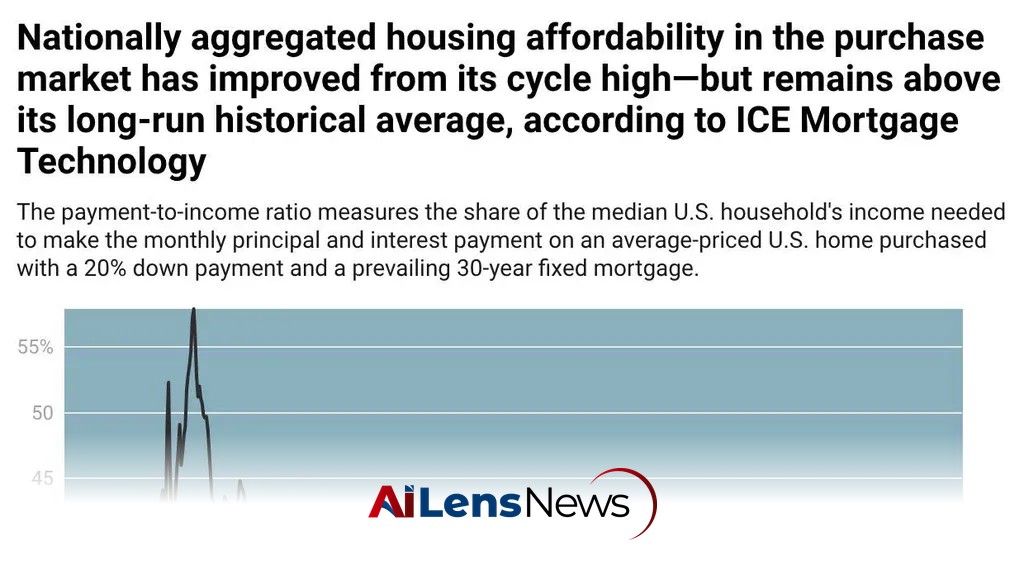


A recent analysis reveals that a 16% decrease in U.S. home prices could bring housing affordability back to its long-term average, highlighting ongoing market challenges.
Washington DC, United States Jul 18, 2026 ALN: The U.S. housing market has been under significant scrutiny in recent years, particularly in light of the economic fluctuations brought on by the COVID-19 pandemic. The pandemic triggered a surge in housing demand, leading to what has been termed the Pandemic Housing Boom. This phenomenon saw home prices skyrocket as remote work became the norm, prompting many individuals and families to seek larger living spaces or relocate to areas with more favorable living conditions. However, this rapid escalation in home prices has raised concerns regarding housing affordability across the nation.
As of the latest reports, the U.S. is currently experiencing a 14-month streak where the year-over-year growth in nationally aggregated worker earnings—recorded at +3.4%—has outpaced the year-over-year growth in home prices, which stands at +1.3%. This shift is noteworthy as it indicates a potential easing of the affordability crisis that has plagued many areas of the country. The disparity between wage growth and home price increases has been a critical issue for many prospective homebuyers, particularly first-time buyers who often face the brunt of rising prices.
The concept of housing affordability is multifaceted, often influenced by various economic indicators, including income levels, home prices, and mortgage rates. In recent months, certain regions, particularly those that experienced rapid growth during the pandemic, such as many Sun Belt and Mountain West cities, are witnessing corrections in their housing markets. These corrections are characterized by declining home prices, which, while challenging for sellers, may provide some relief to buyers who have been struggling to enter the market. The fluctuations in these regions reflect broader trends where demand has outstripped supply, leading to unsustainable price increases.
To contextualize the current state of housing affordability, ICE Mortgage Technology conducted an analysis that highlights the extent to which affordability has deviated from its long-run historical average. This analysis focused on three core levers of housing affordability, illustrating how significant shifts in any one of these factors could theoretically restore affordability to its historical norm. The findings indicate that:
These calculations serve as a conceptual framework to understand the distance between current affordability levels and historical averages. They are not intended to predict the most likely path back to affordability but rather to quantify the existing gap. Such insights are critical for policymakers, economists, and potential homebuyers as they navigate the complexities of the housing market. Understanding these dynamics is essential for developing strategies that could help bridge the affordability gap.
According to ICE Mortgage’s June 2026 Mortgage Monitor report, purchasing the average-priced U.S. home currently consumes 29.8% of the median U.S. household income when accounting for monthly principal and interest payments on a 20% down, 30-year fixed-rate mortgage. This figure represents an improvement from the cycle high of 35.0% recorded in October 2023, suggesting that while conditions are still challenging, there are signs of progress. This improvement is significant, as financial experts generally recommend that housing costs should consume no more than 28% of a household's gross income to ensure financial stability.
The improvement in affordability metrics is a positive development, but it is essential to recognize the broader economic context. The housing market is often seen as a bellwether for the overall health of the economy. A sustained period of high home prices combined with rising mortgage rates can lead to decreased consumer confidence and spending, which in turn can slow economic growth. Conversely, improved affordability can stimulate demand, encouraging home purchases and potentially invigorating related sectors such as construction and home improvement. The interconnectedness of these sectors underscores the importance of a stable housing market for the overall economy.
In the short term, mortgage rates are considered to be the lever that can exert the most immediate influence on housing affordability. Historically, a decrease in mortgage rates can lead to a surge in homebuying activity, as lower borrowing costs make home purchases more accessible to a wider range of buyers. However, many economic models currently project that significant changes in long-term Treasury yields and mortgage rates are unlikely unless there are substantial shifts in the broader economy, such as a spike in unemployment or unexpected inflationary pressures. The Federal Reserve's monetary policy plays a crucial role in this regard, as it directly influences interest rates and, by extension, mortgage rates.
Moreover, the Federal Reserve's monetary policy plays a crucial role in shaping mortgage rates. As the central bank adjusts interest rates in response to inflation and economic growth, these decisions directly impact the cost of borrowing. Consequently, potential homebuyers and investors must remain vigilant regarding the Fed's actions and the overall economic landscape, as these factors will significantly influence the housing market moving forward. The Fed's dual mandate to promote maximum employment and stable prices means that its decisions are closely watched by economists and market participants alike.
The implications of these dynamics extend beyond individual buyers and sellers; they affect communities, local governments, and the economy at large. As housing affordability improves, it can lead to increased homeownership rates, which are often associated with greater community stability and investment. Homeownership is linked to various positive outcomes, including better educational performance among children and increased civic engagement. Conversely, if home prices remain out of reach for many families, it could exacerbate issues such as homelessness and housing insecurity, creating a cycle of disadvantage that is difficult to break.
In conclusion, while the current trends in worker earnings and home prices suggest a potential easing of the housing affordability crisis, significant challenges remain. The need for a 16% drop in home prices, a 19% increase in incomes, or a substantial reduction in mortgage rates underscores the complexity of the situation. Stakeholders at all levels will need to engage in thoughtful discussions and policy-making efforts to address these challenges and work towards a more equitable housing market for all Americans. Policymakers must consider a range of solutions, including increasing the supply of affordable housing, implementing rent control measures, and providing financial assistance to first-time homebuyers, to ensure that the dream of homeownership remains attainable for future generations.
To learn more about the latest developments in Economic Reports, stay updated with our exclusive reports and analyses on AiLensNews.

