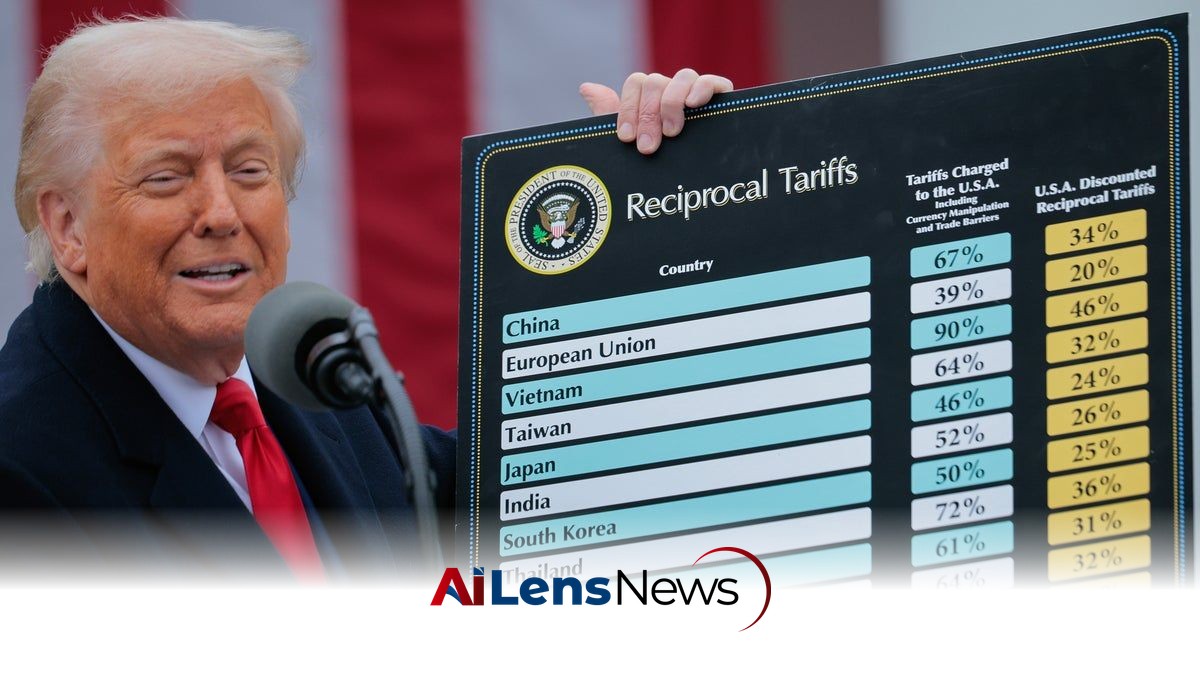


In a significant move, President Trump has announced new tariffs affecting the UK and 59 other key economic partners, raising concerns over international trade relations.
London, United Kingdom Jul 24, 2026 ALN: In a bold economic maneuver, President Donald Trump has imposed new tariffs on the United Kingdom and 59 other major trading partners. This decision is expected to have far-reaching implications for international trade relations and economic stability. The tariffs are a continuation of Trump's administration's aggressive trade policy, which has sought to address perceived trade imbalances and protect American industries from what the administration views as unfair competition.
The tariffs, which vary by country, are part of Trump’s ongoing strategy to address trade imbalances and protect American industries. The announcement was made during a press conference where Trump highlighted the need for reciprocal trade practices. This approach aligns with his administration's broader goal of prioritizing American interests in trade negotiations and agreements.
The tariffs will affect a range of goods imported from the targeted countries, with rates varying significantly. For instance, countries like China and the European Union face some of the highest tariffs, while others like Indonesia and Malaysia see comparatively lower rates. The specific rates reflect the administration's assessment of the trade balance with each country and the perceived need to protect American industries.
These tariffs represent a significant escalation in the ongoing trade tensions between the United States and various nations. The high rates on countries like China and Vietnam, which have been at the center of previous trade disputes, reflect the administration's focus on industries that it believes have been adversely affected by foreign competition, particularly in manufacturing and technology sectors.
The announcement has sparked a mixed response from various sectors. Economists warn that these tariffs could lead to increased prices for consumers and potential retaliatory measures from affected countries. Trade experts suggest that this move may escalate tensions in international trade relations, which have already been strained under the Trump administration's policies.
Supporters of the tariffs argue that they are necessary to protect American jobs and industries from unfair competition. They contend that by imposing these tariffs, the administration is taking a stand against countries that do not play by the same rules, thereby leveling the playing field for American workers. This sentiment resonates with many voters who feel that globalization has harmed domestic industries.
However, critics fear that the long-term consequences could outweigh the short-term benefits. They argue that tariffs can lead to increased costs for consumers, as businesses often pass on the costs of tariffs to customers. Additionally, there is concern that retaliatory tariffs from other countries could harm American exports and lead to job losses in sectors reliant on international trade.
This latest round of tariffs adds to the growing list of trade barriers that have emerged during Trump's presidency. As countries respond to these measures, the global trade landscape may shift significantly, affecting everything from supply chains to consumer prices. The interconnected nature of the global economy means that changes in trade policy can have ripple effects that extend far beyond the immediate parties involved.
With the imposition of these tariffs, the Trump administration aims to reshape trade dynamics, but the effectiveness of such strategies remains to be seen. Stakeholders across various industries are urged to prepare for potential disruptions as the situation unfolds. Industries such as agriculture, manufacturing, and technology, which rely heavily on global supply chains, may be particularly vulnerable to the impacts of these tariffs.
As the world watches closely, the implications of these tariffs will likely reverberate far beyond the immediate economic impacts, influencing diplomatic relations and global market stability. Countries that are affected by the tariffs may seek to retaliate through their own trade measures, which could lead to a tit-for-tat escalation that complicates international relations.
Furthermore, the tariffs could also influence negotiations on existing trade agreements and future trade deals. Countries may be less inclined to engage in negotiations with the United States if they perceive the administration as unwilling to compromise or adhere to established trade norms. This could hinder efforts to establish more favorable trade conditions for American businesses in the long run.
The imposition of tariffs is not a new strategy for the United States. Throughout history, tariffs have been used as a tool to protect domestic industries and generate revenue. The Smoot-Hawley Tariff Act of 1930 is one of the most infamous examples, as it raised duties on numerous imports and is often cited as a contributing factor to the Great Depression. More recently, the Obama administration imposed tariffs on solar panels and washing machines to protect American manufacturers, although these actions were met with mixed responses.
Trump’s tariffs can be seen as part of a broader trend of protectionism that has gained traction in various countries around the world. As globalization has evolved, many nations have grappled with the consequences of free trade, including job losses in certain sectors and rising income inequality. The rise of populist movements in several countries has led to calls for more protectionist policies, with leaders advocating for measures that prioritize domestic industries over international competition.
The long-term economic implications of these tariffs remain uncertain. While they may provide short-term relief to specific industries, the broader effects on the economy could be detrimental. Increased prices for imported goods could lead to inflationary pressures, affecting consumers' purchasing power. Additionally, if trading partners retaliate with their own tariffs, American exporters may find it more challenging to access foreign markets, potentially leading to job losses in export-driven industries.
Moreover, the tariffs could disrupt established supply chains, prompting businesses to re-evaluate their sourcing strategies. Companies that rely on imported components may face increased costs, which could lead to reduced profit margins and a shift in business operations. In some cases, firms may choose to relocate production to countries with more favorable trade conditions, further impacting the U.S. labor market.
In summary, President Trump's new tariffs on the United Kingdom and 59 other economic partners mark a significant development in U.S. trade policy. While the administration argues that these measures are necessary to protect American industries and jobs, the potential for increased consumer prices, retaliatory actions, and broader implications for global trade cannot be overlooked. As stakeholders navigate this evolving landscape, the future of international trade relations remains uncertain, with many watching to see how countries will respond and what the long-term effects of these tariffs will be.
As the global economy continues to adapt to these changes, it is critical for policymakers to consider the broader implications of such trade measures. Finding a balance between protecting domestic interests and fostering healthy international trade relationships will be essential for sustainable economic growth moving forward.
To learn more about the latest developments in Inflation & Prices, stay updated with our exclusive reports and analyses on AiLensNews.

