

Singapore businesses are facing significant challenges due to a new 12.5% tariff imposed by the US, impacting their operations and sales.
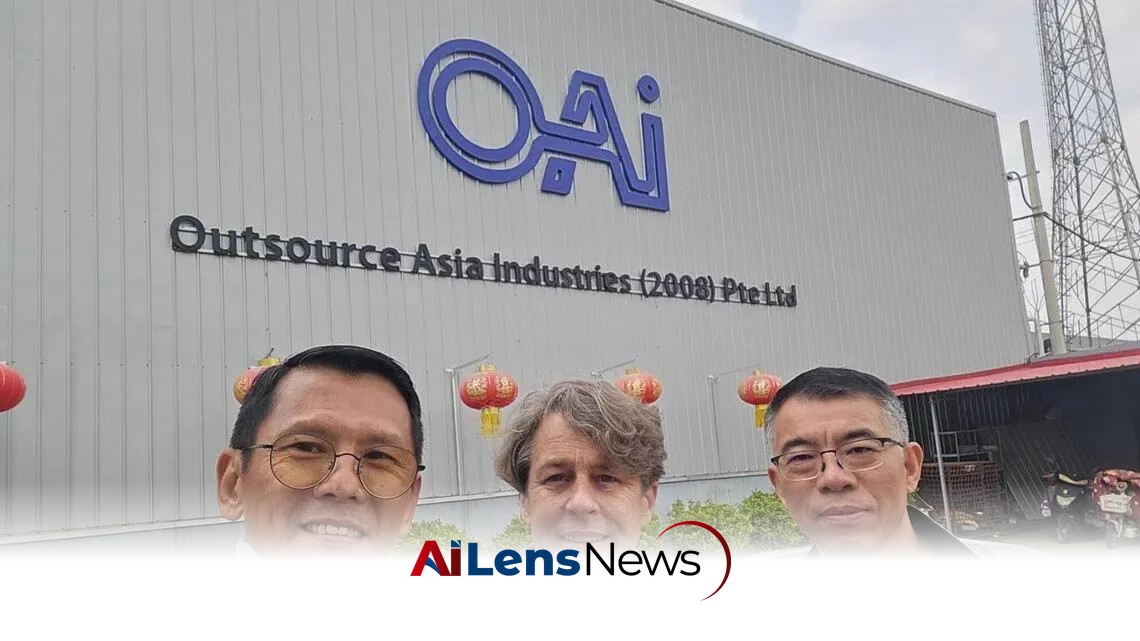
Singapore, Singapore Jul 27, 2026 ALN: Local entrepreneur T.K Khor has for decades been in the business of connecting US customers to original equipment manufacturers fabricating everything from metal parts to precision machines in markets such as China. Khor's company, Outsource Asia Industries, has been significantly affected by the changing landscape of trade tariffs imposed by the United States, particularly under the administration of former President Donald Trump.
US President Trump’s tariffs have been a blow to his operations, with export taxes on products from China surging to as much as 89 percent, after a new 12.5 percent levy took effect recently. The impact of these tariffs has rippled through various sectors, affecting not only manufacturers but also small and medium enterprises (SMEs) that rely on exports to the US market.
Khor, who has seen a drastic decline in his business volume, expressed his frustrations by stating, "Last time, I do about US$8 million (S$10.3 million) in business. This year I’m doing probably US$2 million to US$3 million tops." This significant reduction in revenue illustrates the broader challenges faced by businesses that have long relied on stable trade relations with the US. Khor added, "When the tariffs first started, we were worried. Now that our business has been lost, it doesn’t really affect us. The damage has been done. There is nothing we can do." This sentiment resonates with many entrepreneurs who feel they have little control over the external factors impacting their livelihoods.
A US Federal Register notice published on July 23 listed China and Singapore among 45 economies that will face 12.5 percent duties following a probe by the Office of the US Trade Representative (USTR) into forced labour concerns. The USTR investigation, which started in March and concluded in July, claimed that these economies had failed to both adopt and effectively enforce prohibitions on trade in goods produced with forced labour. This scrutiny highlights the growing global concern over ethical sourcing and the responsibility of nations to uphold human rights standards in their supply chains.
The Ministry of Trade and Industry in Singapore confirmed that the new tariff took effect at 12.01am Eastern time on July 24. This change has significant implications for the Singaporean economy, as about a third of Singapore’s domestic exports to the US are now subject to the Section 301 export tax, which replaces a 10 percent global levy under Section 122 that expired last week. While some exports, such as energy products, pharmaceuticals, and semiconductors, remain exempt from these tariffs, the overall increase in export costs poses a challenge for many businesses.
Singapore has firmly rejected suggestions that it engages in unfair trade practices, including the use of forced labour in supply chains. The government has communicated its position to the US, emphasizing that it does not condone such practices. This stance reflects Singapore's commitment to maintaining its reputation as a fair and transparent trading partner, which is vital for its economic stability and growth.
Ang Yuit, president of the Association of Small and Medium Enterprises, commented on the new tariff, stating that it “will be an operational squeeze for those in traditional sectors, but a clear advantage for high-tech exporters and trade service providers.” He elaborated that businesses involved in precision engineering, industrial tools, custom machinery, and specialty chemicals face an immediate 2.5 percent price disadvantage against competitors in Malaysia, which are taxed at 10 percent. This price discrepancy could compel US buyers to demand price cuts or shift orders to other countries, thereby exacerbating the challenges faced by Singaporean exporters.
However, Ang also pointed out a potential silver lining. He believes that service companies could see increased demand for their compliance offerings due to the tariff targeting forced labour. This could benefit trade lawyers, supply chain auditors, environmental, social, and governance consultants, and logistics firms that specialize in mapping product classifications. The increased scrutiny on ethical sourcing may prompt foreign companies to establish their regional headquarters in Singapore, as they seek to align with US regulatory expectations.
Despite these potential benefits for some sectors, many SMEs are still “waiting for the ripple effect” of the latest tariffs to settle. This uncertainty complicates business planning and forecasting, as companies assess how the new tariffs will affect their operations and profitability.
One such firm is Sunbeam Aquarium, which faces an increase from 10 percent to 12.5 percent in tariffs when exporting ornamental fish to the US. Senior manager Nicole Chin stated that it was still too early to assess the impact of the higher tariff on its business. She emphasized that for ornamental fish, reliability of supply and product quality are also important considerations. Chin noted, "The effect of tariff changes will depend not only on the tariff rates themselves, but also on how they compare across exporting countries, and whether the difference is large enough to influence importers’ sourcing decisions." This highlights the complexities involved in international trade, where multiple factors can influence market dynamics beyond just tariff rates.
Other companies have already begun to feel the impact of US taxes on their business margins. Fast-fashion retailer Shein disclosed a US$99 million loss in the first quarter of 2026, a stark contrast to its net income of US$395 million a year earlier. The Singapore-headquartered company, which was founded in China, reported that products sold by it or through its marketplace and shipped to the US are now subject to tax rates ranging from 10 percent to 87.5 percent. This dramatic shift is partly due to the removal of an import duty exemption on small packages, which has further complicated the landscape for e-commerce businesses.
The Singapore Business Federation has emphasized the need for “clear guidance and adequate transition periods” to help businesses comply with any new regulatory requirements. This call for clarity is crucial, as businesses navigate the complexities of compliance and adapt to the evolving trade environment.
Lennon Tan, president of the Singapore Manufacturing Federation, has acknowledged that the impact of the 12.5 percent tariff on manufacturing companies will be real. He mentioned that the association is surveying affected exporters, particularly those with significant US exposure, to quantify the impact and channel their concerns to the Government. This proactive approach aims to ensure that the voices of affected businesses are heard in policy discussions.
Khor remains hopeful that US President Trump’s upcoming meeting with Chinese President Xi Jinping at the White House could be a turning point for his business. He expressed his desire for concrete outcomes from these high-level discussions, saying, "We were hoping for something concrete from their last meeting in May, but there was nothing at all. Hopefully, there will be some good news in September." This hope for diplomatic resolution underscores the interconnectedness of global trade and the significant influence that political relations can have on economic outcomes.
In conclusion, Singaporean businesses are grappling with the implications of the new 12.5 percent US tariffs, which have introduced uncertainty and challenges across various sectors. While some companies may benefit from increased demand for compliance services, many others face operational squeezes and declining revenues. The broader economic impact of these tariffs will depend on how businesses adapt to the changing trade landscape and the outcomes of ongoing diplomatic negotiations between the US and China.
To learn more about the latest developments in Inflation & Prices, stay updated with our exclusive reports and analyses on AiLensNews.

