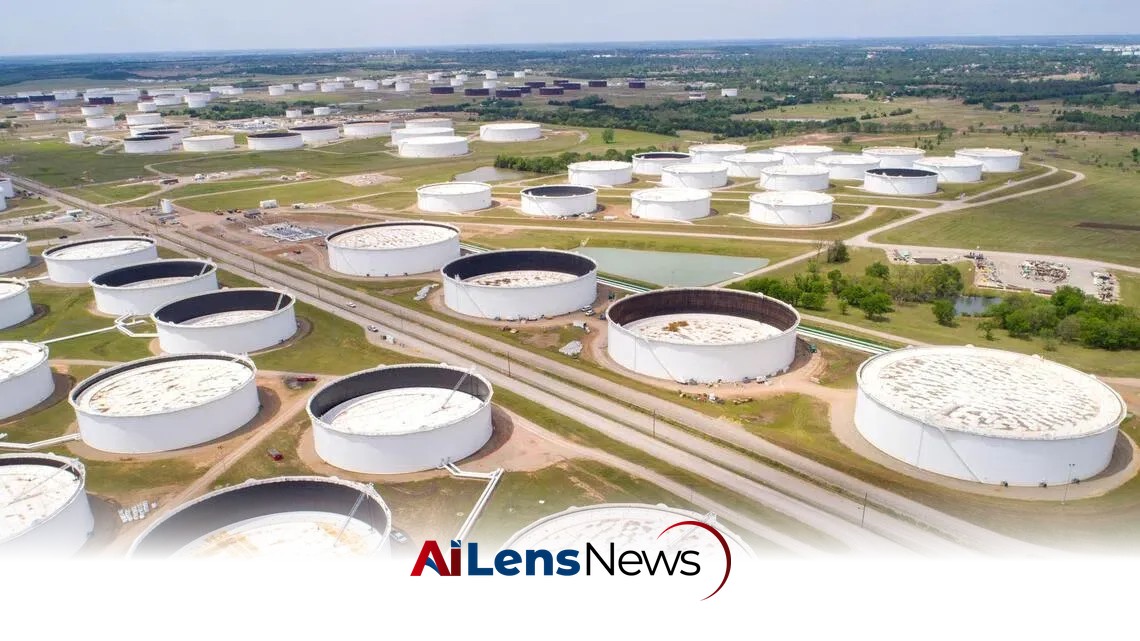


Brent crude oil prices experienced a significant rise after President Trump announced a blockade on Iranian ships, marking the largest daily increase since May 2020.
Singapore, Singapore Jul 14, 2026 ALN: TOKYO - Oil prices surged dramatically following an announcement by US President Donald Trump regarding a blockade on Iranian ships transiting the strategically important Strait of Hormuz. This announcement has significant implications for global oil markets, given the Strait’s role as a vital chokepoint through which approximately 20% of the world's oil supply passes. The Strait of Hormuz is not just a narrow waterway; it is a crucial artery for international trade and energy security, making any disruption in this region a matter of global concern.
On July 13, Brent crude oil prices experienced a notable increase of 9.6%, closing at US$83.30 per barrel. This marked the largest daily rise for the global oil benchmark since May 2020. Concurrently, US West Texas Intermediate (WTI) also saw a substantial rise of 9.4%, settling at US$78.14. The sudden spike in oil prices reflects heightened fears over potential disruptions to oil supply stemming from escalating tensions in the Middle East. The increase in oil prices is not merely a reflection of immediate market reactions; it also signals deeper anxieties about geopolitical stability in a region that has been historically fraught with conflict.
President Trump’s announcement included a demand for a 20% reimbursement on all cargoes transiting the Strait, which could equate to approximately US$30 million for full supertankers carrying oil. This move comes amidst a backdrop of increasing military engagement in the region, with US forces having launched a third consecutive night of strikes against Iranian targets. The situation is dynamic, and analysts suggest that military actions may continue for several more days, further contributing to the volatility of oil markets. Such military interventions are often intended to assert dominance and deter adversaries, but they can also escalate tensions and provoke retaliatory responses, creating a cycle of conflict that can destabilize entire regions.
The recent rise in crude prices reverses a trend observed in the second quarter of 2023, during which prices dropped by about 30%. The current prices represent a rebound to their highest levels in a month. The renewed tensions have reignited concerns about the reliability of oil supplies from the Middle East, which is a critical region for global energy security. The fluctuations in oil prices can be attributed to a myriad of factors, including geopolitical events, supply chain disruptions, and changes in demand patterns. As such, market analysts often look beyond immediate price changes to assess the underlying trends that might affect future pricing.
In the context of these developments, it is important to note that Iran had previously managed to export at least 57 million barrels of crude oil during a brief period when American naval blockades were not in effect. This highlights the precarious balance of power in the region and the stakes involved for the global oil market as restrictions are reimposed. Jay Hatfield, the chief executive officer at Infrastructure Capital Management, commented on the situation, stating, “They were just shipping oil out at unbelievable rates.” He further speculated that oil prices may stabilize around the US$80 level unless there are significant developments affecting the Strait of Hormuz. Hatfield also expressed skepticism about prices reaching US$90 or US$100 per barrel, suggesting that if the Strait were to reopen, prices could plummet to US$60 swiftly. This perspective underscores the volatility inherent in oil markets, where prices can swing dramatically based on geopolitical developments.
The military actions taken by Iran have also escalated tensions. Reports indicate that Iran’s army targeted US assets in Kuwait using drones and launched cruise missiles at what was described as a “hostile vessel.” These developments, reported by the semi-official Fars news agency, underscore the increasing volatility in the region and the potential for further conflict. The use of drones and missiles not only signifies an escalation in military capabilities but also reflects a shift in warfare tactics that can complicate traditional military responses. The potential for miscalculation in such a high-stakes environment is significant, raising concerns about unintended consequences that could lead to broader military engagements.
In a related statement, Iranian Foreign Minister Abbas Araghchi characterized the current agreement with Washington as having “undoubtedly entered a crisis phase.” He indicated that Iran would not abide by the terms of the agreement as long as the United States continued to violate its commitments. Araghchi also ridiculed Trump’s toll proposal on social media, asserting that Iran has historically served as the “guardian” of the Strait of Hormuz and would continue to do so. He suggested that the proposed 20% toll was excessive and expressed a willingness to negotiate fairly. This exchange highlights the deep-seated animosities and mistrust that characterize US-Iran relations, complicating any potential for diplomatic resolutions to the ongoing tensions.
The implications of these developments extend beyond immediate oil prices. The Strait of Hormuz is a critical maritime corridor, and any significant disruption could have far-reaching consequences for global energy markets, economic stability, and geopolitical relations. A blockade or conflict in this region could lead to heightened tensions not only between the US and Iran but also among other nations that rely on oil imports from the Gulf region. The reliance of many economies on oil imports from this area means that any disruption could lead to increased energy costs, inflationary pressures, and potential economic downturns in countries dependent on stable oil supplies.
The international community watches closely as the situation unfolds, given the potential for broader implications on global trade and energy security. Countries that are heavily reliant on oil imports from the Middle East may need to consider alternative sources or strategies to mitigate the impact of potential supply disruptions. In addition, fluctuations in oil prices can have cascading effects on economies worldwide, influencing inflation rates, transportation costs, and overall economic growth. Governments and businesses alike may need to reassess their energy strategies in light of these developments, potentially accelerating shifts toward renewable energy sources or diversification of supply chains.
As the situation develops, market analysts will continue to monitor geopolitical events closely, as well as the responses from both the US and Iranian governments. The potential for further military engagements or diplomatic negotiations remains a critical factor in determining the future trajectory of oil prices and regional stability. Analysts will be particularly attuned to any statements from both governments that could indicate a willingness to engage in dialogue or, conversely, an escalation of hostilities.
In summary, the recent announcement by President Trump regarding a blockade on Iranian ships has sent shockwaves through the oil markets, leading to a significant spike in prices. The ongoing military actions by the US and Iran, coupled with the historical context of their relationship, contribute to an increasingly complex and volatile situation that could have profound implications for global energy security and economic stability. The international community's response, as well as the actions taken by both nations, will be crucial in shaping the future landscape of oil markets and geopolitical relations in the Middle East.
To learn more about the latest developments in Trade & Commerce, stay updated with our exclusive reports and analyses on AiLensNews.

