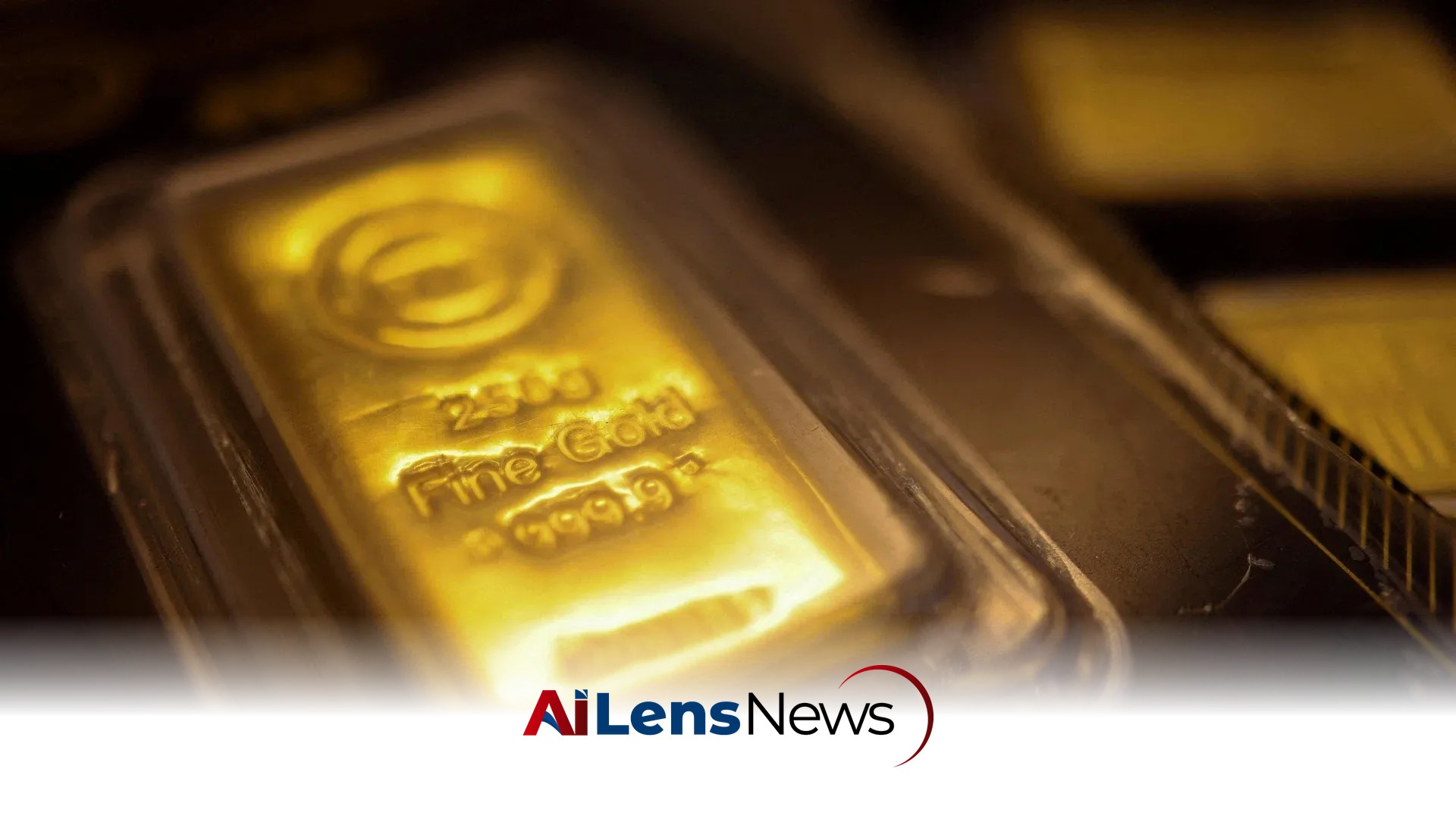


Gold prices fell sharply as escalating tensions in the Middle East and rising oil prices heighten inflation concerns, reinforcing expectations of US interest rate hikes.
Singapore, Singapore Jul 17, 2026 ALN: Gold prices experienced a significant decline on Thursday, July 16, falling by 2 percent to reach a more than two-week low. This drop in gold prices comes amid escalating tensions in the Middle East, which have had a ripple effect on oil prices and US Treasury yields. The heightened geopolitical concerns have raised inflation worries, leading to reinforced expectations of sustained high interest rates in the United States.
As of 2:05 PM EDT, spot gold was recorded at $3,984.64 per ounce, down 1.9 percent from the previous day. Earlier in the trading session, gold prices had dipped as much as 2 percent, marking their lowest level since July 1. Meanwhile, US gold futures settled at $3,992.10, reflecting a 1.5 percent decrease. These fluctuations in gold prices are indicative of a broader trend influenced by a variety of macroeconomic and geopolitical factors.
The backdrop for this decline in gold prices is closely tied to the dynamics of the oil market. Oil prices have remained near a one-month high, driven by growing concerns regarding energy supplies from the Middle East. These concerns were exacerbated when Iran urged Yemen’s Houthis to be prepared to close the Red Sea oil route in response to potential US military strikes on Iranian power infrastructure. Such developments have historically led to volatility in oil markets, which can also influence gold prices as investors often view gold as a safe haven during times of geopolitical uncertainty.
Higher oil prices typically stoke inflation concerns, which in turn raise expectations for elevated interest rates. This scenario tends to dent the appeal of gold as a non-yielding asset, which does not provide interest or dividends. Bart Melek, the global head of commodity strategy at TD Securities, commented on the situation, noting that the increase in oil prices is likely to contribute to expectations of rising US yields and possibly even a rate hike as soon as September. This sentiment reflects a broader market perception that the Federal Reserve may need to act decisively in response to persistent inflationary pressures.
Current market dynamics suggest that traders are pricing in approximately a 53 percent probability that the US Federal Reserve will raise interest rates in September, as indicated by the CME FedWatch Tool. Such expectations can significantly influence investor behavior, particularly in the precious metals market. As yields on the benchmark 10-year US Treasury note drifted higher, the US dollar also gained 0.2 percent, further complicating the outlook for gold. A stronger dollar generally makes gold more expensive for overseas buyers, which can dampen demand.
In a related development, Federal Reserve Chair Kevin Warsh, during remarks made on July 14, reaffirmed his commitment to reducing inflation, although he did not provide specific guidance on the Fed's future actions. This ambiguity leaves room for speculation among investors regarding the timing and magnitude of potential rate hikes. Additionally, economic indicators released earlier in the week showed a slowdown in US consumer inflation for June, while data from Wednesday pointed to a decline in the producer price index. These mixed signals contribute to the complexity of the current economic landscape.
Market analysts, such as Fawad Razaqzada from Forex.com, have noted that even if some near-term economic data shows signs of softening, the persistently high energy prices complicate the Federal Reserve's ability to adopt a more dovish stance. Consequently, investors are increasingly favoring the dollar over gold, which does not generate yield. This trend underscores the ongoing competition between different asset classes in the context of inflationary pressures and interest rate expectations.
In addition to gold, other precious metals also saw declines. Spot silver dropped 3.6 percent to $55.68 per ounce, while platinum slid 3.1 percent to $1,621.83. Palladium experienced a notable dip as well, falling 4.1 percent to $1,260.70. The movements in these metals reflect broader trends in the commodity markets, where investor sentiment is heavily influenced by macroeconomic factors such as inflation and interest rates.
Overall, the interplay between rising Middle East tensions, fluctuating oil prices, and the prospect of changing US monetary policy presents a complex environment for investors. As gold and other precious metals react to these developments, market participants will be closely monitoring geopolitical events and economic indicators to gauge potential impacts on the financial landscape. The implications of these trends extend beyond the immediate market, affecting consumer behavior, investment strategies, and overall economic stability in the face of ongoing uncertainty.
Understanding the intricacies of gold price movements requires a grasp of historical context. Gold has long been viewed as a safe haven asset, particularly during times of geopolitical unrest. The relationship between gold and oil prices is particularly noteworthy; when oil prices rise, they often signal increasing inflationary pressures, which can erode the purchasing power of fiat currencies. This, in turn, can lead investors to seek refuge in gold, driving up its price. However, the current environment presents a paradox where rising oil prices are also leading to expectations of higher interest rates, which diminish the allure of gold.
The Federal Reserve's monetary policy plays a crucial role in shaping the investment landscape. The central bank's actions, particularly regarding interest rates, have direct implications for gold prices. When interest rates rise, the opportunity cost of holding gold increases, as investors may prefer assets that yield returns. Conversely, lower interest rates tend to bolster gold prices as the cost of holding the metal decreases. The Fed's dual mandate of promoting maximum employment and stabilizing prices adds another layer of complexity, as the central bank must balance these objectives against inflationary pressures.
Moreover, the current geopolitical tensions in the Middle East are not isolated events; they are part of a broader narrative involving global energy security, trade dynamics, and international relations. The Middle East has historically been a focal point for conflicts that can disrupt oil supplies, leading to price spikes that reverberate throughout the global economy. As countries navigate these tensions, the interconnectedness of markets becomes increasingly apparent, with gold often serving as a barometer for investor sentiment in times of crisis.
In summary, the recent decline in gold prices amid rising Middle East tensions illustrates the complex interplay of geopolitical factors, economic indicators, and monetary policy. As investors navigate this uncertain landscape, the dynamics of supply and demand in both the gold and oil markets will continue to shape market sentiment. The implications of these trends extend beyond immediate trading strategies, influencing broader economic conditions and consumer behavior in the face of ongoing global challenges.
To learn more about the latest developments in Economic Reports, stay updated with our exclusive reports and analyses on AiLensNews.

