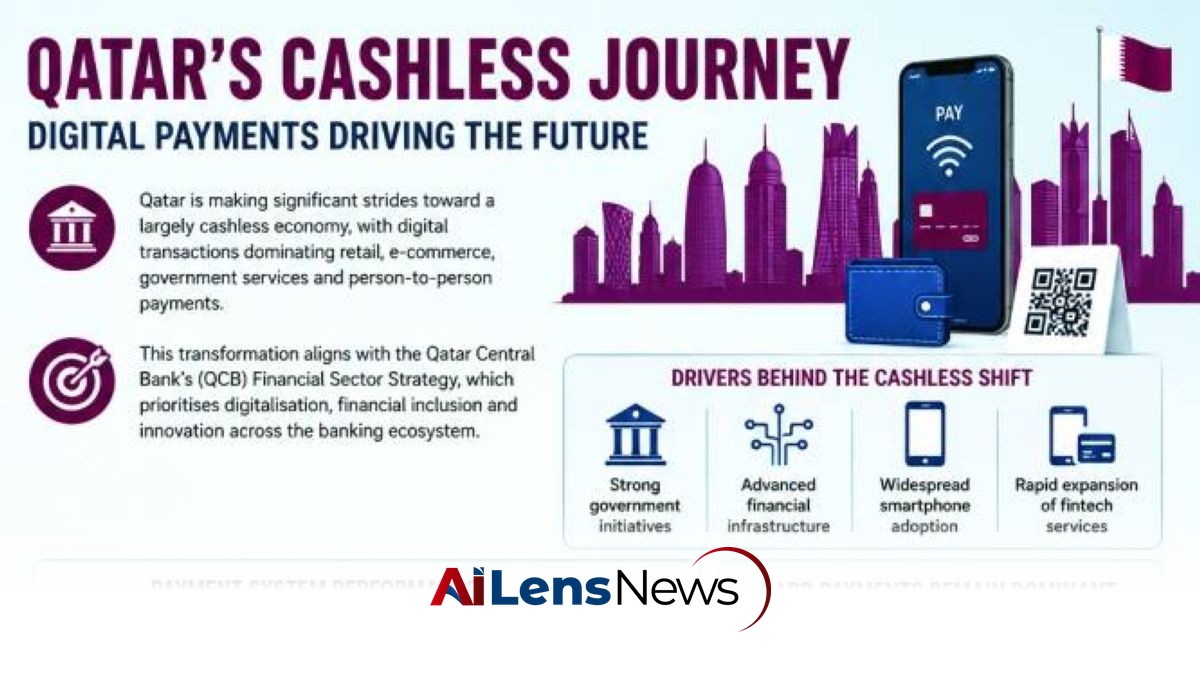


Qatar is rapidly advancing towards a cashless economy, with digital transactions dominating various sectors, supported by government initiatives and fintech growth.
Doha, Qatar Jul 25, 2026 ALN: Qatar has made significant strides toward becoming a largely cashless economy, with digital transactions increasingly dominating retail, e-commerce, government services, and person-to-person payments. This transformation aligns with the Qatar Central Bank (QCB)’s Financial Sector Strategy, which prioritizes digitalization, financial inclusion, and innovation across the banking ecosystem. The shift towards a cashless economy is not merely a trend but reflects a broader global movement where countries are embracing digital payment solutions to enhance economic efficiency and consumer convenience.
As digital payment methods continue to gain popularity and wider acceptance across all user segments, they are supported by strong government initiatives, advanced financial infrastructure, widespread smartphone adoption, and the rapid expansion of fintech services. The QCB has been at the forefront of this initiative, implementing policies that encourage the development and adoption of digital payment technologies. This includes regulatory frameworks that facilitate the entry of fintech companies into the market, thereby fostering a competitive environment that benefits consumers.
According to QCB data, in April this year, the country's payment systems processed around 73.5 million transactions worth QR111.85 billion, representing a 29% increase in transaction volume and a remarkable 77% increase in transaction value compared with the same period last year. This surge in digital transactions underscores the growing reliance on electronic payment methods among consumers and businesses alike. In May 2026, payment transactions rose further to 81.1 million transactions valued at QR95.8 billion, marking a 32% annual increase in volume. Such statistics illustrate the rapid pace at which Qatar is moving toward a cashless society.
Card-based payments remain the dominant payment method across the country. According to QCB data, card transactions accounted for nearly 89% of all payment system transactions this year. In May 2026, card transaction volumes exceeded 72.3 million transactions, while their total value reached around QR24.4 billion. The widespread acceptance of card payments is indicative of changing consumer preferences, as more individuals opt for the convenience and security that comes with digital transactions.
Point-of-sale (POS) transactions continue to drive growth, increasing from around 42.7 million transactions in May 2025 to 53.8 million transactions in May 2026. This growth reflects the widespread adoption of contactless cards and mobile wallet solutions throughout the country. The ease of tapping a card or using a mobile device to make payments has resonated well with consumers, leading to a significant shift in consumer behavior in favor of digital payments.
A Visa survey released in January 2026 found that 62% of consumers in Qatar conduct most of their daily purchases using digital payment methods, including payment cards and mobile devices. This means non-cash users currently outnumber consumers who primarily rely on physical cash by more than two to one. At the same time, the proportion of consumers using cash for everyday purchases has continued to decline, indicating that digital payment methods are becoming the default choice across retail categories. This trend is consistent with global patterns where consumers are increasingly turning away from cash in favor of more modern payment solutions.
Further, research conducted in 2025 found that 57% of consumers in Qatar regularly use mobile payment solutions, while 60% use card payments and 61% use bank transfers. These figures reflect a growing comfort with various digital payment options. In addition, 74% of respondents expected to increase their use of digital payment methods, indicating strong confidence in the convenience and security of electronic transactions. This confidence is crucial for the continued growth of digital payments, as the acceptance of new technologies often hinges on consumer trust.
Security perceptions have also improved considerably, with 71% of consumers expressing trust in digital payments and 98% reporting that they actively take measures to protect their online transactions. The QCB and other stakeholders have emphasized the importance of security in digital transactions, implementing robust cybersecurity measures to protect consumers and businesses from fraud and data breaches. This focus on security is essential, as concerns over online safety can be a significant barrier to the adoption of digital payment solutions.
The launch of the country’s centralized retail payment systems and instant payment infrastructure has enabled real-time transfers between bank accounts and e-wallets. These systems operate around the clock and support transfers using mobile phone numbers, aliases, QR codes, and digital wallets. The infrastructure significantly reduces transaction friction for consumers and merchants while enhancing interoperability among financial institutions operating in the country. This seamless integration of various payment methods is a key factor in promoting the use of digital payments across different sectors.
Meanwhile, digital acceptance among businesses continues to expand. Industry estimates indicate that around 86% of merchants consider digital payment acceptance essential. Generally, electronic payment acceptance has been achieved across fuel stations, pharmacies, supermarkets, and major retailers. The increasing prevalence of digital payment options in physical stores reflects a broader trend in retail, where businesses are adapting to consumer preferences for fast and convenient payment solutions.
In addition, small and medium-sized enterprises are increasingly adopting standardized QR payment solutions supported by the QCB. The QR payment system offers a cost-effective and user-friendly method for businesses to accept payments, particularly for smaller merchants who may not have the resources to invest in more complex payment systems. This democratization of payment technology is crucial for fostering economic growth and financial inclusion.
Digital wallets have become increasingly popular among residents and visitors alike. These wallets not only facilitate purchases but also offer features such as loyalty programs and budgeting tools, further enhancing their appeal. As more consumers adopt digital wallets, the ecosystem surrounding digital payments continues to grow, creating opportunities for innovation and new services.
Similarly, the QCB's Tahweel system continues to facilitate electronic account-to-account transfers. In April 2026, 4 million transfer transactions were made, with QR83.28 billion transferred; compared with April 2025, there was a 193% volume increase in transactions, with the total value more than doubled. This rapid growth in electronic transfers highlights the increasing reliance on digital solutions for financial transactions, further solidifying Qatar's position as a leader in the transition to a cashless economy.
In conclusion, Qatar's shift towards a cashless economy is a multifaceted transformation driven by technological advancements, changing consumer preferences, and supportive government policies. As digital payments become more integrated into everyday life, they promise to enhance convenience, security, and efficiency for both consumers and businesses. The continued growth of this trend will likely have significant implications for the broader economy, influencing everything from consumer spending habits to the operational strategies of businesses across various sectors. As Qatar moves forward, the focus will remain on ensuring that the digital payment landscape is secure, inclusive, and accessible to all segments of society.
To learn more about the latest developments in Economic Reports, stay updated with our exclusive reports and analyses on AiLensNews.

