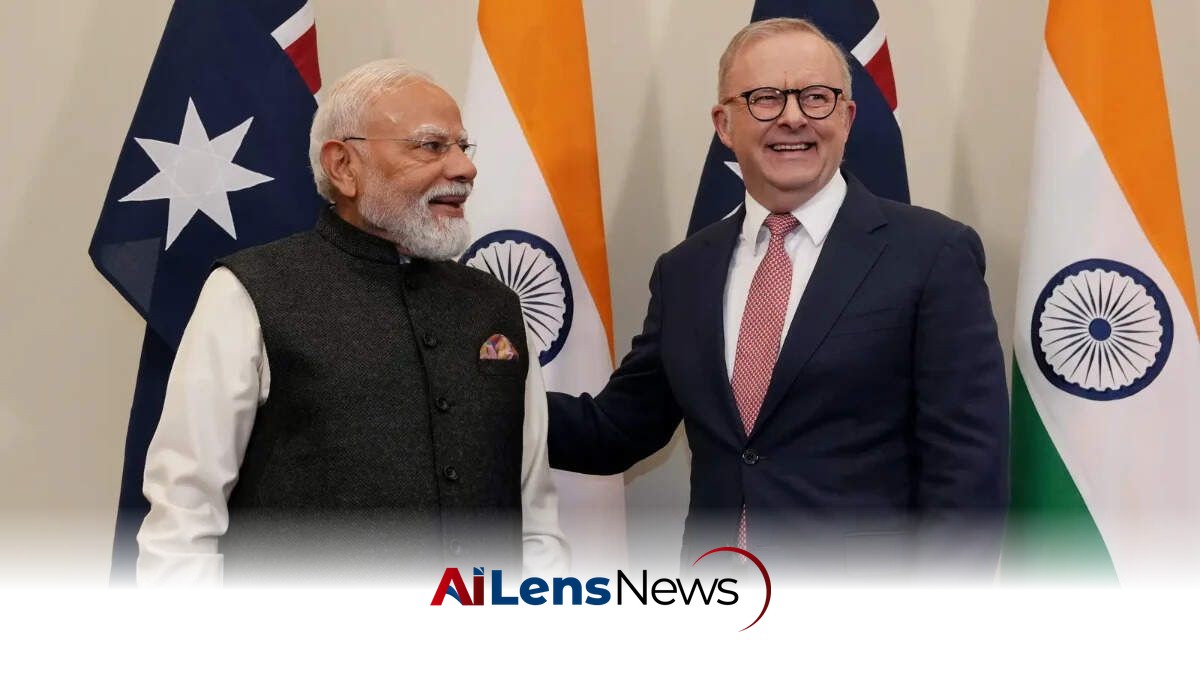


Prime Minister Narendra Modi urged Australian businesses to invest in India, emphasizing growth opportunities and the need for an early conclusion of the Comprehensive Cooperation Agreement.
New Delhi, India Jul 9, 2026 ALN: Melbourne: Prime Minister Narendra Modi on Thursday pitched India as a long-term investment destination for Australian businesses and called for the early conclusion of the proposed bilateral Comprehensive Cooperation Agreement (CECA). This call for collaboration comes amidst a backdrop of increasing ties between India and Australia, which have been strengthened by recent trade agreements and mutual interests in various sectors.
Modi made the remarks at the Australia-India CEOs Forum and the Roadmap Business event in Melbourne, which he jointly addressed with his Australian counterpart, Anthony Albanese. These events were attended by leading Indian and Australian CEOs and business leaders, according to India's Ministry of External Affairs (MEA). The presence of prominent business figures underscores the significance of the dialogue between the two nations and highlights the potential for future collaborations.
In a post on X after addressing the CEOs Forum, Modi remarked, "Since 2023, this forum has gained remarkable momentum, reflecting the growing confidence in our partnership. I thank PM Anthony Albanese for joining the interaction and sharing his vision for taking our ties to even greater heights." This statement reflects the evolving nature of the relationship between India and Australia, as both countries seek to deepen their and strategic ties.
During his address, Modi discussed opportunities across a wide range of sectors, including aviation, transport and logistics, financial services, critical minerals, technology, food processing, food security, and skilling. He emphasized that "India offers unmatched opportunities for growth and innovation" and extended an invitation to Australian businesses to invest and innovate in India. This appeal is indicative of India's broader strategy to attract foreign direct investment (FDI), which is seen as a critical driver for growth and development.
Addressing the Forum, Modi stated that India's "strong growth, policy reforms, digital transformation, and expanding innovation ecosystem were creating new business opportunities for Australian partners," the MEA said in a statement. This assertion is backed by India's robust performance in recent years, characterized by a steady GDP growth rate, a burgeoning middle class, and an increasing digital that presents numerous avenues for investment.
Moreover, Modi noted the complementarities between the Indian and Australian economies, highlighting the "vast opportunities" available in India across various sectors. These include manufacturing, clean energy, critical minerals, mining, infrastructure, artificial intelligence, fintech, and digital services. The emphasis on sectors such as clean energy and critical minerals reflects a global shift towards sustainability and the increasing demand for green technologies and resources.
Modi asserted that India's scale and Australian expertise make for a "win-win proposition" and invited Australian investors to take advantage of opportunities for long-term investments in India. This partnership is particularly relevant given the ongoing global transition towards renewable energy and the critical role that both countries can play in this arena. India's commitment to achieving net-zero emissions by 2070 aligns with Australia's strengths in mining and resource extraction, particularly in critical minerals essential for green technologies.
He welcomed the growing presence of Australian universities in India, highlighting that deeper collaboration in higher education, research, innovation, and skill development would not only make talent in both countries future-ready but also help them tap into global opportunities. The focus on education and skill development is crucial, as it ensures that the workforce in both nations is equipped to meet the demands of a rapidly changing global .
At the Roadmap business event, Modi highlighted the "natural synergies" between India and Australia and encouraged businesses to work together in sectors including critical minerals, semiconductors, artificial intelligence, electric vehicles (EVs), and defense. The emphasis on these sectors is indicative of the strategic importance both countries place on technology and innovation as drivers of growth.
The event was attended by more than 200 CEOs and business leaders from both sides, underscoring the level of interest and engagement from the business community in fostering closer ties. Modi emphasized that "shared democratic values, a common vision for the Indo-Pacific, vibrant people-to-people ties, and strong political understanding created fertile ground for the business partnership between the two countries to grow and prosper together," as stated by the MEA.
He urged business leaders to leverage complementary strengths on both sides and create global solutions, especially in fields such as rare earths, lithium, batteries, electronics, EVs, semiconductors, artificial intelligence, and defense supply chains. This call to action is reflective of the growing recognition of the importance of collaboration in addressing global challenges, particularly in the context of supply chain vulnerabilities and the need for sustainable development.
Modi expressed satisfaction with the growth of trade and investment ties based on the Cooperation and Trade Agreement (ECTA) of 2022 and called for an early conclusion of the proposed CECA to propel business ties to a new level, the MEA reported. The ECTA was designed to enhance trade relations and remove barriers to commerce, and the proposed CECA aims to build on this foundation by further deepening cooperation and collaboration between the two nations.
He stated that for bilateral business ties to grow to the next level, it was important for Indian states and Australian provinces to forge "dynamic partnerships based on their core competencies." This statement highlights the need for localized approaches to collaboration, recognizing that different regions may have unique strengths and opportunities that can be leveraged for mutual benefit.
India and Australia are actively negotiating a CECA to build upon the foundational ECTA. This agreement is anticipated to enhance trade in goods and services and facilitate investment flows, thereby contributing to the resilience of both nations. Australia is currently India's 14th-largest trading partner, with bilateral trade in goods and services valued at USD 24.1 billion in 2025-26. This figure underscores the potential for growth in trade relations, particularly as both countries seek to diversify their partnerships in light of global shifts.
Modi arrived in Australia on Wednesday on the second leg of his three-nation tour. He was in Indonesia before this and will travel to New Zealand on the final leg of his visit. This tour reflects India's broader diplomatic strategy of strengthening ties with key partners in the Indo-Pacific region, which is increasingly viewed as a vital area for and strategic engagement. As India continues to assert its presence on the global stage, fostering partnerships with countries like Australia will be crucial for achieving its and geopolitical objectives.
To learn more about the latest developments in Trade & Commerce, stay updated with our exclusive reports and analyses on AiLensNews.

