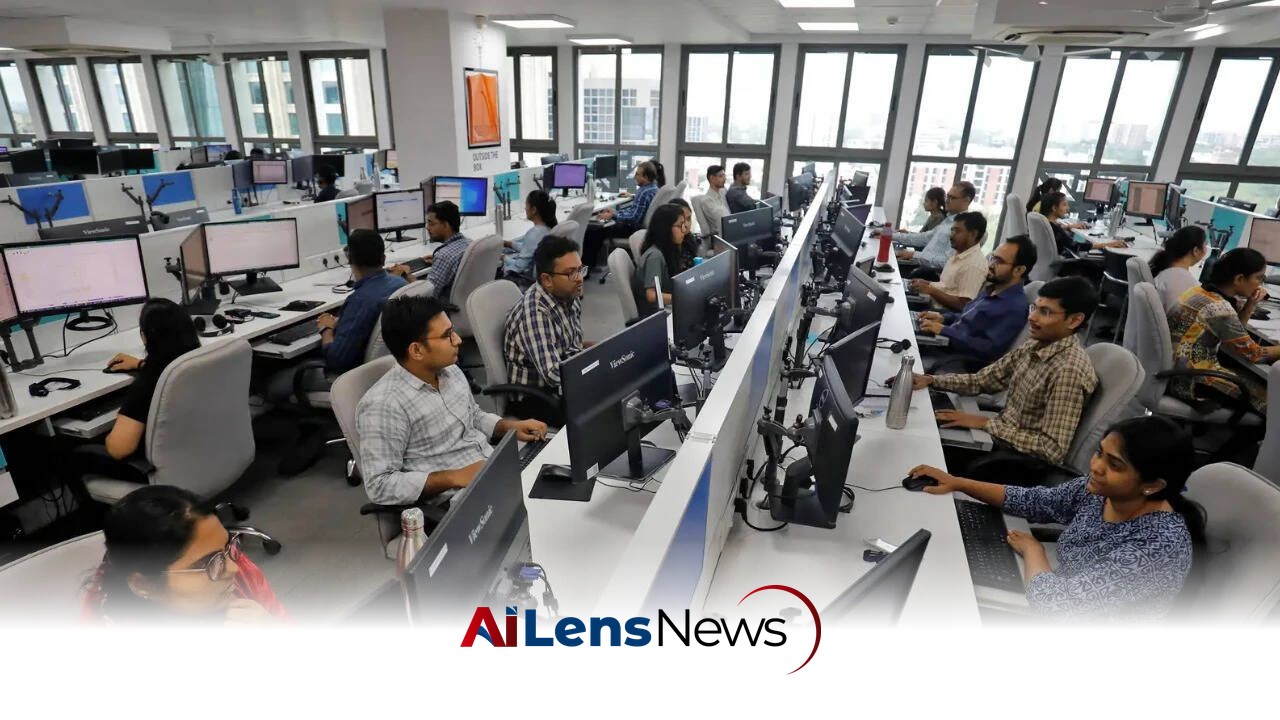


India's services sector growth slowed significantly in June, reaching a 17-month low due to weakened domestic demand and reduced client interest.
New Delhi, India Jul 3, 2026 ALN: New Delhi: India's services sector expanded at its slowest pace in 17 months in June as challenging market conditions and reduced client interest weighed on sales and output, according to a private survey released Friday. Exports, however, remained a bright spot, with overseas demand rising to a three-month high.
The HSBC India Services PMI Business Activity Index fell to 57.4 in June from 59.8 in May and 60.4 a year earlier. A reading above 50 indicates expansion, while one below 50 signals contraction. This decline in the index marks a notable downturn in the growth trajectory of the services sector, which has been a crucial component of India's landscape.
The services sector in India has historically been a significant driver of growth, contributing around 55% to the country's GDP. It encompasses a wide range of industries, including information technology, telecommunications, hospitality, and finance. The current slowdown, therefore, raises concerns about the overall stability and growth prospects of the country. The services sector has been a vital source of employment and innovation, and any slowdown could have far-reaching implications for the Indian .
Pranjul Bhandari, chief India economist at HSBC, noted that the loss of momentum points to more challenging market conditions and weaker demand, particularly at home. "Even so, external demand held up well as overseas sales stayed robust and growth reached a three-month high," she said. This observation suggests that while domestic consumers may be pulling back, international markets are still showing interest in Indian services, which could mitigate some of the adverse effects of domestic slowdowns. The resilience of external demand is particularly relevant in a globalized where international trade can provide a buffer against local fluctuations.
Manufacturing activity also softened, with the HSBC India Manufacturing PMI easing to a three-month low of 54.2 in June from 55 in May. The manufacturing sector, which has been recovering from the disruptions caused by the COVID-19 pandemic, is also facing headwinds. The decline in manufacturing activity, alongside the services slowdown, raises questions about the overall health of the Indian . Manufacturing is another pillar of the , responsible for a significant share of employment and export revenues. The interplay between the manufacturing and services sectors is critical, as both are interdependent and contribute to the overall stability.
As a result, the HSBC India Composite PMI, which combines manufacturing and services activity, declined to 57.1 in June from 59.3 in May, reflecting slower growth in sales and employment. The composite index is a crucial indicator as it provides a comprehensive view of the landscape, combining the performance of both major sectors. The drop in this index indicates a broader deceleration, which could have implications for investment and policy decisions going forward. Policymakers may need to closely monitor these trends to implement timely interventions that could support growth.
Looking ahead, service providers remained optimistic about output growth over the next 12 months, although overall business confidence slipped to a five-month low. Firms cited equipment purchases, marketing initiatives, and new client inquiries as reasons for optimism, while competition, difficult conditions, and rupee depreciation remained key concerns. The optimism among service providers is a critical factor as it could influence hiring and investment decisions, potentially leading to a recovery if external conditions remain favorable. However, this optimism is tempered by the reality of the current environment, which necessitates a cautious approach to future planning.
New business growth slowed to its weakest pace in more than two-and-a-half years. This slowdown in new business is particularly concerning as it suggests that companies are finding it increasingly difficult to attract new clients, which is essential for sustaining growth. The services sector's reliance on new business to drive expansion underscores the importance of addressing the underlying issues that are contributing to the current slowdown. Companies may need to innovate and adapt their offerings to meet evolving consumer preferences and market demands.
In summary, the June data indicates a significant slowdown in India's services sector, driven by domestic demand challenges, while external demand continues to provide some support. The interplay between domestic and international markets will be critical in determining the future trajectory of the services sector. Policymakers may need to consider measures to stimulate domestic demand, such as fiscal incentives or support for small and medium enterprises, to counterbalance the effects of reduced client interest. Furthermore, the ongoing global conditions, including inflationary pressures and geopolitical tensions, could also impact India's export capabilities and overall performance.
As the Indian navigates these challenges, it will be essential for businesses to adapt to the changing landscape. Embracing digital transformation, enhancing customer engagement, and diversifying market strategies may be necessary steps for firms aiming to sustain growth in a more competitive and uncertain environment. The resilience of the services sector will be tested in the coming months, and its recovery will be crucial for the broader outlook of the .
In conclusion, while the current data presents a sobering picture of the services sector's performance, it also highlights the importance of adaptability and innovation in overcoming challenges. The ability of businesses to pivot in response to market demands, coupled with supportive government policies, could play a pivotal role in revitalizing growth in the months ahead. As India continues to emerge from the shadows of the pandemic, the focus will need to be on fostering a robust environment that encourages both domestic and international investment. The challenges ahead are significant, but with strategic planning and execution, there remains potential for recovery and growth in the Indian services sector.
To learn more about the latest developments in Macroeconomics, stay updated with our exclusive reports and analyses on AiLensNews.

