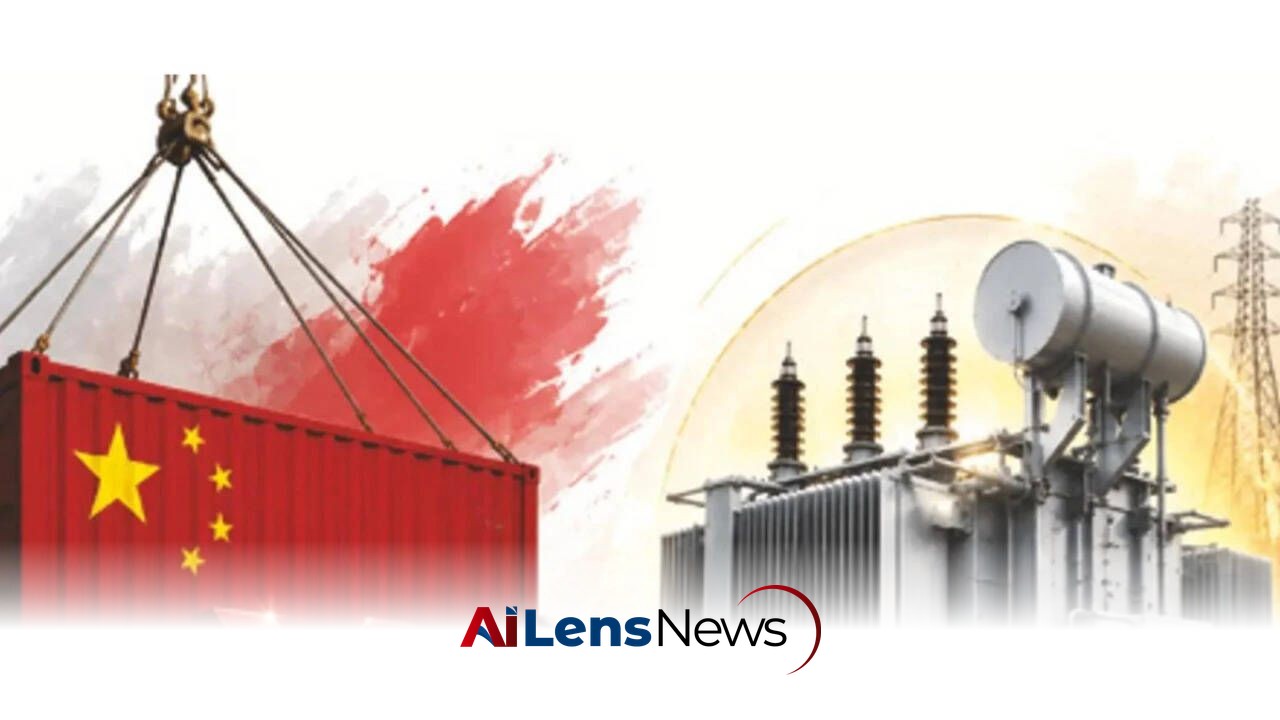


Indian transformer producers remain confident despite new Chinese competition, bolstered by strong demand and government policies favoring local manufacturing.
New Delhi, India Jul 9, 2026 ALN: Indian transformer manufacturers are navigating a complex landscape following the recent decision by the Indian government to lift restrictions on Chinese companies participating in local transmission projects. This strategic move, aimed at enhancing competition and potentially lowering costs for public-sector undertakings (PSUs), has not deterred Indian firms from maintaining a positive outlook on their operations and future growth prospects.
The Indian transformer market is crucial for the nation’s energy infrastructure, which requires continuous upgrades and expansions to meet the growing demand for electricity. Transformer makers in India have been bolstering their capabilities, and many are already engaged in significant capacity expansion projects. This proactive approach is a response not only to domestic demand but also to the increasing emphasis on renewable energy sources and the need for efficient power transmission systems.
As per the recent governmental directive, four Chinese firms have been granted a two-year exemption under the Public Procurement Order (PPO), allowing them to bid for local projects. These companies include TBEA, Nanjing Electric, New Northeast Electric, and Taikai Electric. Among these, TBEA is recognized for its substantial manufacturing capacity, while the other three are still in the process of scaling their operations. This distinction is critical as it highlights the competitive landscape that Indian manufacturers currently face.
The exemption specifically pertains to essential transmission components such as bushings, insulators, circuit breakers, power transformers, and gas-insulated switchgear (GIS). However, it is worth noting that the exemption is limited to tenders from PSUs, which are government-owned entities responsible for a significant portion of India’s infrastructure projects. This limitation is designed to protect local manufacturers by ensuring that a substantial portion of the components—between 50% to 60%—must be sourced from domestic suppliers. Such a requirement is intended to maintain a competitive edge for Indian firms while still allowing for some level of foreign participation.
Satyen Mamtora, Managing Director and CEO of Transformers & Rectifiers (India) Ltd (Taril), expressed confidence in the resilience of the Indian transformer manufacturing sector. With a robust order book valued at ₹7,600 crore, Mamtora indicated that this provides a visibility of approximately 30 months for ongoing projects. He emphasized that he does not anticipate any significant pricing pressure from the newly permitted Chinese competitors, suggesting that Indian manufacturers are well-positioned to sustain their market share.
However, the industry is not without its challenges. Delays in the delivery of transformers have previously led to the postponement of entire substation projects, even when other necessary equipment is ready for deployment. This situation has created a ripple effect, slowing down the ordering processes across various product categories and grid equipment. Timely delivery is critical in the power sector, where infrastructure projects are often interdependent.
The government’s decision to permit Chinese manufacturers also raises questions about the long-term implications for domestic firms. Industry experts have pointed out that while the current measures aim to bolster local production, any future extension of exemptions to imported components could create competitive pressures for Indian manufacturers. The balance between fostering competition and protecting local industries is a delicate one, and stakeholders are closely monitoring the situation.
N Venu, Managing Director of Hitachi Energy India, highlighted the importance of the Make in India initiative in shaping the government's policies. He expressed confidence that the Indian government is committed to ensuring a level playing field, considering factors such as subsidies and incentives. This sentiment underscores the broader context of India's strategy, which seeks to enhance local manufacturing capabilities while attracting foreign investment and expertise. Venu’s assertion reflects a belief in the potential for Indian companies to thrive by leveraging advanced technology and skilled talent in the energy sector.
The decision to allow Chinese firms to bid is also seen in the context of broader geopolitical dynamics. India has been cautious about its engagement with China, particularly in the wake of border tensions and trade imbalances. The lifting of restrictions could be interpreted as a pragmatic move to ensure that the country’s infrastructure projects are not hindered by a lack of competition, especially in light of the pressing need for modernization in the power sector.
Moreover, the global energy landscape is evolving, with a significant shift towards renewable energy sources. As India aims to increase its renewable energy capacity, the demand for efficient and reliable power transmission systems will only grow. This presents an opportunity for both domestic and foreign manufacturers to contribute to the energy transition. The ability of Indian firms to innovate and adapt to new technologies will be crucial in maintaining their competitive edge in this rapidly changing environment.
In conclusion, while the re-entry of Chinese transformer manufacturers into the Indian market presents challenges, Indian firms remain optimistic about their prospects. With strong order books, ongoing capacity expansions, and a commitment to local manufacturing, they are poised to navigate this new competitive landscape effectively. The government's careful balance of fostering competition while protecting domestic industries will be key to ensuring the sustainable growth of India's power transmission sector in the years to come.
To further understand the implications of this policy shift, it is essential to consider the historical context of the Indian transformer industry. Over the past decades, the Indian government has implemented various initiatives aimed at boosting local manufacturing capabilities. The 'Make in India' campaign, launched in 2014, has been a cornerstone of this strategy, encouraging both domestic and foreign companies to manufacture in India. The transformer sector, being integral to the power infrastructure, has benefitted from these initiatives, leading to increased investments and technological advancements.
Additionally, the Indian transformer market has seen a surge in demand due to the government's focus on electrification and infrastructure development. As part of its commitment to achieving 24/7 power supply for all citizens, the government has invested heavily in expanding the electricity grid and enhancing transmission efficiency. This has created a favorable environment for transformer manufacturers, who are now tasked with meeting the growing demand for reliable and efficient power transmission solutions.
Despite the optimism surrounding the Indian transformer industry, the re-entry of Chinese manufacturers poses certain risks. The Chinese firms, with their established manufacturing capabilities and competitive pricing, may disrupt the market dynamics, particularly if they can offer lower costs for similar products. This could lead to increased competition, potentially forcing Indian manufacturers to either innovate or reduce prices, which may impact their profit margins.
Furthermore, the geopolitical tensions between India and China add another layer of complexity to this situation. The relationship between the two nations has been strained in recent years, particularly following border disputes and trade disagreements. These tensions may influence public sentiment and consumer preferences, with some stakeholders advocating for a complete ban on Chinese products in favor of supporting local industries. Such sentiments could further complicate the operational landscape for both Indian and Chinese manufacturers in the region.
In light of these challenges, Indian transformer manufacturers are focusing on enhancing their technological capabilities and diversifying their product offerings. Many companies are investing in research and development to create innovative solutions that cater to the evolving needs of the energy sector. This includes the development of smart transformers that integrate digital technology for improved monitoring and efficiency, aligning with the global trend towards smart grid solutions.
Moreover, collaborations between Indian firms and international technology providers are becoming increasingly common. These partnerships not only facilitate knowledge transfer but also enable Indian manufacturers to access advanced technologies that can enhance their competitiveness in the market. By leveraging these collaborations, Indian firms aim to position themselves as leaders in the energy sector, capable of meeting both domestic and international demands.
Overall, the Indian transformer industry stands at a pivotal crossroads. The government's decision to permit Chinese firms to participate in local projects reflects a broader strategy to enhance competition and drive down costs. While this may pose challenges for domestic manufacturers, it also presents opportunities for growth and innovation. The ability of Indian firms to adapt to this new landscape, invest in technology, and collaborate with global partners will be crucial in determining their success in the coming years. As the energy sector continues to evolve, the resilience and adaptability of the Indian transformer industry will play a significant role in shaping the future of India's power infrastructure.
To learn more about the latest developments in Trade & Commerce, stay updated with our exclusive reports and analyses on AiLensNews.

