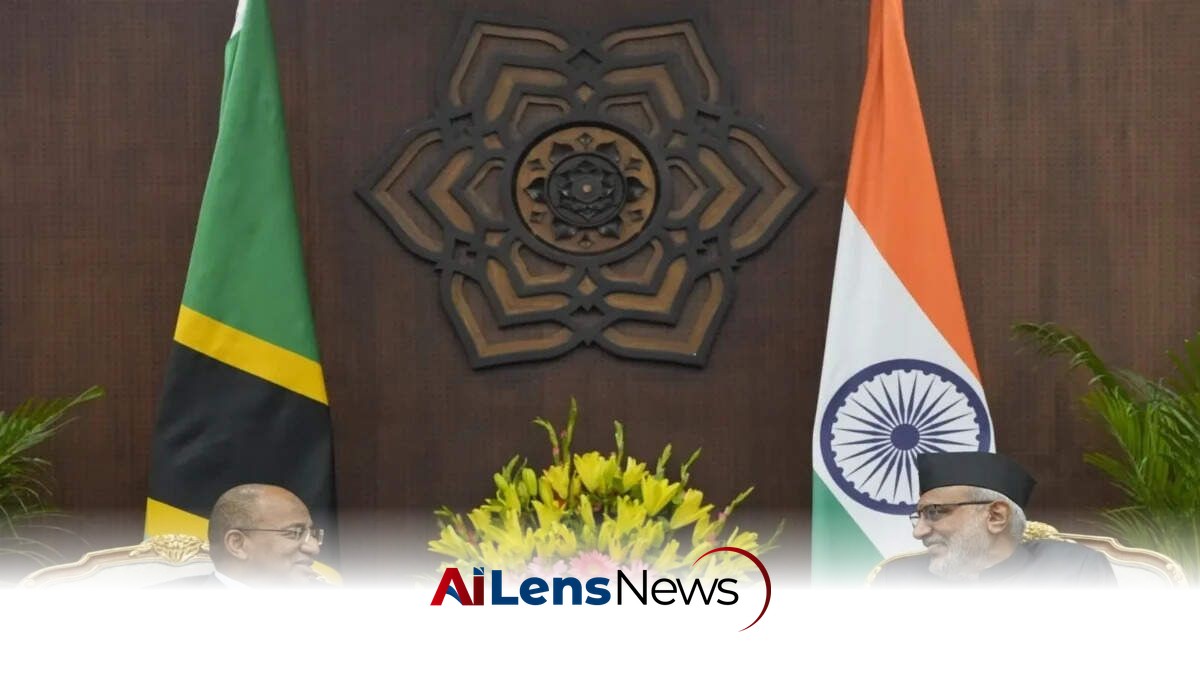


In a significant meeting in New Delhi, Vice President CP Radhakrishnan and Zanzibar President Hussein Ali Mwinyi focused on enhancing trade, investment, and educational cooperation between India and Zanzibar.
New Delhi, India Jul 19, 2026 ALN: New Delhi: Vice President CP Radhakrishnan on Sunday held "wide-ranging and productive discussions" with the Zanzibar President and Chairman of the Revolutionary Council, Hussein Ali Mwinyi, at the Uprashtrapati Bhawan in the national capital. This meeting reaffirmed the enduring India-Tanzania partnership and the special relationship India shares with Zanzibar.
In a post on X, the Vice President's Office detailed the meeting, stating, "Hon'ble Vice-President Shri C. P. Radhakrishnan today held wide-ranging and productive discussions with H.E. Dr. Hussein Ali Mwinyi, President of Zanzibar and Chairman of the Revolutionary Council, at the Uprashtrapati Bhawan, New Delhi." The discussions were characterized by a mutual understanding of the importance of collaboration between India and Zanzibar, highlighting the historical ties that have evolved over the years.
The discussions focused on strengthening cooperation in various sectors, including trade, investment, development partnerships, tourism, education, technology, and multilateral engagement. The Vice President emphasized India's commitment to partnering with Tanzania and Zanzibar in advancing shared development aspirations through enhanced cooperation across priority sectors. This commitment is significant as both nations are looking to leverage their strengths for mutual growth, particularly in areas that can benefit from India's technological advancements and Tanzania's rich natural resources.
President Mwinyi expressed his delight at visiting the IIT Madras campus in Chennai and praised India's support in establishing the IIT Madras Zanzibar Campus, calling it "a landmark initiative in bilateral educational cooperation." This initiative is particularly noteworthy as it represents a strategic investment in education, which is a cornerstone for sustainable development. The IIT Madras Zanzibar Campus aims to provide quality technical education and foster innovation, thereby equipping the youth of Zanzibar with the necessary skills to thrive in a rapidly changing global .
Furthermore, President Mwinyi appreciated India's assistance for water projects, ICCR scholarships, and ITEC training programs. These initiatives not only reflect India's commitment to capacity building in Zanzibar but also signify a broader approach to development partnerships that emphasize human resource development. The focus on water projects is particularly relevant given the global challenges posed by climate change and water scarcity, making such collaborations crucial for ensuring sustainable access to clean water in Zanzibar.
Earlier on Sunday, External Affairs Minister S Jaishankar also met President Mwinyi, aiming to deepen bilateral ties across key sectors, including digital technology, water infrastructure, artificial intelligence, healthcare, and higher education. Jaishankar described the dialogue as productive, emphasizing New Delhi's resolve to bolster developmental alliances with both Zanzibar and the United Republic of Tanzania. This multi-faceted approach to diplomacy underscores India's strategy of engaging with African nations through a lens of mutual benefit and respect, facilitating a platform for shared growth.
During his visit, President Mwinyi participated as the Chief Guest at the 63rd Convocation Ceremony of the Indian Institute of Technology (IIT) Madras. His presence at this significant academic event underscores the importance of educational ties between India and Zanzibar. He advocated for robust academic exchange programs, highlighting the IIT Madras Zanzibar operational facility as a key aspect of the relationship. Such exchanges can lead to a better understanding of cultural and academic practices, fostering goodwill and collaboration between the two nations.
The ongoing visit is expected to catalyze future-ready pacts in healthcare infrastructure, industrial capacity building, and digital public architecture, positioning the IIT Madras Zanzibar campus as a blueprint for India's geopolitical and educational outreach across the Global South. The emphasis on healthcare infrastructure is particularly timely as nations around the world continue to grapple with the impacts of the COVID-19 pandemic, necessitating stronger health systems and preparedness strategies.
In summary, the meeting between Vice President Radhakrishnan and President Mwinyi marks a significant step in enhancing the strategic partnership between India and Tanzania, with a strong focus on education, trade, and mutual development. This partnership is not only beneficial for both nations but also serves as a model for other countries looking to establish similar collaborative frameworks. The discussions held during this visit are expected to lead to tangible outcomes that can positively impact the lives of people in both Zanzibar and India, reinforcing the idea that international cooperation can lead to sustainable development and shared prosperity.
Historically, India and Tanzania share a long-standing relationship that dates back to the early 1960s when both countries were working towards independence and self-determination. This historical context adds depth to their contemporary engagements, as both nations seek to build on their shared values and aspirations. The presence of leaders like President Mwinyi in India signifies a renewed commitment to this partnership, especially in light of the changing global landscape where developing countries are increasingly looking to collaborate on various fronts to address common challenges.
Moreover, the significance of Zanzibar in the broader context of Tanzania cannot be understated. As a semi-autonomous region, Zanzibar has unique cultural and historical attributes that enrich the relationship with India. The island's strategic location along key maritime routes also presents opportunities for enhanced trade and investment, further solidifying the ties between the two nations.
In conclusion, the discussions between Vice President Radhakrishnan and President Mwinyi are a reflection of the evolving dynamics of international relations, where education, technology, and sustainable development take center stage. As both nations move forward, their partnership will likely serve as a critical component in addressing regional and global challenges, fostering a spirit of cooperation that transcends borders.
To learn more about the latest developments in Trade & Commerce, stay updated with our exclusive reports and analyses on AiLensNews.

