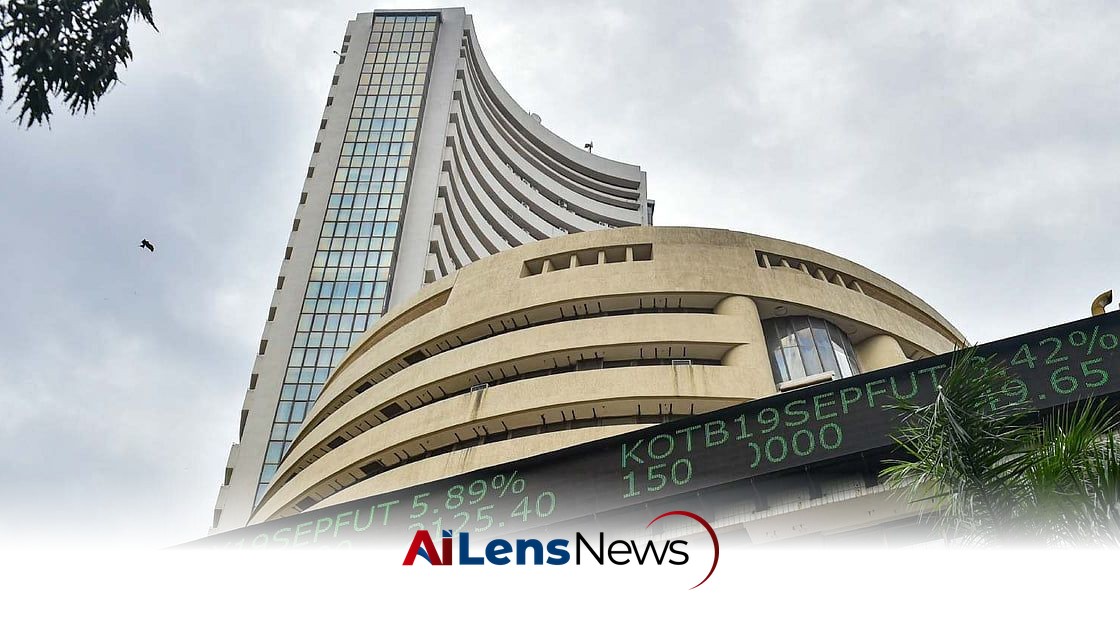


The stock markets ended a five-day losing streak with the Sensex rising by 776 points, driven by a significant drop in crude oil prices and easing tensions in West Asia.
New Delhi, India Jul 27, 2026 ALN: Stock markets in India experienced a significant rebound on Monday, breaking a five-day losing streak. The benchmark Sensex surged by 776 points, or 1.02 percent, closing at 76,835.78. During the trading session, the index reached an intraday high of 76,901.51, marking an increase of 841.74 points or 1.10 percent at its peak. The 50-share NSE Nifty index also saw a robust gain, climbing 228.50 points, or 0.96 percent, to finish at 23,995.95, thus ending its recent trend of declines.
This rally in the stock market was largely attributed to a sharp decline in crude oil prices, which fell significantly amid easing geopolitical tensions in West Asia. Brent crude, the global oil benchmark, saw a notable drop of 9.40 percent, settling at USD 87.64 per barrel. Such a decline in crude prices is generally seen as a positive indicator for economies reliant on oil imports, as it can lead to reduced inflationary pressures and lower import costs. Lower oil prices can also help improve the trade balance of oil-importing countries like India, potentially leading to a stronger currency.
The context of this market movement is crucial. The previous week had seen a series of declines across major indices, attributed to rising concerns over inflation and the potential impact of escalating tensions in oil-producing regions. The market's turnaround on Monday can be seen as a relief rally, with investors responding positively to the news of a pause in military strikes in West Asia. This pause has alleviated fears regarding potential disruptions in oil supply, which had been a significant concern for market participants. The geopolitical landscape, particularly in oil-rich regions, has long been a critical factor influencing global oil prices and, by extension, stock market performance.
Market analysts, including Vinod Nair, Head of Research at Geojit Investments Limited, noted that the correction in crude oil prices, combined with a decline in long-term bond yields, has raised hopes for a more stable economic environment. The easing of geopolitical tensions is expected to contribute to a more favorable outlook for both domestic and foreign investors. The bond market's reaction, with yields falling, suggests that investors are anticipating a more accommodative monetary policy stance from central banks in response to lower inflation expectations.
In terms of individual stock performance, several companies within the Sensex index saw substantial gains. Eternal, for instance, led the pack with a remarkable increase of 5.70 percent. Other notable gainers included InterGlobe Aviation, Infosys, Bajaj Finance, Asian Paints, and Mahindra & Mahindra. The aviation sector, in particular, has been sensitive to fuel price fluctuations, and lower oil prices can significantly enhance profitability for airlines. Conversely, HDFC Bank, Power Grid, and Axis Bank were among the laggards, indicating a mixed performance across various sectors. The banking sector's performance is often closely tied to economic growth prospects, and investor sentiment can shift rapidly based on macroeconomic indicators.
Foreign Institutional Investors (FIIs) had been active in the market prior to this rebound, having offloaded equities worth Rs 3,892.77 crore on Friday, as per exchange data. This trend of selling by FIIs had contributed to the downward pressure on the markets in the preceding days. However, the positive sentiment following the decline in oil prices may encourage a reversal of this trend, as investors reassess their positions in light of improved economic indicators. FIIs play a crucial role in the Indian equity market, and their investment decisions can significantly influence market trends.
In a broader context, the performance of Asian markets mirrored the positive sentiment seen in India. Major indices such as South Korea's KOSPI, Japan's Nikkei 225, Shanghai's SSE Composite index, and Hong Kong's Hang Seng index all ended higher, reflecting a regional recovery amid easing fears of inflation and geopolitical instability. European markets also exhibited strength, trading higher, while U.S. markets finished mostly in positive territory as well. This synchronized recovery across global markets underscores the interconnectedness of global economic conditions and investor sentiment.
Looking back at the recent performance of the Sensex, it is notable that on the preceding Friday, the index had declined by 331.62 points, or 0.43 percent, closing at 76,059.77. The Nifty index also experienced a dip, falling by 102.15 points, or 0.43 percent, to end at 23,767.45. This pattern of volatility underscores the sensitivity of the markets to global economic indicators and geopolitical events. Investors are increasingly aware that market movements can be driven by external factors, and this awareness can lead to more cautious trading strategies.
The implications of the recent market movements are significant for investors and policymakers alike. A sustained drop in crude oil prices could lead to lower inflation rates, which in turn may influence the Reserve Bank of India's monetary policy decisions. If inflation continues to ease, it may provide the central bank with more flexibility in managing interest rates, which could further stimulate economic growth. Lower interest rates can lead to increased borrowing and spending, creating a positive feedback loop for the economy.
Moreover, for individual investors, the current market conditions present both opportunities and risks. As the markets stabilize, investors may look to re-enter positions that had previously been sold off during periods of uncertainty. However, caution is warranted, as geopolitical tensions can resurface and impact market dynamics swiftly. Investors are advised to stay informed about global events and economic data releases that could affect market sentiment.
In conclusion, the rebound in stock markets following a drop in crude oil prices highlights the interconnectedness of global economic factors and domestic market performance. The ongoing monitoring of geopolitical developments in West Asia, along with domestic economic indicators, will be crucial for investors in navigating the current landscape. As the markets continue to react to these evolving conditions, stakeholders will need to stay informed and agile in their investment strategies. The interplay between crude oil prices, inflation, and monetary policy will remain a focal point for market participants in the coming weeks, as they seek to make informed decisions in a complex and rapidly changing environment.
To learn more about the latest developments in Inflation & Prices, stay updated with our exclusive reports and analyses on AiLensNews.

