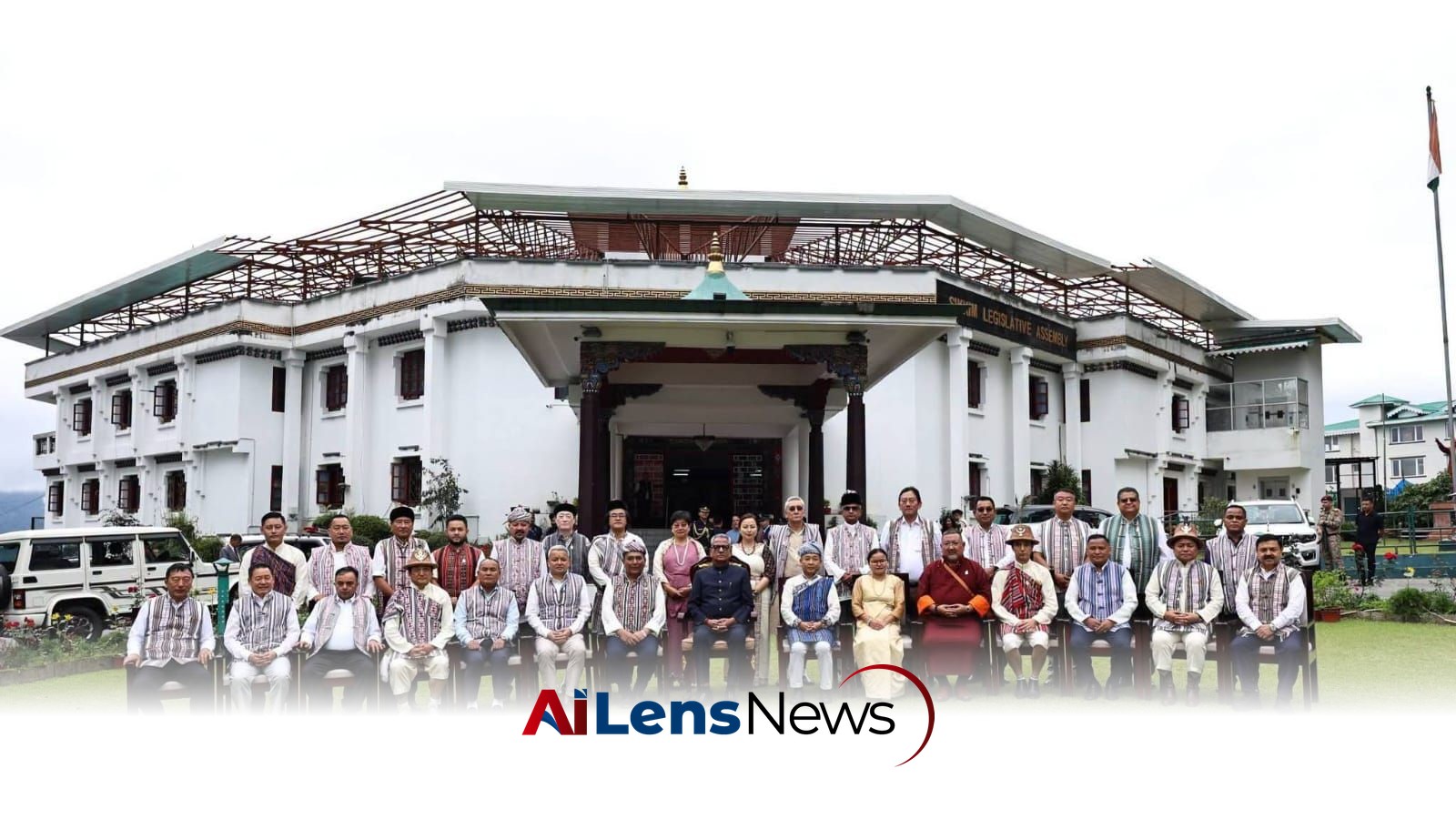


The Legislative Assembly's Budget Session commenced with a proposed gross expenditure of ₹19,215 crore, focusing on infrastructure, healthcare, and education.
Gangtok, India Jul 20, 2026 ALN: Gangtok: The first day of the four-day Budget Session of the Eleventh Legislative Assembly commenced on Monday with Governor Om Prakash Mathur’s address, followed by the presentation of the General Budget for the financial year 2026-27 by Chief Minister and Finance Minister Prem Singh Tamang. The government proposed a gross expenditure of ₹19,215 crore, outlining a development roadmap focused on infrastructure, healthcare, education, agriculture, social welfare, and sustainable growth.
Presenting the Budget in the Assembly, Chief Minister Prem Singh Tamang proposed a gross expenditure of ₹19,215 crore for 2026-27, with a net expenditure of ₹18,455 crore after accounting for recoveries. Revenue expenditure has been estimated at ₹11,733 crore, while capital expenditure stands at ₹5,896 crore, excluding loans and advances. In addition, ₹2,460 crore has been earmarked under Centrally Sponsored Schemes.
The Chief Minister said the Budget would be financed through the State’s own revenues, transfers from the Government of India, and prudent borrowings, with allocations prioritizing good governance, infrastructure development, and social welfare. This financial strategy reflects an understanding of the state’s economic landscape, which has been shaped by both local initiatives and support from central government schemes.
Highlighting the state’s economic performance, Tamang informed the House that has recorded an average real Gross State Domestic Product (GSDP) growth of over 12.6 percent during the past eight years and currently has the highest per capita GSDP in the country. The state’s GSDP at current prices is projected to reach ₹62,973 crore in 2026-27. This impressive growth can be attributed to various factors, including the state's focus on sustainable tourism, organic farming, and investments in infrastructure.
Reaffirming the government’s vision of Viksit, he said the state aims to sustain an annual GSDP growth of over 13 percent through sound governance, strategic investments, and citizen-centric development while maintaining fiscal responsibility and sustainable debt levels. The term 'Viksit' translates to 'developed' in , and it embodies the government's commitment to elevating the standard of living for all citizens through comprehensive development strategies.
The Budget announced several sector-specific initiatives. To strengthen agriculture, the government will introduce a State Interest Subvention Scheme, enabling eligible farmers who repay Kisan Credit Card crop loans on time to access credit at an effective interest rate of one percent. This initiative is expected to improve financial accessibility for farmers, thereby enhancing agricultural productivity and sustainability. The government also announced the Mero Alaichi, Mero Dhan Mission to revive the large cardamom sector through scientific research, disease-resistant varieties, and farmer field laboratories. Large cardamom is a significant cash crop for , and revitalizing this sector could have positive economic implications for many farmers.
In infrastructure, around 570 kilometers of roads will be upgraded using Mastic Asphalt Surfacing at an estimated cost of ₹546 crore to improve durability and all-weather connectivity. The government will also continue implementing the Asian Development Bank-assisted Power Sector Development Project and informed the House that over 92,000 smart meters have already been installed across the state. These initiatives are part of a broader strategy to enhance connectivity and energy efficiency, which are critical for supporting economic growth.
Plans were also announced for satellite townships around Gangtok, the revitalization of the capital’s historic core, and further expansion of digital governance systems including e-Budget, e-Payment, and Aadhaar-based Direct Benefit Transfer. These measures are aimed at improving urban planning and governance, making services more accessible to residents, and ensuring that the benefits of development reach the intended beneficiaries.
Earlier, inaugurating the Budget Session, Governor Om Prakash Mathur described the 2026-27 Budget as a roadmap towards a “Sunaulo, Samriddha ani Samarth,” reaffirming the government’s commitment to inclusive and sustainable development. The phrase translates to 'Golden, Prosperous, and Capable' in and encapsulates the aspirations of the state’s leadership to foster a thriving economy that is equitable and sustainable.
Congratulating the people of on the completion of 50 years of Statehood, the Governor highlighted the significance of the visits by the President, Prime Minister, and Vice President during the Golden Jubilee celebrations. He also referred to major achievements including being declared a Fully Literate State, the conferment of the President’s Colour on Police, the launch of the Aama Didi Bahini Pink Bus Service, and recognition of as India’s first Paperless Judiciary. These milestones reflect the state’s commitment to social development, gender equality, and technological advancement.
The Governor said the Budget focuses on strengthening tourism, organic agriculture, horticulture, infrastructure, and connectivity while supporting the national vision of Viksit Bharat. He also outlined five strategic priorities—strengthening productive sectors, improving infrastructure and connectivity, investing in human capital, promoting environmentally sustainable growth, and ensuring planned urbanization. These priorities align with broader national objectives aimed at fostering holistic development across various sectors.
During his Budget speech, the Chief Minister also announced major healthcare initiatives. These include a statewide Human Papilloma Virus (HPV) screening programme covering around 1.5 lakh women aged 30 to 65 years to eliminate cervical cancer, operationalization of ’s first Renal Transplant Programme at STNM Hospital during the current financial year, and the establishment of an Assisted Reproductive Technology Centre to address declining fertility rates. These healthcare initiatives are crucial for improving public health outcomes and ensuring that citizens have access to essential medical services.
He further announced that the Government Medical College at Sochakgang will commence admissions with an annual intake of 100 MBBS students from the academic year 2026-27. This development is expected to bolster the healthcare workforce in the state, addressing the growing need for qualified medical professionals to serve the population.
The Chief Minister said the government will continue to strengthen education, skill development, and entrepreneurship through the INSPIRES programme, which is expected to benefit over three lakh women and youth through employment generation, entrepreneurship support, and specialized training in tourism, adventure sports, and emerging creative industries. This focus on skill development is essential for empowering the youth and enhancing their employability in a rapidly changing job market.
The Assembly also witnessed the introduction of six Bills, including the Medical Council for Indian System of Medicine Bill, 2026, which seeks to establish a statutory council to regulate Ayurveda, Yoga, Naturopathy, Unani, Siddha, Sowa Rigpa, and Homeopathy practitioners in the state. This legislative move aims to ensure the quality and safety of traditional medical practices, which are integral to ’s healthcare landscape.
Among education-related legislations introduced were amendments to the Private Universities (Establishment and Regulation) Act, 2025, paving the way for the proposed Scholars University of Skills & Innovation at Melli, amendments to the Board of Open Schooling and Skill Education Act, and a Bill to establish the Board of Open Schooling and Vocational Education. These legislative changes are indicative of the government’s commitment to enhancing educational opportunities and fostering skill development.
The House also introduced the National Council for Skill Education (Repealing) Bill, 2026, and the Fire and Emergency Services (Amendment) Bill, 2026, aimed at decriminalizing minor regulatory offences to promote ease of doing business. These reforms are expected to create a more conducive environment for entrepreneurship and investment in the state, thereby supporting economic growth.
To learn more about the latest developments in Economic Reports, stay updated with our exclusive reports and analyses on AiLensNews.

