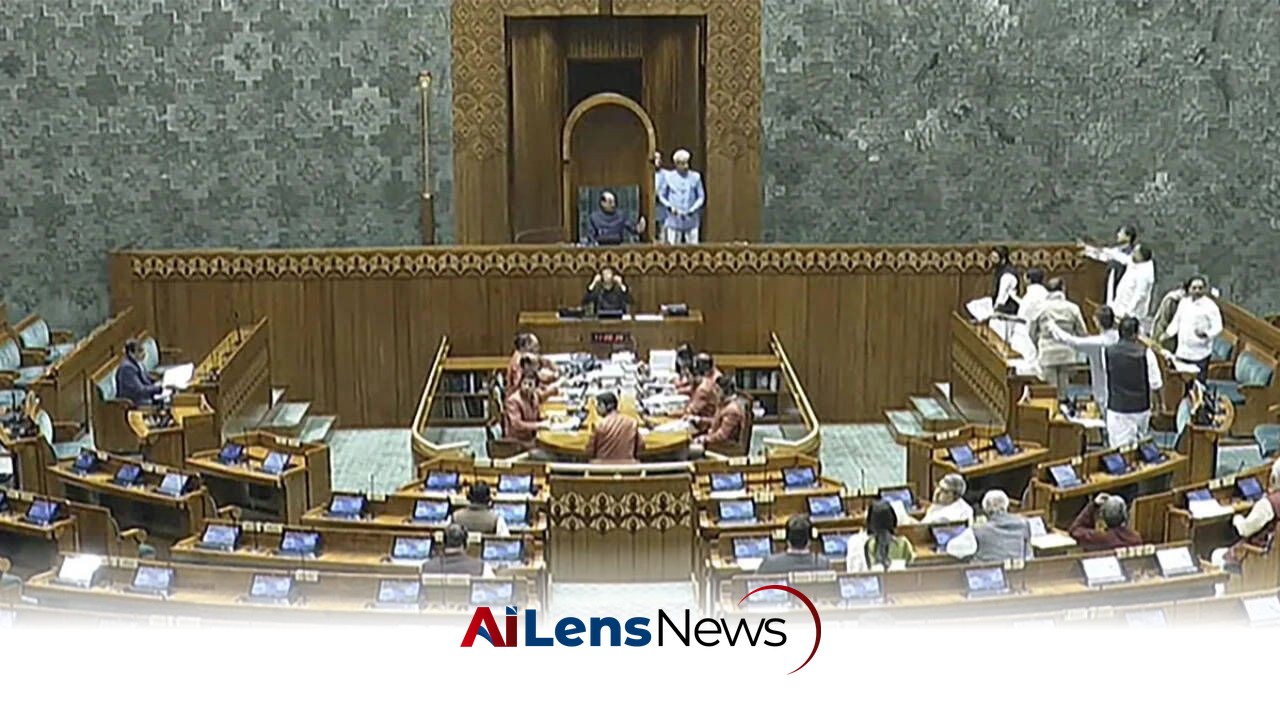


The upcoming Monsoon session of Parliament will see significant bills, including one to protect Vande Mataram and amend the FCRA Act.
New Delhi, India Jul 16, 2026 ALN: A bill aimed at granting the national song Vande Mataram the same statutory protection as the national anthem Jana Gana Mana is set to be introduced during the Lok Sabha's Monsoon session, which begins on July 20. This legislation, known as the Prevention of Insults to National Honour (Amendment) Bill, 2026, seeks to make any insult or obstruction to the singing of Vande Mataram a punishable offense. The proposed bill is significant in the context of national identity and pride, as Vande Mataram has historically been a symbol of India's struggle for independence and has deep-rooted cultural and emotional significance for many Indians.
Vande Mataram, composed by Bankim Chandra Chatterjee and set to music by Rabindranath Tagore, was first sung during the Indian National Congress session in 1905. It played a pivotal role in the Indian independence movement, inspiring countless freedom fighters. While Jana Gana Mana was declared the national anthem in 1950, Vande Mataram holds a special place in the hearts of many and is often sung at national events and gatherings. The introduction of this bill reflects the government's intention to reinforce the importance of this song in the national consciousness and to protect it from perceived disrespect.
In addition to the Vande Mataram bill, the government plans to introduce a bill aimed at tightening regulations on foreign contributions to non-governmental organizations (NGOs). This legislation, the Foreign Contribution (Regulation) Amendment (FCRA) Bill, 2026, was previously introduced during the Budget session but did not progress due to opposition from certain groups in Kerala. The FCRA Bill seeks to impose stricter controls on the flow of foreign funds to NGOs, which the government claims are necessary to prevent misuse of funds and ensure that foreign contributions do not interfere with India's sovereignty. Critics, however, argue that such regulations may hinder the functioning of NGOs that play crucial roles in social welfare and development, particularly in areas like health, education, and human rights.
Another significant bill listed for consideration is the Registration of Births and Deaths (Amendment) Bill, 2026. This bill aims to impose stricter regulations on the delayed registration of births and deaths. Under the proposed changes, individuals who fail to report births and deaths within two years may face a more stringent registration process, requiring approval from a first-class judicial magistrate. This move is intended to improve the accuracy of demographic data, which is essential for effective governance and planning. Accurate birth and death records are vital for public health initiatives, resource allocation, and the formulation of policies that address the needs of the population.
The lack of timely registration can lead to complications in accessing government services and benefits, including education and healthcare. By enforcing stricter regulations, the government aims to encourage timely reporting and ensure that all citizens are accounted for in official records. However, this could also place additional burdens on families during of grief, as they may need to navigate bureaucratic processes to secure the registration of their loved ones.
The government is also set to introduce the Viksit Bharat Shiksha Adhishthan Bill, 2025, which proposes a comprehensive overhaul of India’s higher education sector. This legislation aims to dissolve existing regulatory bodies such as the University Grants Commission (UGC), All India Council for Technical Education (AICTE), and National Council for Teacher Education (NCTE), creating a single, unified regulatory commission. The proposed changes are part of a broader vision to streamline the higher education system, reduce bureaucratic red tape, and enhance the quality of education in India.
The current regulatory framework has been criticized for being fragmented and often inefficient, leading to challenges in maintaining educational standards and responding to the evolving needs of the job market. By consolidating these bodies, the government hopes to create a more coherent approach to higher education that fosters innovation, research, and skill development. This overhaul is particularly timely as India seeks to position itself as a global leader in education and research, attracting international students and faculty.
Furthermore, the government plans to introduce the Income-tax (Amendment) Bill to replace the Ordinance that exempts foreign investors from income tax on interest earnings and capital gains from investments in government securities. This move is aimed at attracting foreign capital amidst pressures from global fluctuations and domestic challenges. By providing tax incentives, the government hopes to stimulate investment in key sectors, thereby boosting growth and job creation.
Additionally, the Micro, Small and Medium Enterprises Development (Amendment) Bill, 2026 is also on the agenda. This bill seeks to align the existing MSME Development Act with current market conditions to enhance the ease of doing business. MSMEs are crucial to India's , contributing significantly to employment and industrial output. By updating the regulatory framework, the government aims to support the growth of these enterprises, making it easier for them to access credit, resources, and markets.
As the Monsoon session approaches, these legislative proposals reflect the government's efforts to address various socio- issues and enhance regulatory frameworks across different sectors. The introduction of these bills indicates a proactive approach to governance, aiming to respond to the evolving needs of the nation while also reinforcing national pride through the protection of cultural symbols like Vande Mataram. However, the implications of these legislative changes will need to be closely monitored, as they may have far-reaching effects on civil society, education, and development in India.
To learn more about the latest developments in Economic Reports, stay updated with our exclusive reports and analyses on AiLensNews.

