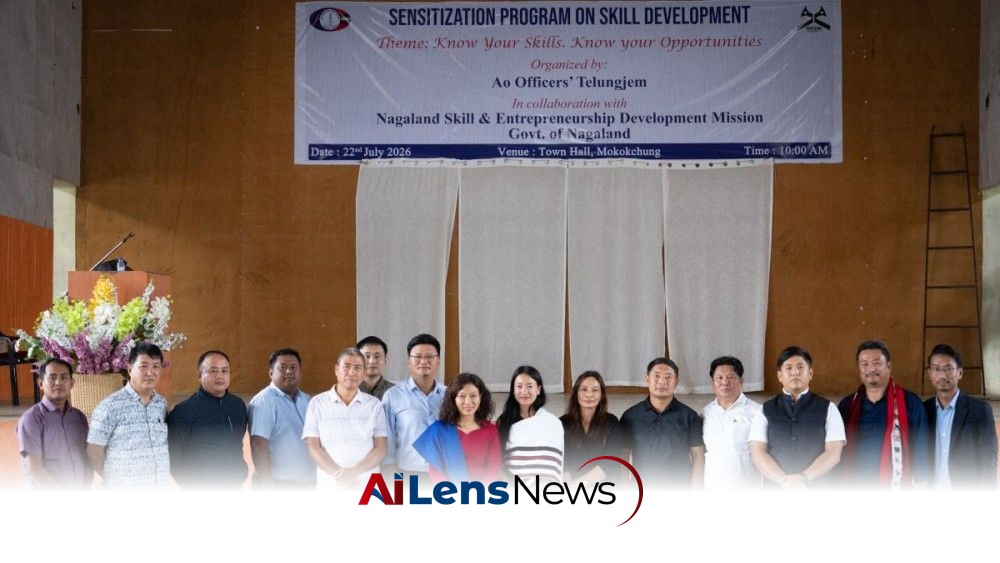


With only 96 posts available in the Public Service Commission, over 16,000 candidates are vying for a chance, highlighting a significant job crisis in the state.
Kohima, India Jul 22, 2026 ALN: Job Crunch in : 16,000 Candidates Compete for 96 NPSC Posts
In a striking illustration of the intense competition for government jobs in , a staggering 16,000 candidates recently appeared for preliminary examinations for just 96 posts advertised by the Public Service Commission (NPSC) in 2025. This translates to an overwhelming ratio of approximately 166 candidates vying for each available position. Such figures not only underscore the challenges faced by job seekers in the region but also highlight the broader issues surrounding employment, education, and economic opportunity in .
The backdrop to this job crunch is the educational landscape of , which sees an estimated 15,000 to 20,000 graduates entering the job market each year. This influx is compounded by the fact that over 30,000 Naga students are pursuing their higher education in metropolitan areas like Delhi and other cities across India. Despite this significant number of graduates, the annual recruitment for NPSC posts typically hovers around 250 to 300 positions, creating a stark mismatch between the supply of educated youth and the availability of government jobs.
Meripeni Ngullie, the Under Secretary and Project Lead of the Skill and Entrepreneurship Development Mission (NSEDM), presented these concerning statistics during a one-day sensitization programme focused on skill development. This event was organized by the Ao Officers’ Telungjem in collaboration with the NSEDM and took place at the Town Hall in Mokokchung. Ngullie's presentation, titled "Shifting Paradigms on Job Opportunities & Employment," provided critical insights into the employment crisis affecting the youth in .
One of the most alarming statistics shared by Ngullie was the state's unemployment rate, which stands at 16 percent, one of the highest in India. Furthermore, a significant portion of the unemployed population—over 65 percent—falls within the 15 to 29 age bracket. Among these, approximately 80 percent are graduates or hold higher degrees, indicating a troubling trend where higher education does not necessarily translate into job opportunities.
Ngullie poignantly questioned the fate of the remaining 165 candidates who spend years preparing for a single government job vacancy. This rhetorical inquiry highlights the pressing need for young people to rethink their career strategies and consider alternatives beyond the traditional pathway of government examinations. The emphasis on prolonged preparation for exams often leads to stagnation, resulting in a loss of income, work experience, and professional networks, ultimately eroding confidence among the youth.
Moreover, Ngullie pointed out a significant disconnect between the education system and the demands of the job market. Many graduates possess qualifications that do not align with industry needs, leading to a mismatch between their salary expectations and the realities they face upon entering the job market. This gap underscores the necessity for educational institutions to adapt their curricula to better equip students with the skills and knowledge that employers seek.
While training programs are essential, Ngullie stressed that they must be complemented by practical experience and an openness to various employment opportunities. She emphasized that skills hold value only when they are actively applied in the workforce. The NSEDM is currently engaged in training approximately 2,400 young individuals across more than 30 different trades, aiming to enhance access to skill development opportunities, guidance, and employment linkages.
Ajit Kumar Verma, the Deputy Commissioner of Mokokchung, echoed Ngullie's sentiments, stating that government employment alone cannot accommodate the increasing number of educated youth in the state. He urged the creation of an ecosystem that facilitates access to quality training, infrastructure, and market opportunities for skilled workers. Verma encouraged young people to explore entrepreneurship and employment in diverse sectors such as technology, hospitality, agriculture, and repair services, which are emerging as viable avenues for employment.
Verma’s remarks highlight the need for a paradigm shift in how young people perceive employment opportunities. With the state possessing a capable and adaptable youth population, it is vital to provide sustained guidance, platforms, and investment to harness this potential effectively. The call for entrepreneurship is particularly pertinent in a context where traditional job markets are saturated.
Imosong Imsong, the Jt. Commissioner of Taxes and vice-president of Ao Officers’ Telungjem, emphasized the importance of self-discovery among the youth. He noted that despite being one of the most educated communities, the Ao community still grapples with unemployment challenges. This paradox points to the need for a more nuanced understanding of how education and employment intersect in the context of .
The technical session of the programme was moderated by Er. T. Imlisunep Ao, the Principal of ITI Mokokchung. The session featured insights from NSEDM Mission and Training Coordinator Nukholo Swuro, who discussed various skilling opportunities available under the NSEDM initiative. Additionally, local entrepreneurs such as Limamatsung and Akumtemsu from L&A Repair and Services, along with drone operator Kütholüzo Gideo Veswüh, shared their experiences, providing tangible examples of how young people can carve out successful careers outside the traditional government job framework.
In conclusion, the stark reality of 16,000 candidates competing for a mere 96 NPSC posts serves as a wake-up call for both the youth of and the stakeholders involved in education and employment. The challenges presented by the current job market necessitate a collective effort to bridge the gap between education and industry, promote skill development, and encourage entrepreneurship. As continues to grapple with high unemployment rates among educated youth, it is imperative to foster an environment that nurtures innovation, adaptability, and diverse career pathways, ensuring that the potential of the state's youth is fully realized.
To learn more about the latest developments in Inflation & Prices, stay updated with our exclusive reports and analyses on AiLensNews.

