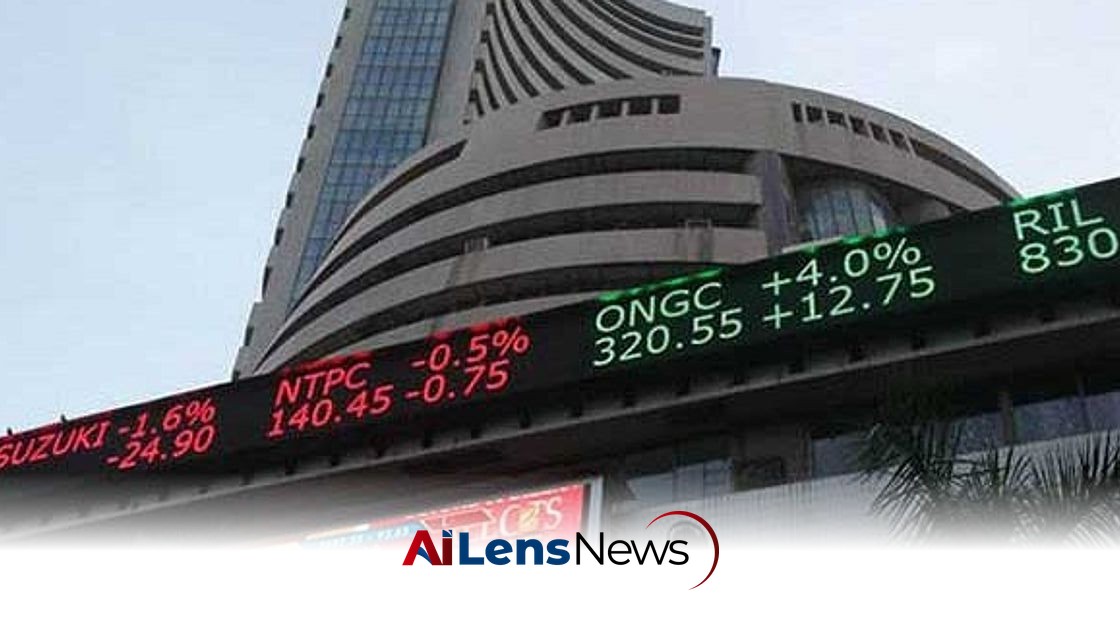


The stock market sees a positive trend with Bajaj Finance leading the charge, boosted by strong earnings and foreign fund inflows.
New Delhi, India Jul 31, 2026 ALN: Stock market benchmark indices Sensex and Nifty were trading higher in early deals on Friday, tracking a sharp rally in Bajaj Finance, foreign fund inflows, and a decline in crude oil prices. This uptick in the market reflects a broader trend of investor optimism, particularly in sectors that have shown resilience amid fluctuating economic conditions. The performance of the stock market is often seen as a barometer of the overall economic health of a country, and recent trends suggest a cautiously optimistic outlook among investors.
Profit-taking in IT stocks, however, restricted the market's rally during the initial trading. The technology sector, which has been a significant driver of growth in Indian markets over the past few years, is experiencing some volatility as investors reassess valuations and future growth prospects. This profit-taking indicates a cautious approach among investors, who may be looking to lock in gains after a period of strong performance. The technology sector's fluctuations can be attributed to various factors, including changing consumer demands, evolving technology trends, and increasing competition both domestically and internationally.
The 30-share BSE Sensex advanced 49.91 points to 77,970.95 in early trade. The 50-share NSE Nifty went up by 28 points to 24,343.65, reflecting a positive sentiment among traders and investors. Market analysts suggest that these movements are indicative of a healthy market environment, where sectors like finance and consumer goods are rallying while others, like IT, are undergoing corrections. The resilience of the financial sector is particularly noteworthy, as it often plays a crucial role in supporting overall economic growth through lending and investment activities.
From the Sensex pack, Bajaj Finance jumped over 6 percent after the firm on Thursday reported a 28 percent year-on-year rise in consolidated profit after tax (PAT) to Rs 6,081 crore for the June quarter of FY27. This impressive growth was driven by an increase in core income and an improvement in asset quality, which are critical indicators of the company's operational health. Bajaj Finance's strong performance is a reflection of its effective business strategies and robust demand for consumer finance products, which have gained traction in a recovering economy. The company's ability to innovate and adapt to changing market conditions has positioned it as a leader in the financial services sector, further enhancing investor confidence.
Bajaj Finserv, Mahindra & Mahindra, Bharat Electronics, Maruti, InterGlobe Aviation, Adani Ports, and Sun Pharma were also among the winners, showcasing a diverse range of sectors contributing to the market's upward trajectory. The performance of these companies highlights the resilience and growth potential in various industries, including automotive, pharmaceuticals, and infrastructure, as they adapt to changing market dynamics. For instance, the automotive sector, led by companies like Mahindra & Mahindra and Maruti, has been buoyed by increased consumer spending and a recovery in demand post-pandemic. Similarly, the pharmaceutical sector has continued to thrive amid ongoing health concerns and a focus on healthcare innovation.
Conversely, Infosys, Tata Consultancy Services, HCL Tech, Tech Mahindra, ITC, and HDFC Bank were among the major laggards. The underperformance of these IT and banking stocks may be attributed to a combination of profit booking and concerns over future growth in a rapidly evolving global economic landscape. As the technology sector faces increased competition and regulatory scrutiny, analysts are closely monitoring how these companies will navigate challenges while maintaining profitability. The banking sector, on the other hand, is grappling with issues related to asset quality and the impact of rising interest rates, which could affect lending growth.
Foreign Institutional Investors (FIIs) bought equities worth Rs 3,623.51 crore on Thursday, according to exchange data. This influx of foreign capital is a positive sign for the Indian stock market, reflecting confidence in the country's economic recovery and growth potential. FIIs play a crucial role in providing liquidity and stability to the markets, and their continued investment is essential for sustaining the upward momentum observed in recent sessions. The interest from foreign investors can also be indicative of favorable economic reforms and policies that enhance the attractiveness of the Indian market for global investors.
Brent crude, the global oil benchmark, traded 0.98 percent lower at USD 88.16 per barrel. The decline in crude oil prices can have significant implications for the Indian economy, which is heavily reliant on oil imports. Lower oil prices can lead to reduced inflationary pressures, benefiting consumers and businesses alike. Additionally, it may improve the balance of trade and strengthen the Indian rupee against other currencies, further enhancing investor sentiment. The relationship between oil prices and the Indian economy is complex, as fluctuations in global oil prices can impact various sectors, including transportation, manufacturing, and consumer goods.
In Asian markets, South Korea's KOSPI rebounded sharply and jumped 14.28 percent. Japan's Nikkei 225 index and Shanghai's SSE Composite index also quoted in positive territory, while Hong Kong's Hang Seng index traded lower. The mixed performance across Asian markets reflects the varied economic recovery trajectories in the region, influenced by factors such as domestic policies, export demand, and global economic conditions. Investors are closely watching these trends as they can provide insights into potential shifts in market dynamics and investment opportunities across Asia.
US markets ended significantly higher on Thursday, driven by strong corporate earnings and positive economic data. The performance of US markets often sets the tone for global markets, and the recent gains may encourage further investment in emerging markets like India, as investors seek growth opportunities outside of developed economies. The correlation between US market performance and Indian stock indices underscores the interconnectedness of global financial markets, where trends in one region can significantly impact investor sentiment and decision-making in another.
On Thursday, the Sensex ended 273.55 points, or 0.35 percent, higher at 77,928.15. The Nifty went up by 66.95 points, or 0.28 percent, to end at 24,317.15. The upward movement in these indices underscores the positive sentiment prevailing in the market, driven by strong earnings reports, foreign investment, and favorable economic indicators. As the market continues to evolve, investors will be keenly watching for further developments that could impact their investment strategies. The ability to respond to changing market conditions and adapt investment approaches will be crucial for both institutional and retail investors in navigating the complexities of the current economic landscape.
Overall, the current market dynamics suggest a cautiously optimistic outlook, with certain sectors thriving while others undergo corrections. Investors are advised to remain vigilant and consider a diversified approach to mitigate risks associated with market volatility. As economic conditions continue to change, staying informed about market trends and company performances will be essential for making sound investment decisions. The importance of continuous monitoring and analysis cannot be overstated, as it enables investors to make timely adjustments to their portfolios in response to emerging opportunities and challenges.
To learn more about the latest developments in Inflation & Prices, stay updated with our exclusive reports and analyses on AiLensNews.

