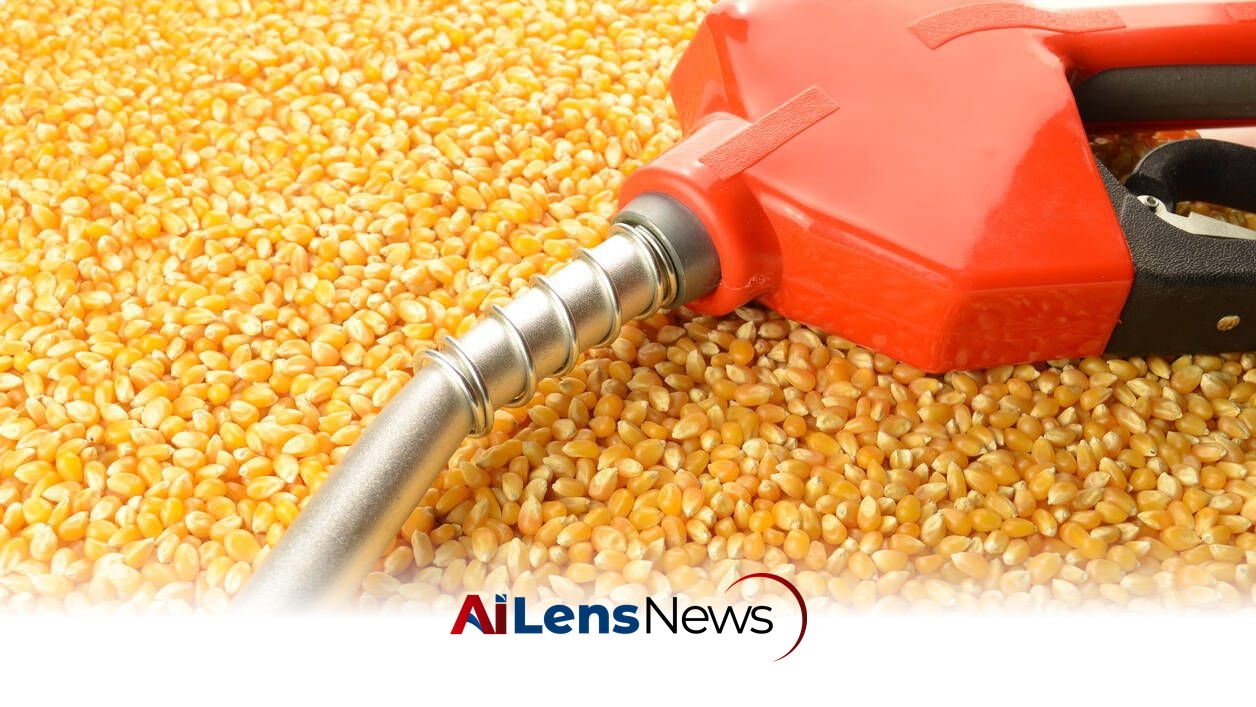


Ethanol production in India is increasingly supported by a diverse range of feedstocks, with maize leading the way. Policy support is essential for future growth.
New Delhi, India Jul 8, 2026 ALN: The ongoing Ethanol Supply Year (ESY) 2025–26 indicates that grain-based feedstocks continue to dominate ethanol production in India. A diversified mix of raw materials is crucial for supply stability and resilience. Ethanol, primarily produced from agricultural feedstocks, plays a significant role in the country’s renewable energy landscape, contributing to energy security, rural development, and environmental sustainability.
As of June 2026, cumulative ethanol supplies have reached 717 crore litres against contracted volumes of 1,048 crore litres, representing an overall supply achievement of 68% during the ongoing supply year, according to the latest ethanol supply data released by the All India Distillers' Association (AIDA). This achievement reflects not only the operational efficiencies of distilleries across the nation but also the strategic planning and supportive policies that have been implemented to boost ethanol production.
The latest data reveals that grain-based ethanol accounts for nearly 67% of total ethanol supplied, amounting to 480 crore litres, while sugarcane-based feedstocks contribute 238 crore litres, or 33%. This division underscores the importance of both grains and sugarcane in the Indian ethanol production landscape, with maize emerging as a particularly significant player.
Maize continues to be India's single largest feedstock, supplying 258 crore litres of ethanol. Its prominence is attributed to several factors, including its availability, versatility, and the ability to be cultivated across a variety of climatic conditions in India. The latest supply pattern reflects an increasingly diversified feedstock ecosystem, which is essential for mitigating risks associated with crop failure and market fluctuations.
Ethanol produced from surplus Food Corporation of India (FCI) grains has reached 177 crore litres, while sugarcane juice has contributed 144 crore litres. Additionally, B-Heavy molasses accounts for 82 crore litres, and damaged food grains contribute 45 crore litres. The utilization of surplus grains and by-products not only enhances the efficiency of the ethanol supply chain but also addresses food security concerns by ensuring that excess grains are put to productive use rather than being wasted.
Vijendra Singh, President of AIDA, stated, "The latest ethanol supply data demonstrates that India's biofuel programme has evolved into a robust and resilient ecosystem driven by diversified feedstocks. While maize continues to be the largest contributor, the increasing participation of surplus food grains and sugarcane-based feedstocks reflects the strength of a balanced supply chain. This diversification reduces dependence on any single crop, enhances year-round feedstock availability, and strengthens India's energy security. As the country moves beyond the E20 milestone, policy support for higher ethanol blends, flex-fuel vehicles (FFVs), ethanol-diesel blending, and next-generation biofuels will be essential to fully utilize the significant production capacity created by the industry."
Bharati Balaji, Deputy Director General of AIDA, added, "India's ethanol programme is now transitioning from a capacity-building phase to a resilience-building phase. The latest supply pattern reflects the success of policy interventions that have encouraged multiple feedstocks to participate in the programme. This balanced mix not only improves supply security but also creates greater flexibility for distilleries and strengthens the long-term sustainability of the ethanol ecosystem. Going forward, policy support for higher ethanol blends, flex-fuel mobility, and new ethanol applications will be critical to fully utilize the industry's growing production capacity and sustain India's clean energy transition."
The importance of a diversified feedstock approach cannot be overstated, especially in the context of India’s broader energy goals. The country has set ambitious targets for renewable energy, aiming to achieve 175 GW of renewable power capacity by 2022 and 450 GW by 2030. Ethanol plays a pivotal role in this transition, contributing to a reduction in greenhouse gas emissions and reliance on fossil fuels.
Furthermore, the production of ethanol from various feedstocks supports rural economies by providing farmers with additional income streams. This is particularly important in a country like India, where agriculture remains a primary source of livelihood for a significant portion of the population. By expanding the range of feedstocks used for ethanol production, the government can enhance the resilience of agricultural communities and promote sustainable farming practices.
The Indian government has implemented several policy measures to encourage the growth of the ethanol sector, including the National Biofuel Policy, which aims to promote the use of biofuels in transportation and other sectors. The policy encourages the blending of ethanol with petrol, with targets set for increasing the ethanol blending percentage over the coming years. Currently, the target is to achieve 20% ethanol blending by 2025, which necessitates a significant ramp-up in production capacity and supply chain efficiency.
Moreover, the promotion of flex-fuel vehicles (FFVs) is a critical component of the government's strategy to enhance the adoption of ethanol. FFVs are designed to run on a variety of fuel blends, including high concentrations of ethanol, thereby providing consumers with greater flexibility and choice. The success of FFVs will depend on the availability of ethanol and the infrastructure to support its distribution.
In conclusion, the current trends in ethanol production highlight the importance of a diversified feedstock approach, which not only enhances supply stability but also supports India's broader energy goals. The ongoing transition towards a more resilient ethanol ecosystem, supported by policy interventions and technological advancements, positions India to harness the potential of biofuels effectively. As the nation continues to navigate the complexities of energy security, environmental sustainability, and rural development, the ethanol sector will remain a cornerstone of its strategy for achieving a cleaner and more sustainable energy future.
To learn more about the latest developments in Trade & Commerce, stay updated with our exclusive reports and analyses on AiLensNews.

