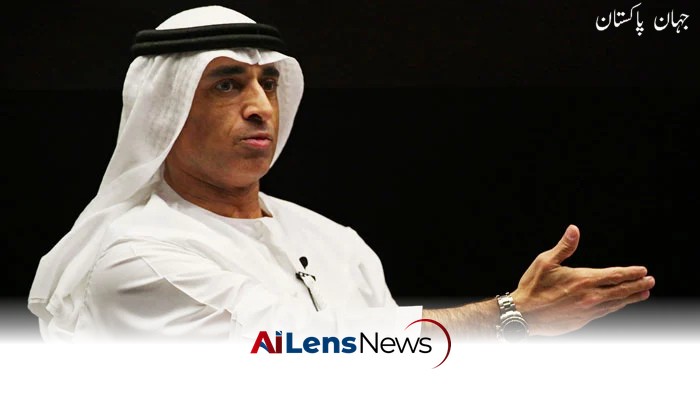


Yousef Al Otaiba, the UAE Ambassador to the US, stated that the United Arab Emirates does not require external financial assistance, emphasizing the strength of the UAE economy.
Islamabad, Pakistan Apr 22, 2026 ALN: Yousef Al Otaiba, the UAE Ambassador to the United States, has recently asserted that the United Arab Emirates (UAE) does not require external financial aid. This statement reflects the UAE's confidence in its economic resilience and independence, particularly in the context of global economic challenges that have led many countries to seek financial assistance from international entities. The assertion comes at a time when various nations are grappling with economic difficulties, making the UAE's position noteworthy.
During discussions on the dollar-dirham swap, a financial arrangement that allows for the exchange of US dollars for UAE dirhams, Al Otaiba emphasized the robustness of the UAE economy. He declared that there is no shortage of dollars, a claim supported by the country’s substantial financial reserves and investment capabilities. The UAE, a federation of seven emirates, has emerged as a significant player on the global economic stage, largely due to its strategic investments and diversified economy. This diversification has allowed the UAE to mitigate risks associated with reliance on a single source of revenue, particularly oil, which has historically been subject to price volatility.
The ambassador highlighted that the UAE possesses approximately $2 trillion in investment funds and $300 billion in foreign exchange reserves. These figures are indicative of the country's financial stability and its ability to navigate through economic fluctuations without relying on external support. The substantial reserves not only provide a buffer against economic downturns but also enhance the UAE's credibility as a stable investment destination. The UAE's financial strategy has been characterized by a commitment to maintaining a strong fiscal position, which has been critical in fostering investor confidence.
In addition to these financial metrics, a high-level meeting took place in Washington regarding the currency swap line between the United States and the United Arab Emirates. This meeting underscores the strong economic ties that exist between the two nations, facilitating trade and investment flows. Currency swap agreements are essential tools for enhancing liquidity and reducing reliance on foreign currency, which can be particularly beneficial in times of economic uncertainty. Such arrangements not only bolster bilateral trade but also serve as a stabilizing mechanism in the face of fluctuating exchange rates.
The ambassador's remarks come at a time when many countries are grappling with the repercussions of the COVID-19 pandemic, rising inflation, and geopolitical tensions that have led to increased volatility in global markets. In contrast, the UAE's economic framework, which has been built on diversification away from oil dependency and a focus on innovation and technology, has allowed it to maintain a level of financial independence that many other nations currently aspire to achieve. The UAE's proactive measures during the pandemic, including fiscal stimulus packages and support for various sectors, have further demonstrated its ability to adapt and respond effectively to economic challenges.
The UAE's economic strategy has been characterized by significant investments in various sectors, including renewable energy, technology, tourism, and finance. This diversification has not only fortified the UAE's economy against oil price fluctuations but has also positioned it as a leader in sustainable development in the region. The government's Vision 2021 initiative and the subsequent UAE Centennial 2071 plan aim to create a sustainable and diversified economy that can thrive in the long term. These initiatives underscore the UAE's commitment to fostering innovation and sustainability, which are increasingly important in the global economy.
Moreover, the UAE has been proactive in establishing itself as a global hub for trade and investment. The country has developed world-class infrastructure, including ports, airports, and free trade zones, which attract foreign direct investment. These efforts have been complemented by a favorable business environment, characterized by low tax rates and a regulatory framework that encourages entrepreneurship and innovation. The strategic location of the UAE serves as a gateway between East and West, enhancing its attractiveness as a trade hub.
In recent years, the UAE has also taken significant steps to strengthen its financial sector. The Central Bank of the UAE has implemented various reforms aimed at enhancing the resilience and transparency of the banking system. These reforms have included measures to improve risk management practices and increase capital adequacy among financial institutions, further solidifying the stability of the UAE's financial landscape. The emphasis on regulatory compliance and financial prudence has bolstered the integrity of the financial system, making it more resilient to external shocks.
Additionally, the UAE's commitment to maintaining its economic sovereignty is reflected in its approach to international relations and trade agreements. The country has actively sought to forge partnerships with nations across the globe, focusing on mutual benefits and economic cooperation. The UAE's participation in international forums and organizations, such as the G20 and the World Trade Organization, highlights its role as a proactive player in shaping global economic policies. Through these engagements, the UAE seeks to promote free trade and investment, aligning with its broader economic objectives.
The implications of Ambassador Al Otaiba's statements are significant, as they not only reinforce the UAE's position as a financial powerhouse but also serve as a message to potential investors and partners about the country's economic stability and growth prospects. By asserting its financial independence, the UAE aims to attract further investments while encouraging other nations to view it as a reliable partner in the global economy. This positioning is crucial, especially in an era where economic partnerships are increasingly important for growth and development.
In conclusion, the UAE's financial independence and robust investment landscape position it as a significant player in the global economy. The ambassador's statements reflect the nation's commitment to maintaining its economic sovereignty and confidence in its ability to navigate the complexities of the modern financial landscape. As the world continues to face economic uncertainties, the UAE's approach serves as a model for other countries seeking to enhance their financial stability and resilience. The UAE's ability to maintain its economic independence amidst global challenges underscores the importance of strategic planning and diversification in achieving long-term economic goals.
To learn more about the latest developments in Macroeconomics, stay updated with our exclusive reports and analyses on AiLensNews.

