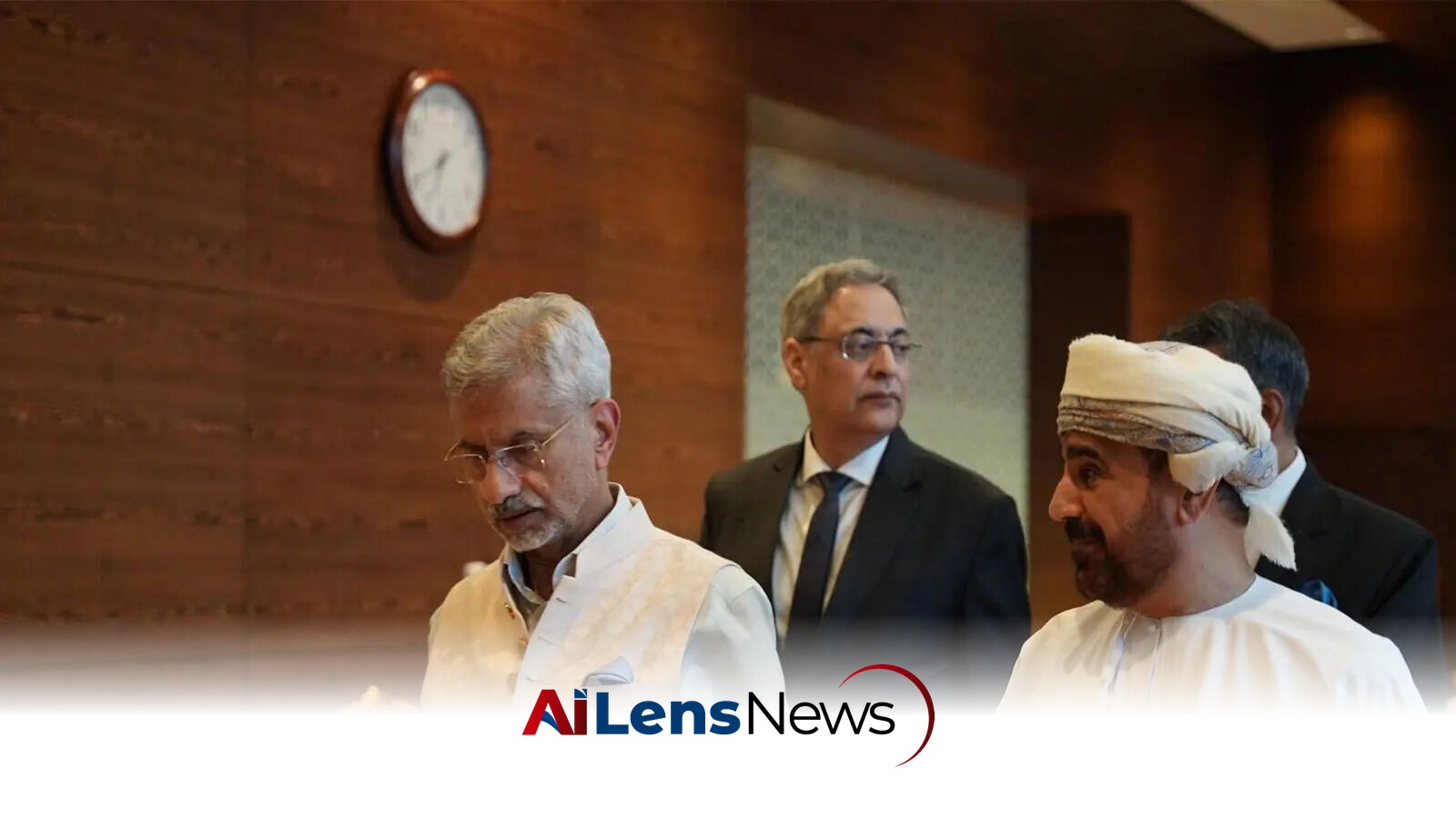


External Affairs Minister S. Jaishankar's visit to Oman is part of a multi-nation tour aimed at enhancing India's bilateral relations in the Gulf region.
New Delhi, India Jul 10, 2026 ALN: Muscat: External Affairs Minister S. Jaishankar has arrived in Oman as part of his official tour, which also includes visits to Qatar, Bahrain, and Kuwait. Upon his arrival, he was warmly welcomed by Sheikh Ahmed Al Maskari, Director General of the Foreign Ministry of Oman.
In a post on social media, Jaishankar expressed his gratitude for the reception, stating, "Glad to arrive in Oman today. Appreciate the warm reception by Sheikh Ahmed Al Maskari, Director General, Foreign Ministry of Oman." This visit is significant as it aims to bolster India's diplomatic ties with the Gulf nations, which have been a focal point of India's foreign policy for several decades.
The Gulf region, comprising countries such as Oman, Qatar, Bahrain, Kuwait, Saudi Arabia, and the United Arab Emirates, is of strategic importance to India for multiple reasons. Primarily, these nations are among India's largest trading partners, with significant investments flowing both ways. The region is also home to a large Indian diaspora, which plays a crucial role in the economies of these Gulf countries and contributes significantly to India's foreign remittances.
Jaishankar's itinerary from July 5 to July 10 includes meetings with key leaders and counterparts in each of the four countries. The discussions will focus on enhancing bilateral relations and addressing regional developments that affect mutual interests. These engagements are expected to cover a wide range of topics, including trade, investment, energy security, and regional security issues.
Before arriving in Oman, Jaishankar visited Kuwait on July 9, where he engaged in talks with Kuwait's Foreign Minister Sheikh Jarrah Jaber Al-Ahmad Al-Sabah. Their discussions revolved around the implications of the ongoing Gulf conflict and the status of bilateral cooperation across various sectors. The Gulf region has been experiencing geopolitical tensions, particularly with the ongoing conflicts in Yemen and the broader implications of Iran's influence in the region. Such discussions are critical for India as it seeks to navigate its interests in a complex geopolitical landscape.
Jaishankar highlighted the importance of the India-Kuwait Strategic Partnership, expressing confidence that it would continue to strengthen. He stated, "We jointly assessed our cooperation focusing on energy, trade, investments, defence, technology, food security, and health domains. Confident that our Strategic Partnership will continue to strengthen in the time to come." This statement underscores India's commitment to diversifying its partnerships and enhancing its strategic footprint in the Gulf.
During his visit to Kuwait, Jaishankar also met with Crown Prince Sabah Al-Khaled Al-Sabah, conveying the greetings of Indian Prime Minister Narendra Modi. He remarked on the Crown Prince's commitment to advancing bilateral cooperation and appreciated the insights shared regarding developments in the Gulf region. The meeting with the Crown Prince is particularly significant as it reflects the high-level engagement that both countries are pursuing to deepen their ties.
Jaishankar's visit to Oman is expected to further enhance India's strategic interests in the Gulf, a region that holds significant geopolitical importance for India. The minister's engagements are aimed at fostering deeper ties and addressing shared challenges in the region. Oman, with its unique position as a neutral mediator in regional conflicts, plays a vital role in facilitating dialogue and cooperation among Gulf nations. This aspect of Oman’s foreign policy aligns with India’s interests in promoting stability and peace in the region.
India's relationship with Oman is historically strong, characterized by deep-rooted cultural and ties. The two countries have enjoyed a longstanding friendship, enriched by the presence of a significant Indian community in Oman, which has contributed to the local and fostered people-to-people connections. As of recent estimates, there are approximately 800,000 Indians residing in Oman, making them one of the largest expatriate communities in the country.
The bilateral trade between India and Oman has seen substantial growth over the years, with Oman's exports to India primarily consisting of crude oil, while India exports a variety of goods including agricultural products, textiles, and machinery. In 2022, the total trade volume between the two nations exceeded $5 billion, highlighting the strong ties that underpin their relationship.
In addition to trade, India and Oman have collaborated in various sectors, including defense, security, and counter-terrorism. The two nations have conducted joint military exercises and have engaged in dialogues to enhance their defense cooperation, particularly in addressing maritime security in the Indian Ocean region. Given the strategic location of Oman, which overlooks the vital Strait of Hormuz, ensuring maritime security is of paramount importance to both countries.
In conclusion, Jaishankar's multi-nation tour underscores India's proactive approach to strengthening its relationships with Gulf countries, which are vital for trade, energy security, and regional stability. The Gulf Cooperation Council (GCC) states are crucial for India's energy needs, as they supply a significant portion of India's crude oil imports. Furthermore, the growing defense cooperation between India and Gulf nations is indicative of a shifting paradigm where regional security concerns are increasingly being addressed through collaborative efforts.
As India continues to enhance its diplomatic outreach in the Gulf, the implications of these visits extend beyond mere ties. They represent India's strategic pivot towards a more integrated approach in addressing regional challenges, promoting stability, and securing its interests in a rapidly changing geopolitical environment. The outcome of Jaishankar's meetings in Oman, along with the other Gulf nations, will likely set the tone for future engagements and cooperation between India and the Gulf states, reflecting a mutual commitment to fostering peace, stability, and prosperity in the region.
Moreover, the evolving geopolitical landscape, marked by increasing tensions and shifting alliances, necessitates that India remains engaged with its Gulf partners. The presence of emerging powers and the resurgence of traditional rivalries in the region means that India must navigate its foreign policy with care, balancing its interests while promoting regional collaboration. As such, Jaishankar's visit is not just about strengthening bilateral ties; it is also about positioning India as a key player in the Gulf's future, ensuring that it can effectively contribute to and benefit from the region's stability and growth.
To learn more about the latest developments in Trade & Commerce, stay updated with our exclusive reports and analyses on AiLensNews.

