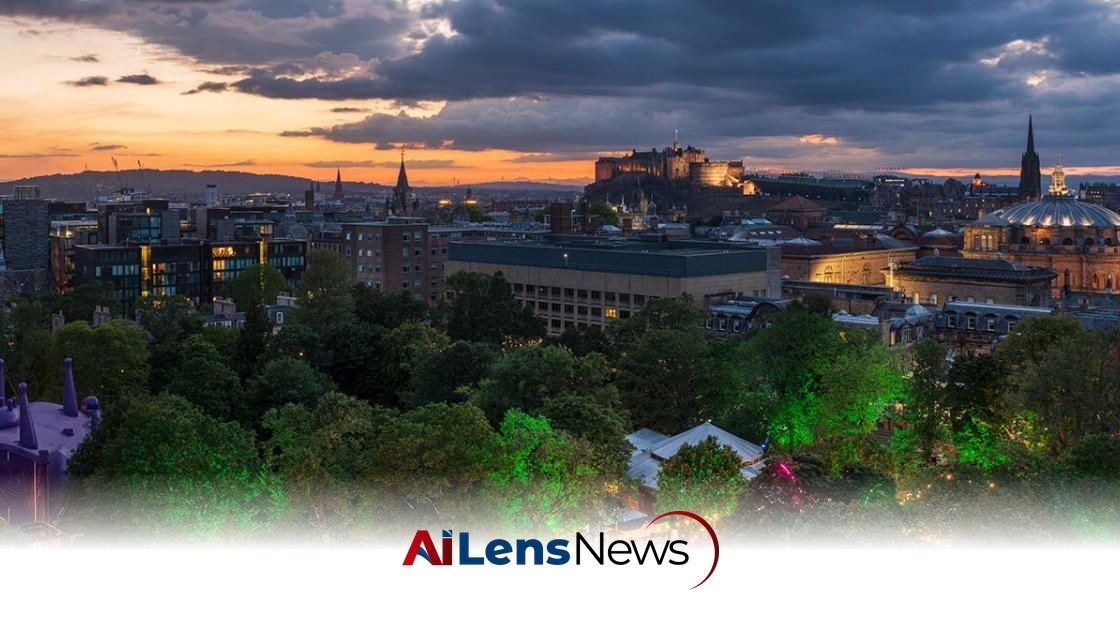


As Edinburgh gears up for its vibrant festival season, The Herald emphasizes the importance of cultural coverage and invites readers to support its journalism.
London, United Kingdom Jul 25, 2026 ALN: The World Cup may be over and done with for another four years, but in Scotland’s capital city preparations are well underway for our cultural equivalent of the sporting celebration.
Edinburgh Festival posters can now be found around on buses, taxis and almost every corner of the city centre, while street performers and buskers are growing in number by the day.
Some of the hundreds of venues which will be in use over the next few weeks have already hosted performances, including George Square, Princes Street Gardens and Edinburgh Castle esplanade.
But it still feels like the calm before the storm in Edinburgh, which will host more than 5000 events and shows in the coming weeks.
The city’s summer festival season should attract an overall audience of around four million by the end of August if recent years are anything to go by.
With the countdown well underway towards the 80th anniversary of the first of Edinburgh’s festivals in 2027, it is worth reflecting on their status as one of the biggest success stories for the city and the country.
The McEwan Hall is one of the biggest used during the Fringe and the Edinburgh International Book Festival. (Image: Ryan Warburton)
It is perhaps down to the annual staging of the Edinburgh Festival - and its undoubted impact on the city centre - that the summer season can divide opinion in the city. The festivals are very often under-appreciated, and perhaps taken for granted, by many of Edinburgh’s decision-makers, businesses and residents.
But the reality behind the Edinburgh Festival is that a huge collective effort is needed to put the programmes together, create and rehearse productions, get venues built and stage all the shows and events across more than 300 stages around the city. It is that collective effort that ensures that artists, companies, arts industry workers, delegates and visitors will flock to the city from around the world over the next few weeks.
Digital access is only £20 for a whole year - offer is for a limited time (Image: Newsquest)
At The Herald, there will be a huge collective effort to deliver Edinburgh Festival coverage of the highest quality over the coming weeks – trusted journalism that we firmly believe is well worth paying for to help navigate the world's biggest cultural gathering.
Our readers can expect reviews of all the big productions, previews highlighting the most eagerly-anticipated shows, and opinion pieces and analysis on the biggest issues faced by artists, audiences and the city itself.
Our writers will be hitting the streets of Edinburgh to capture the atmosphere of the festival city, lift the lid on behind-the-scenes dramas, explore the impact of the festivals on the city, and look at how the festivals should improve as they head into their 80th anniversary year.
We hope The Herald will be a must-read title for audiences, artists, companies and industry workers in the coming weeks.
You can ensure you have unlimited access to all Edinburgh Festival coverage on The Herald website by taking advantage of our latest digital subscription offer – which costs just £20 for the next 12 months.
Our plans for the Edinburgh Festival reflect our approach to Scotland’s rich and varied cultural scene.
The Herald is an unapologetic champion of the arts and creative industries in Scotland, not least because they are worth an estimated £5.7 billion to the national economy, and employ 90,000 workers.
But that does not mean that our journalists are unquestioning cheerleaders for the arts.
Our commitment to culture coverage does, of course, mean championing our stars of theatre, music, visual art, comedy, film and television, as well as identifying the stars of the future.
But we are also committed to exploring the challenges faced by artists, writers, festival organisers, performing arts companies and venues, highlighting funding cuts and closure threats, fighting for a fair deal for the arts and holding decision-makers at the highest level to account.
Our readers can expect arts journalism that is passionate and informed, but also questioning and challenging, from writers with decades of experience of the cultural landscape, such as Mary Brennan, Keith Bruce, Neil Cooper, Barry Didcock and Claire Sawers, as well as a new generation of arts writers making a real mark on Scottish culture, including Derek McArthur, Marissa MacWhirter, Evie Glen and Julia Braun Raven, the inaugural winner of the Arts Writer of the Year prize in The Herald Student Press Awards.
I am proud to have been at the heart of a significant - and ongoing - expansion of The Herald’s culture coverage since I was appointed Arts Correspondent last spring.
One of the first projects I worked on, an in-depth week-long series on the future of the Scottish screen industry, was recognised at the Scottish Press Awards this year when I was named Arts and Entertainment Journalist of the Year.
The Herald has been at the heart of the debate about decision-making at BBC Scotland over the last year, with River City being brought to an end, shows being scrapped and some of its best-known presenters shown the door.
An independent bookshop’s battle to fend off plans by industry giant Waterstones to open on its doorstep, a campaign to lift a threat of closure from Cumbernauld Theatre and efforts to secure the return of Scotland’s flagship Gaelic language drama An t-Eilean (The Island) all succeeded following extensive coverage in The Herald.
Our arts coverage has reached across the country in recent months, with a deep-dive series on the growth of Scotland’s island music festivals and what is needed to secure their future, and the recent postponement or cancellation of a host of mainland music festivals amid growing concerns about rising costs and intense competition.
More recently, the future of both the former Centre for the Contemporary Arts in Glasgow and Glasgow School of Art’s Mackintosh Building has been covered in news stories, features, explainers and analysis pieces.
The Herald's expanded culture coverage is down to the level of support we have seen from readers who are willing to pay for our high-quality, trusted, agenda-setting arts coverage.
Convincing more people to is key to ensuring our arts journalism can develop and expand further.
With a global gathering about to descend on Edinburgh, there has never been a better time to get on board.
To learn more about the latest developments in Cultural Events, stay updated with our exclusive reports and analyses on AiLensNews.

