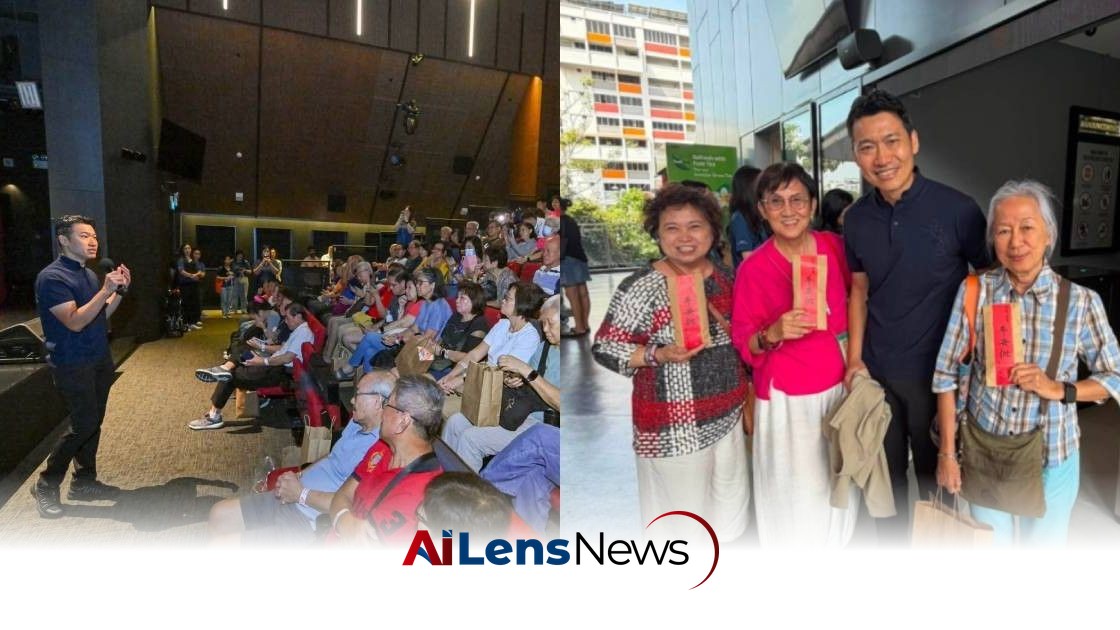


Acting Minister David Neo watched 'Dear You' with Tampines seniors, reflecting on cultural heritage and relationships, following his remark on ministers' busy schedules.
Singapore, Singapore Jul 15, 2026 ALN: Acting Culture, Community and Youth Minister David Neo recently engaged with seniors in the Tampines constituency by hosting a film screening of the Chinese hit film Dear You. This event took place just a week after Neo made a controversial remark in Parliament, stating that "ministers have no time to watch movies." The juxtaposition of these two events has stirred discussions about the role of ministers in connecting with the community and the importance of cultural engagement.
The screening was held at the Festive Arts Theatre in Our Tampines Hub, a community-focused venue that aims to promote arts and culture among residents. Neo shared images from the event on his Facebook page, expressing his joy in watching the film with the seniors. The event was also attended by Minister of State for Culture, Community and Youth Baey Yam Keng, who serves as a Member of Parliament for Tampines GRC alongside Neo.
Reflecting on the film, Neo remarked, "There was laughter, there were touching moments, and perhaps most importantly, the film brought everyone together and sparked conversations about family and memories." His comments highlighted the film's ability to resonate with the audience, evoking emotions and fostering discussions that are vital for community bonding.
Neo further emphasized the film's role as a reminder to cherish relationships and the people who shape our lives. He noted that watching the film with the seniors allowed him to reflect on the hard work and sacrifices made by previous generations, which have significantly contributed to Singapore's rich cultural tapestry. He stated, "This is exactly why the Ministry of Culture, Community and Youth and our heritage organisations have been encouraging our young to get to know our dialect heritage while promoting Mandarin," underscoring the importance of both dialects and Mandarin in narrating the Singapore story.
Neo's earlier comment in Parliament, which was made on July 7, has sparked considerable debate and discussion. During a parliamentary session, he responded to a query from Workers' Party MP Kenneth Tiong about whether ministers had viewed the Teochew or Mandarin-dubbed versions of Dear You. His remark, while eliciting laughter from fellow members, also drew attention to the serious underlying issues regarding Singapore's bilingual policy and its impact on dialect usage in the nation.
The film Dear You has enjoyed significant success in mainland China, becoming a box-office hit. The story follows a man's journey to Thailand in search of his long-lost grandfather, exploring themes of family, nostalgia, and cultural ties. The film's narrative has resonated with audiences, particularly among the older generation, who may relate to the themes of familial relationships and the importance of heritage.
Neo's comment about ministers lacking time for leisure activities, such as watching movies, raises questions about the work-life balance of public officials and their engagement with cultural events. Critics argue that such remarks may suggest a disconnect between government officials and the everyday experiences of citizens. In contrast, supporters might view it as a humorous acknowledgment of the demanding nature of political life.
Moreover, Neo's remarks came during a broader discussion on Singapore's longstanding restrictions on dialect content. Various MPs expressed their views on the nation's bilingual policy, which has historically prioritized Mandarin while limiting the use of dialects in public life. This policy has sparked debates about cultural identity, language preservation, and the role of dialects in modern Singapore.
In response to these discussions, Neo highlighted the government's ongoing collaboration with clan associations, which are enthusiastic about promoting their dialects and respective cultures. This partnership aims to create a more inclusive environment where diverse cultural expressions can thrive, reflecting Singapore's multicultural identity.
The film screening event not only provided entertainment for the seniors of Tampines but also served as a platform for deeper reflection on cultural identity and the importance of intergenerational connections. By encouraging conversations about family and memories, the event fostered a sense of community among attendees, reinforcing the idea that culture is best experienced and understood collectively.
The implications of Neo's engagement with the seniors extend beyond this single event. It highlights the need for government officials to actively participate in community activities and to connect with constituents on a personal level. Such interactions can help bridge the gap between policymakers and the public, fostering a sense of trust and understanding.
As Singapore continues to navigate its multicultural landscape, the balance between promoting a unified national identity and respecting the diverse cultural backgrounds of its citizens remains a critical challenge. Events like the film screening in Tampines play a vital role in addressing this challenge, providing opportunities for dialogue and cultural exchange.
In conclusion, David Neo's film screening with seniors in Tampines serves as a reminder of the importance of cultural engagement and community connection. While his earlier comment in Parliament may have sparked controversy, it also opened the door for meaningful discussions about cultural identity, the role of dialects, and the need for ministers to be more accessible and relatable to the public. As Singapore continues to evolve, fostering these connections will be essential in nurturing a cohesive and inclusive society.
In a broader context, the engagement of government officials with community events such as film screenings can be seen as part of a larger strategy to enhance public relations and build rapport with constituents. The importance of cultural events in fostering social cohesion cannot be understated, particularly in a multicultural society like Singapore, where diverse backgrounds and experiences coalesce. By participating in such activities, ministers like Neo not only entertain but also educate and inspire, creating a shared space for dialogue and understanding.
Furthermore, the film Dear You serves as a cultural artifact that embodies the complexities of family dynamics and the significance of cultural heritage. Its themes resonate deeply within the context of Singapore's own narrative, where multiple cultures intersect and influence each other. The film acts as a conduit for discussions about identity, memory, and the evolving nature of familial relationships in contemporary society.
As Singapore looks towards the future, the role of cultural engagement in government policy becomes increasingly critical. The ability to connect with citizens through shared experiences, such as watching films, can foster a sense of belonging and community. This is particularly important in a rapidly changing world where traditional values and modernity often clash. By embracing cultural events, government officials can demonstrate their commitment to understanding and appreciating the diverse tapestry of Singaporean society.
In conclusion, the film screening hosted by David Neo not only served as a response to his previous remarks but also highlighted the essential role of cultural engagement in fostering community ties. As discussions around dialects, cultural identity, and the responsibilities of public officials continue, it is evident that such initiatives are vital in nurturing a cohesive society that values both its heritage and its future.
To learn more about the latest developments in Cultural Events, stay updated with our exclusive reports and analyses on AiLensNews.

