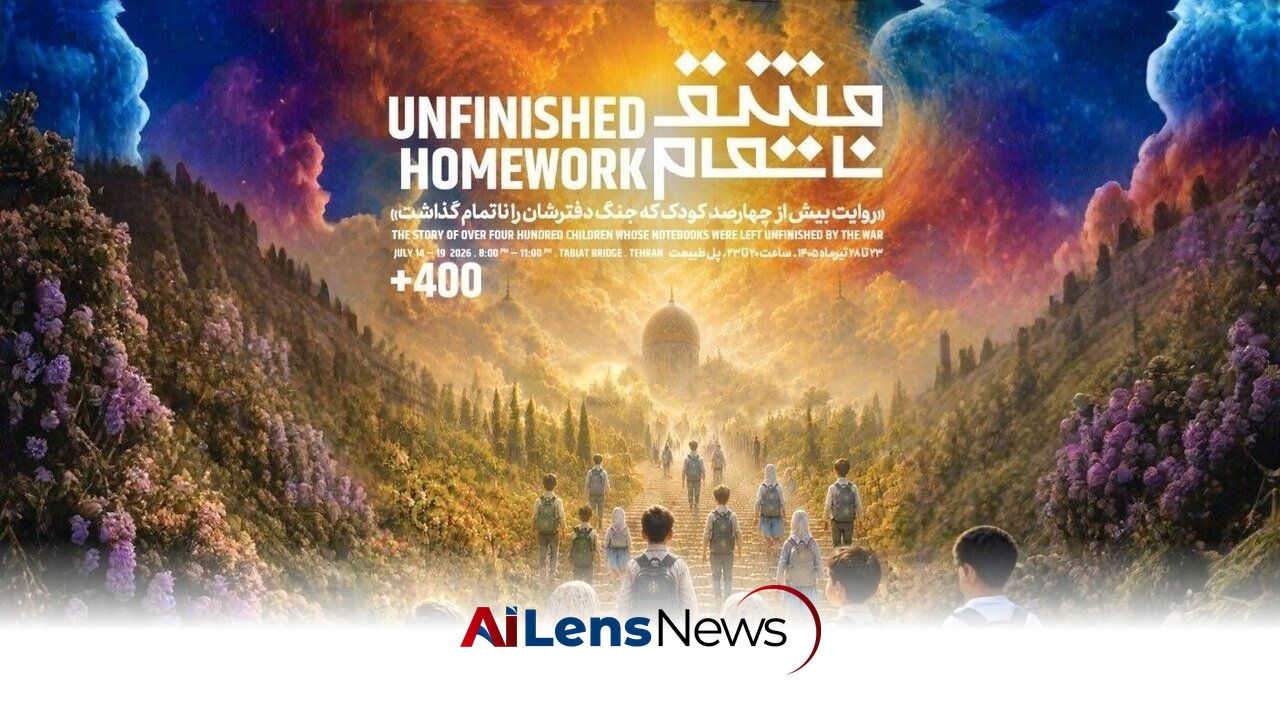


The 'Unfinished Homework' event at Tabiat Bridge pays tribute to over 400 Iranian children lost in war, featuring art, performances, and remembrance activities.
Tehran, Iran Jul 14, 2026 ALN: TEHRAN- Tehran's Tabiat Bridge—the city's most expansive pedestrian landmark—will transform into an open-air gallery this week as it hosts "Mashq-e Natamam" (Unfinished Homework), a cultural and artistic event dedicated to the memory of over 400 Iranian children who lost their lives during the recent war. This event, rich in emotional resonance, aims to create a space for reflection and remembrance, providing a poignant reminder of the cost of conflict on the most vulnerable members of society.
The event serves as a living memorial to those whose childhood dreams and aspirations were cut short by the aggression of the United States and the Zionist regime against Iran. The choice of the Tabiat Bridge as a venue is significant; it is not only a symbol of connection and unity within Tehran but also represents the bridging of past and present experiences, allowing visitors to engage with the memories of the innocent lives lost.
Starting Wednesday evening, the bridge will become a passage into the innocent world of children whose "last school bell" rang prematurely, leaving behind unfinished games and unspoken hopes. The imagery of unfinished homework resonates deeply, serving as a metaphor for lives interrupted and futures denied. It evokes the universal experience of childhood, where learning and play are central, yet starkly contrasts with the harsh realities faced by these young victims.
Produced by Mohammad Sadeq Mirkarimi and narrated by Hossein Parsai, the event features a multidisciplinary approach to remembrance. The program includes theatrical performances, live music, and special interactive activities designed for children, adolescents, and families. This inclusive approach not only honors the memory of the martyrs but also engages the community, inviting them to participate in the healing process through art and creativity. A centerpiece of the event is the exhibition of portraits of the 400 child martyrs, accompanied by a solemn candle-lighting ceremony, symbolizing hope and remembrance.
The event brings together a collective of artists from the fields of visual arts, theater, and music, all aiming to bridge the gap between the past and the present through art and emotion. This collaboration highlights the role of culture in processing grief and trauma, showcasing how artistic expression can serve as a powerful tool for collective mourning and remembrance. The diverse forms of art presented will likely resonate with a wide audience, fostering a deeper understanding of the impact of war on society.
"Unfinished Homework" is open to the general public and free of charge. The event will take place nightly from Wednesday to Saturday, between 8:00 PM and 11:00 PM. Residents and visitors are invited to walk across the Tabiat Bridge to pay their respects to the "martyr angels" of the homeland. This accessibility underscores the importance of communal participation in the remembrance of these children, encouraging individuals from all walks of life to engage with the narrative of loss and resilience.
The tragedy of the Ramadan War left an indelible scar on the Iranian psyche, most poignantly seen in the loss of its youngest citizens. Among the most harrowing memories is the attack on the school children of Minab, where the sanctuary of a classroom was shattered by the US-Israeli air strike. These children, whose only crime was a desire to learn and grow, were transformed from students into symbols of national martyrdom. Their desks became empty, and their laughter was silenced, leaving behind a void that can never be filled, yet serving as a timeless reminder of the cruelty of war and the innocence of those it claims.
Beyond the halls of Minab, hundreds of other child martyrs across the country faced similar fates, their "unfinished homework" becoming a testament to a stolen future. Each name and portrait represents a dream interrupted—a game left unplayed or a story left untold. By honoring these young souls, Iran does more than mourn a loss; it preserves the memory of a generation that paid the ultimate price for the nation's sovereignty. These children remain the "martyr angels" of the homeland, forever reminding the world that the deepest casualties of war are those who never had the chance to experience a peaceful adulthood.
The broader implications of the event extend beyond mere remembrance; it serves as a call to action for peace and reflection on the cost of war. By showcasing the impact of conflict on children, the event challenges attendees to consider the ongoing consequences of violence and the importance of safeguarding the rights and futures of the youngest members of society. In a world where the effects of war can often feel distant or abstract, events like "Unfinished Homework" bring the stark realities into sharp focus, prompting a collective reckoning with the past.
Furthermore, the event can be seen as part of a larger cultural movement within Iran to confront and process the traumas of war. In recent years, there has been a growing recognition of the need to address the psychological and emotional scars left by conflict, particularly among younger generations who may not have direct memories of these events but continue to feel their effects. Through art and cultural expression, communities are finding ways to heal and to honor those who have suffered.
In conclusion, the "Unfinished Homework" event at Tehran's Tabiat Bridge is not just a tribute to the child martyrs of the Ramadan War; it is a powerful statement about the importance of memory, the impact of war on innocent lives, and the role of culture in healing. By inviting the public to engage with this narrative, the event fosters a sense of community and shared responsibility in remembering the past while advocating for a future where such tragedies are not repeated. The legacy of these young martyrs lives on, serving as a poignant reminder of the need for compassion, understanding, and a commitment to peace in our world.
To learn more about the latest developments in Cultural Events, stay updated with our exclusive reports and analyses on AiLensNews.

