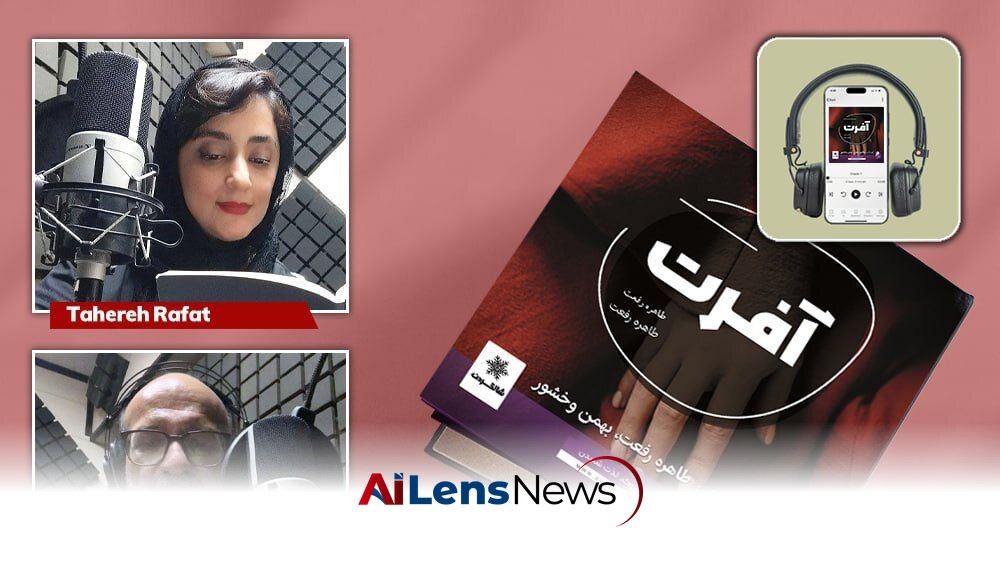


TEHRAN — The audiobook version of Iranian writer Tahereh Rafat’s novel 'Aafrat' has recently been released, featuring voices of the author and Bahman Vakhshour.
Tehran, Iran Jul 18, 2026 ALN: The audiobook version of Iranian writer Tahereh Rafat’s novel ‘Aafrat’ has recently been released, marking a significant addition to the growing landscape of audiobooks in Iran. This format has gained popularity in recent years, particularly as more readers seek accessible ways to engage with literature amidst their busy lives. The rise of audiobooks can be attributed to several factors, including advancements in technology, the proliferation of smartphones, and a cultural shift towards multitasking, which allows individuals to consume literature while engaging in other activities.
Produced and published by Avaye Chirok, a major institute that specializes in audiobooks in Iran, the work features the voices of Bahman Vakhshour and the author herself. Avaye Chirok has established itself as a leader in the audiobook industry, offering a diverse range of titles that cater to various tastes and preferences. Their commitment to high-quality productions has contributed to the increasing acceptance of audiobooks as a legitimate form of literature in Iranian society. This acceptance is significant, as it reflects broader trends in the literary world where audiobooks are becoming a staple in many countries, thus fostering a more inclusive literary culture.
Based on the print edition previously published by Shalgardan Publications, ‘Aafrat’ is a nuanced exploration of an ostensibly ordinary life. Rather than relying on grand plot twists or dramatic events, the narrative delves into the psychological depths of its protagonist, focusing on the silent turmoil and intricate emotions that simmer beneath the surface of daily existence. This introspective approach is characteristic of contemporary Iranian literature, which often seeks to reflect the complexities of human experience in a rapidly changing society. The significance of such literature lies in its ability to resonate with readers on a personal level, reflecting shared struggles and experiences that transcend cultural boundaries.
The story follows a woman who spends much of her time in solitude, confined within the narrow parameters of her own life. She finds herself trapped in an ambiguous relationship—one that has neither fully blossomed nor completely dissolved—leaving her in a state of emotional limbo. This theme of emotional ambiguity resonates with many readers, especially in a world where relationships are often complicated by societal expectations and personal aspirations. The exploration of such themes is particularly relevant in today’s globalized society, where individuals frequently grapple with their identities and the expectations placed upon them by family, peers, and the broader community.
As the narrative unfolds through a series of repetitive days, the protagonist begins to scrutinize her own behaviors and choices. Simple acts, such as smoking, pacing the house, or staring out at the street, become conduits for deep introspection. The portrayal of mundane activities as moments of reflection highlights the author’s skill in transforming the ordinary into something profound. Gradually, fragments of the past emerge, revealing relationships and events that continue to haunt and shape her present. This layering of past and present is a technique that adds depth to the character, allowing readers to understand the complexities of her emotional landscape. Rafat’s ability to weave together the threads of memory and current experience invites readers to consider how the past informs the present, a theme that is universally relatable.
The tension of the novel lies in the protagonist's precarious position on the threshold between complacency and change. The story progresses organically, driven by the internal decisions she makes—or fails to make—rather than sudden external shocks. This narrative style invites readers to engage with the protagonist’s internal struggles, fostering a sense of empathy and understanding for her plight. The pacing of the story mirrors the protagonist's own journey, creating a rhythm that reflects her emotional state. Such a narrative technique emphasizes the importance of character development in literature, showcasing how the internal landscape of a character can be just as compelling as external conflicts.
The audiobook production was managed by Bahman Vakhshour, with editing and sound design handled by Hasti Sadeqi, with a total runtime of 4 hours and 38 minutes. The choice to include the author’s voice alongside a professional narrator adds a unique layer to the listening experience, allowing listeners to connect more intimately with the text. The collaboration between Vakhshour and Sadeqi underscores the importance of sound design in enhancing the storytelling experience, particularly in a medium where auditory elements can significantly impact the listener's engagement. The inclusion of different vocal interpretations can also offer listeners a richer understanding of the emotional nuances within the narrative, making the experience of the audiobook distinct from reading the printed text.
Audiobooks have become a vital part of the literary ecosystem, providing an alternative format that appeals to a wide audience. The release of ‘Aafrat’ in audiobook format not only expands the reach of Rafat’s work but also contributes to the broader trend of increasing accessibility to literature in Iran. As more people turn to audiobooks for their convenience and flexibility, this format has the potential to introduce new readers to the rich tapestry of Iranian literature. The growth of the audiobook market in Iran signifies a cultural shift towards embracing diverse forms of literary expression, encouraging both established and emerging authors to explore new avenues for storytelling.
The implications of this release extend beyond mere accessibility; it reflects a shift in how literature is consumed in contemporary society. Audiobooks allow for multitasking, enabling listeners to engage with literature while commuting, exercising, or performing household tasks. This adaptability is particularly appealing in today’s fast-paced world, where time is often at a premium. Moreover, the popularity of audiobooks can encourage a new generation of readers who may have previously felt intimidated by traditional print formats. The rise of audiobooks is also indicative of changing consumer preferences, as more individuals seek out experiences that fit seamlessly into their lifestyles.
In addition, the success of ‘Aafrat’ in audiobook form may inspire other Iranian authors to explore this medium, leading to a diversification of voices and stories within the audiobook landscape. As the demand for audiobooks continues to grow, publishers may be more inclined to invest in producing high-quality audio versions of literary works, thereby enriching the cultural dialogue within the country. This diversification is crucial for the continued evolution of literature in Iran, as it allows for a broader range of narratives to be shared and appreciated by audiences.
Overall, the release of the audiobook edition of ‘Aafrat’ represents a significant milestone for both Tahereh Rafat and the Iranian literary community. It highlights the evolving nature of literature consumption and underscores the importance of embracing new formats to reach broader audiences. As listeners immerse themselves in the introspective world of Rafat’s protagonist, they are invited to reflect on their own lives, relationships, and the silent struggles that often go unnoticed in the hustle and bustle of everyday existence. The growing popularity of audiobooks in Iran not only celebrates the art of storytelling but also encourages a culture of reflection and connection among readers and listeners alike.
To learn more about the latest developments in Literature & Books, stay updated with our exclusive reports and analyses on AiLensNews.

