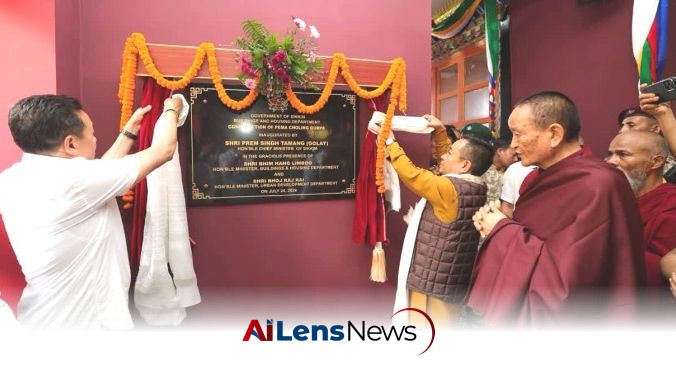


The Chief Minister inaugurated the Pema Choling Monastery in Salghari, highlighting the government's commitment to cultural heritage and community development.
Gangtok, India Jul 25, 2026 ALN: The Chief Minister recently inaugurated the Pema Choling Monastery in Salghari, marking a significant milestone in the region's cultural and spiritual landscape. This event not only celebrates the architectural beauty of the monastery but also underscores the government's commitment to preserving cultural heritage while promoting community development. The inauguration of the Pema Choling Monastery highlights the importance of such institutions in fostering a sense of belonging and identity among the local populace, which is often crucial in regions where cultural heritage plays a central role in community life.
During the inauguration ceremony, the Chief Minister emphasized the importance of such initiatives in fostering a sense of community and belonging among the residents. He stated, "The Pema Choling Monastery will serve as a beacon of hope and a center for spiritual learning, contributing to the overall development of Salghari." This statement reflects a broader vision of integrating spiritual and cultural development with community welfare, a concept that has gained traction in various regions as a means to enhance social cohesion and local identity. The Chief Minister's remarks resonate with a growing understanding that cultural institutions can serve as vital components in the social fabric of communities, particularly in areas with rich historical and spiritual legacies.
The Pema Choling Monastery is designed to be a hub for cultural activities, spiritual teachings, and community gatherings. Monasteries traditionally serve as centers of learning and community engagement in many cultures, particularly in regions influenced by Buddhism. The establishment of the Pema Choling Monastery is expected to attract visitors and devotees from various regions, thereby boosting local tourism and economy. This influx of visitors can significantly impact local businesses, including hospitality, food services, and handicrafts, fostering economic growth and creating job opportunities for the local population. The potential for increased tourism can lead to the development of new businesses and services catering to visitors, which can further stimulate the local economy.
Moreover, the monastery is anticipated to host various cultural events, festivals, and spiritual retreats, further enriching the cultural tapestry of Salghari. These activities not only promote tourism but also provide a platform for cultural exchange, allowing local traditions to be shared and appreciated by a broader audience. In this way, the monastery can play a pivotal role in the preservation and promotion of the region's unique cultural heritage. The events hosted by the monastery may include traditional music and dance performances, art exhibitions, and workshops that highlight local crafts, thereby fostering a deeper appreciation for the region's cultural diversity.
The Chief Minister reiterated the government's dedication to enhancing cultural infrastructure across the state. He mentioned ongoing projects aimed at preserving historical sites and promoting local traditions, which are vital for maintaining the region's identity. This commitment reflects a growing recognition of the importance of cultural heritage in sustainable development. By investing in cultural infrastructure, the government aims to create a balanced approach that values both modern development and historical preservation. This dual focus is increasingly seen as essential for fostering resilient communities that can thrive in a rapidly changing world.
In addition to the Pema Choling Monastery, the government has initiated several programs aimed at revitalizing other cultural landmarks and supporting local artisans. These initiatives are designed to create a framework where cultural heritage can thrive alongside economic development, ensuring that the unique identity of Salghari is not only preserved but also celebrated. Supporting local artisans not only helps to keep traditional crafts alive but also provides economic opportunities for individuals and families, contributing to the overall economic health of the community.
Local residents expressed their joy and gratitude for the new monastery, viewing it as a positive step towards enriching their community life. The Chief Minister encouraged community members to actively participate in the monastery's activities and contribute to its upkeep. This call for community involvement is crucial, as it fosters a sense of ownership and responsibility among residents, ensuring that the monastery remains a vibrant part of the community for years to come. Community involvement can take many forms, including volunteer opportunities for maintenance, organization of events, and participation in educational programs.
Community engagement in the operations of the monastery can also lead to the development of volunteer programs, educational workshops, and collaborative cultural events. Such initiatives can empower local residents, particularly the youth, by providing them with opportunities to learn new skills, engage in cultural practices, and contribute to the spiritual and economic vitality of their community. By involving the youth, the monastery can help cultivate a new generation of community leaders who are invested in the preservation of their cultural heritage.
Looking ahead, the Chief Minister outlined plans for further development in Salghari, including improved transportation links and enhanced public services. These initiatives are expected to create a more conducive environment for both residents and visitors. Improved transportation infrastructure will not only facilitate easier access to the monastery but also enhance connectivity with other cultural and historical sites in the region, promoting a more integrated approach to tourism. Better transportation can also lead to increased accessibility for local residents, allowing them to participate more fully in cultural and spiritual events.
Furthermore, the government’s focus on enhancing public services, such as healthcare, education, and sanitation, is essential for ensuring that the benefits of cultural development extend beyond tourism. By addressing these fundamental needs, the government can create a holistic environment where cultural and community development go hand in hand with improving the quality of life for all residents. This comprehensive approach can help ensure that the economic benefits derived from tourism and cultural activities are equitably shared among the community.
In conclusion, the inauguration of the Pema Choling Monastery is a testament to the government's commitment to cultural preservation and community development. It stands as a symbol of hope and unity for the people of Salghari. The monastery not only enriches the spiritual landscape of the region but also serves as a catalyst for economic growth and community engagement. As Salghari moves forward, the integration of cultural heritage with modern development strategies will be vital in ensuring a sustainable and vibrant future for its residents. The successful implementation of these initiatives can serve as a model for other regions seeking to balance cultural preservation with economic development, highlighting the potential of cultural institutions to foster community resilience and cohesion.
To learn more about the latest developments in Cultural Events, stay updated with our exclusive reports and analyses on AiLensNews.

