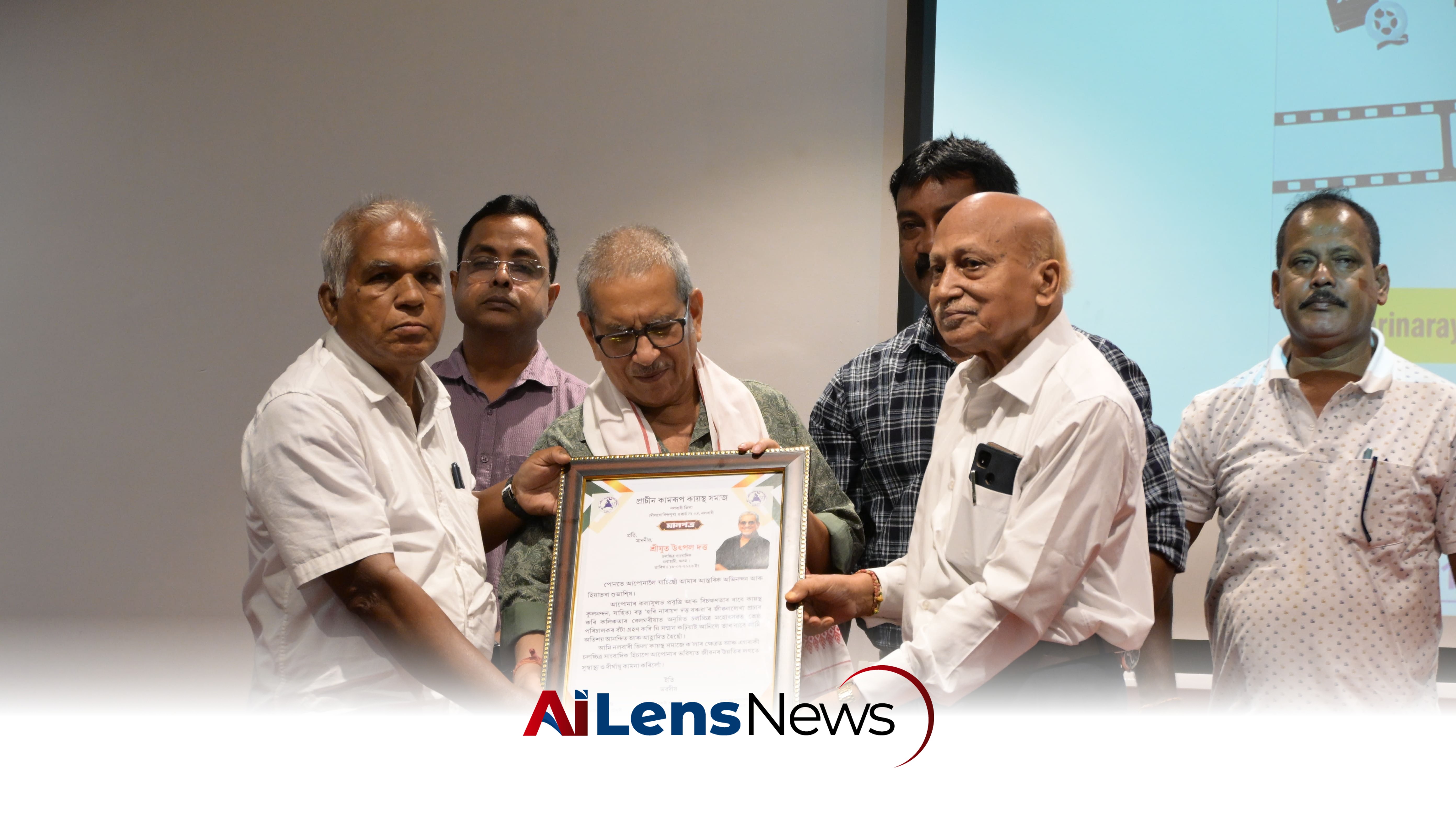


Assam Down Town University showcased five award-winning documentaries, emphasizing its commitment to cultural preservation and documentary filmmaking.
Kohima, India Jul 22, 2026 ALN: Guwahati: Assam Down Town University (AdtU) hosted a special screening of five documentary films at the auditorium of Building 3, Down Town Hospital, on July 18, highlighting its growing focus on documentary filmmaking and cultural preservation.
The screening featured Harinarayan, Wangala, Debadhwani, Devadasi, and Fagu Khele Karunamoi. The university stated that Wangala, Debadhwani, Devadasi, and Fagu Khele Karunamoi were edited entirely at AdtU, reflecting its expanding capabilities in film production and post-production.
According to the university, the documentaries were conceptualized by AdtU, produced by Prof Bandana Dutta and Gariasi Dutta, and directed by Utpal Datta. The films explore India’s diverse cultural traditions, heritage, and communities, showcasing the rich tapestry of life and practices that define various regions of the country.
Documentary filmmaking has gained prominence as an important medium for storytelling, particularly in a country like India, where diverse cultures and traditions coexist. The films presented during the screening not only serve as artistic expressions but also as vital tools for cultural preservation. Each documentary addresses different aspects of Indian culture, providing insights into the lives of people and the customs that shape their identities.
Among the featured works, Harinarayan has received national recognition, adding to the university’s profile in the field of creative arts and documentary cinema. This particular film delves into the life and teachings of Harinarayan, a figure significant to the cultural and spiritual landscape of Assam. The recognition received by this documentary underscores the potential of regional narratives to resonate on a national level, thereby encouraging more filmmakers to explore local stories.
The event was attended by academicians, students, filmmakers, media professionals, and invited guests, indicating a strong interest in documentary filmmaking within the academic community and beyond. Discussions focused on the role of documentary films in preserving cultural heritage, promoting social awareness, and encouraging a deeper understanding of India’s diverse traditions. Such dialogues are crucial in an era where globalization often threatens to overshadow local cultures and narratives.
The university emphasized that such initiatives aim to promote creative excellence and support impactful storytelling centered on the cultural heritage of the Northeast and the country. The Northeast region of India, known for its unique cultural diversity and rich traditions, provides a fertile ground for documentary filmmakers. By focusing on local stories, filmmakers can foster a sense of pride and identity among communities while also educating broader audiences.
In recent years, there has been a growing recognition of the importance of documentary films in educational settings. Universities are increasingly incorporating film studies into their curricula, recognizing the power of visual storytelling as a means of engaging students and fostering critical thinking. AdtU’s initiative to host screenings and support documentary filmmaking aligns with this broader trend, positioning the university as a leader in promoting creative arts in the region.
Moreover, the involvement of faculty members like Prof Bandana Dutta and Gariasi Dutta in the production of these films highlights the commitment of the university to not only educate students but also actively participate in the cultural discourse through creative endeavors. Their roles as producers ensure that the films are not just academic exercises but are rooted in real-world experiences and insights.
As the landscape of media consumption continues to evolve, documentaries have emerged as a popular format for audiences seeking authentic stories and deeper connections to cultural narratives. The rise of digital platforms has made it easier for filmmakers to reach wider audiences, allowing regional stories to gain visibility and appreciation beyond their local contexts. This shift presents both challenges and opportunities for filmmakers, particularly in navigating the balance between artistic integrity and commercial viability.
The screening at AdtU serves as a reminder of the power of documentary films to bridge gaps between communities, foster understanding, and celebrate diversity. By showcasing these films, the university not only highlights the talent of its students and faculty but also contributes to the broader cultural landscape of India. This event is part of a larger movement to elevate documentary filmmaking as a respected and essential form of artistic expression.
Looking ahead, it is essential for institutions like AdtU to continue supporting initiatives that promote documentary filmmaking. This can include providing resources for aspiring filmmakers, organizing workshops, and facilitating collaborations with industry professionals. By nurturing the next generation of storytellers, the university can play a pivotal role in ensuring that the rich cultural heritage of India is preserved and celebrated through the medium of film.
In conclusion, the recent screening of award-winning documentaries at Assam Down Town University marks a significant step in promoting documentary filmmaking and cultural preservation. As the university continues to invest in creative arts, it not only enhances its academic offerings but also contributes to the vital task of keeping cultural narratives alive for future generations. The success of this screening may inspire similar events in the future, further enriching the cultural dialogue within the region and beyond.
The importance of documentary films in the context of cultural preservation cannot be overstated. In a rapidly globalizing world, where homogenization threatens to dilute unique cultural identities, documentaries serve as a powerful means of recording and sharing stories that might otherwise be lost. They provide a platform for marginalized voices and highlight the richness of traditions that define the various communities across India.
Additionally, the screening of these documentaries at AdtU aligns with a broader societal movement towards valuing indigenous knowledge and practices. By documenting local customs, rituals, and lifestyles, filmmakers contribute to a collective memory that is crucial for future generations. This is particularly important in regions like Northeast India, where many communities possess distinct cultural heritages that are at risk of being forgotten in the face of modernization and urbanization.
Furthermore, the university's initiative reflects an understanding of the educational potential of documentaries. They serve not only as tools for cultural expression but also as educational resources that can stimulate discussion, promote empathy, and encourage critical engagement among viewers. By integrating documentary films into academic curricula, institutions can enhance students' learning experiences and foster a deeper appreciation for the complexities of human experiences.
As filmmakers and educators continue to collaborate, the potential for innovative storytelling grows. The interaction between academic institutions and the film industry can lead to new approaches in documentary filmmaking, where students are encouraged to explore experimental narratives and utilize modern technology to tell their stories. This synergy can cultivate a vibrant creative community that not only produces compelling content but also influences public discourse.
The impact of events like the documentary screening at AdtU extends beyond the university's walls. They inspire local filmmakers to pursue their passions and empower communities to share their stories. By showcasing the work of filmmakers who focus on regional narratives, the university helps to create a supportive environment that values local talent and encourages originality.
In summary, the recent screening of award-winning documentaries at Assam Down Town University is more than just an academic event; it represents a commitment to cultural preservation, community engagement, and the celebration of diversity through the art of filmmaking. As the university continues to champion documentary filmmaking, it contributes to a larger narrative that honors the past while inspiring future generations to tell their own stories. The implications of this initiative are profound, as it fosters a culture of creativity, awareness, and pride in the rich tapestry of India's cultural heritage.
To learn more about the latest developments in Cultural Events, stay updated with our exclusive reports and analyses on AiLensNews.

