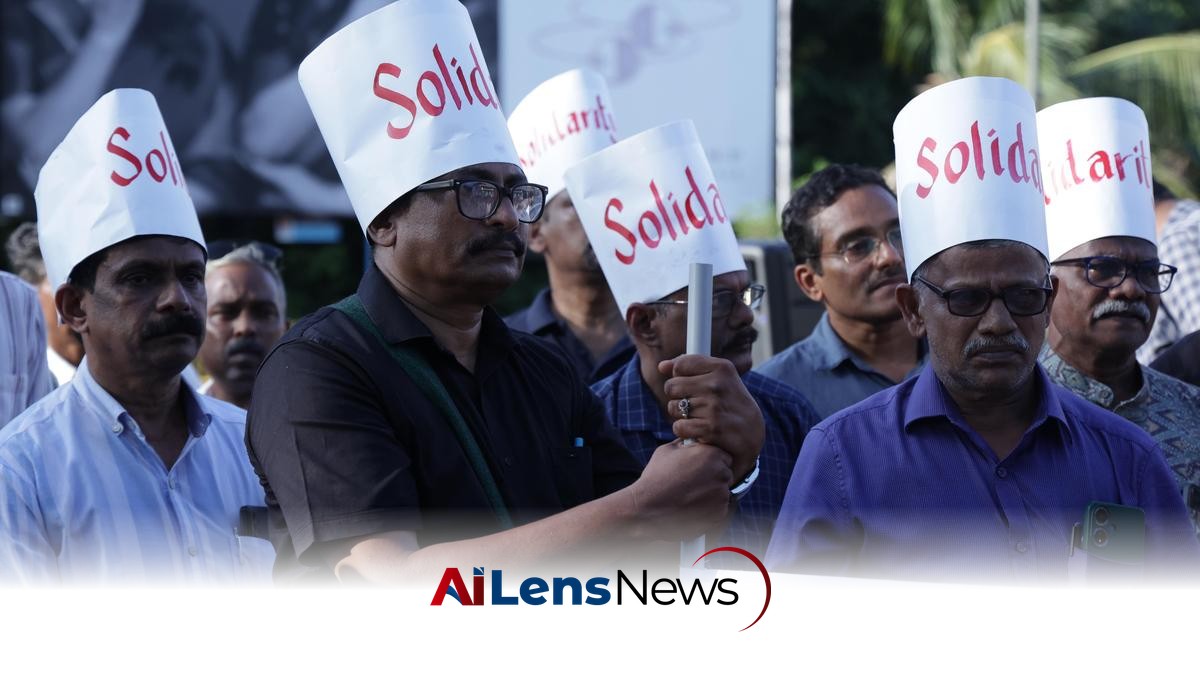


Purogamana Kalasahithya Sangham (Pukasa) held a protest in Kochi, expressing solidarity with the student agitation in Delhi, featuring performances and speeches from various artists.
Thiruvananthapuram, India Jul 25, 2026 ALN: Purogamana Kalasahithya Sangham (Pukasa), a Left-leaning collective of writers and artists in India, organized a protest meet in Kochi on Friday, July 24, 2026, expressing solidarity with the ongoing student agitation in Delhi. This protest is part of a larger wave of activism that has swept across the country, as students mobilize to voice their concerns over various educational and social issues, including government policies that they perceive as detrimental to the educational landscape. The protests in Delhi are not isolated incidents; they are emblematic of a growing trend among students nationwide who are increasingly vocal about their grievances and demands for change.
The protests in Delhi have garnered significant attention, as they are rooted in a range of grievances that resonate with students nationwide. Issues such as rising tuition fees, inadequate facilities, and perceived governmental neglect of higher education institutions have fueled discontent among the student body. In the past few years, there has been a growing sentiment among students that their voices are not being heard, prompting many to take to the streets in protest. The discontent is not merely about educational policies; it reflects a broader frustration with socio-economic disparities, lack of job opportunities, and a perceived erosion of democratic values within educational institutions.
At the Kochi protest, Joshy Donbosco, the State Secretary of Pukasa, inaugurated the meet, emphasizing the importance of solidarity among different groups advocating for social justice. His remarks highlighted how the struggles of students in Delhi are reflective of broader societal issues that affect marginalized communities across India. The event featured several prominent figures in the arts and literature community, including Vanitha Sahithi State Secretary Ravitha Haridas, artists Sathyapal and Sindhu Divakaran, and Pukasa District Secretary Saheer Ali, all of whom addressed the gathering to express their support for the student protestors. These figures play a crucial role in mobilizing public sentiment and providing a voice to those who may feel powerless in the face of systemic challenges.
The inclusion of artistic performances at the protest is a hallmark of Pukasa's approach to activism. A monodrama titled Hrudayam, written by Sureshkumar Sreestha, was performed by A.H. Shanavas during the event. The use of drama and other forms of art serves not only to entertain but also to provoke thought and inspire action among the audience. The themes explored in Hrudayam likely resonate with the struggles faced by students, reflecting their emotional and psychological battles in the face of systemic challenges. This intertwining of art and activism is significant as it can engage a wider audience, making complex issues more relatable and accessible.
Additionally, the protest featured performances of protest anthems by artists such as Salimon Kumbalangi, Thennal, and Viswan Panampukad. Music has long been a powerful tool for social movements, capable of uniting individuals and amplifying their messages. The anthems performed at the protest likely served to energize participants and create a sense of camaraderie among attendees, reinforcing their collective identity as advocates for change. Music, in this context, becomes a rallying cry, echoing the sentiments of the protestors and providing a soundtrack to their demands for justice and reform.
Poetry also played a significant role in the event, with recitations by Baburaj Vyttila, Anil Perumbalam, Anvar Kakkanad, Jiji Raghu, P.R. Raghu, and Aji Alath. Poetry can articulate complex emotions and experiences in a way that resonates deeply with listeners, making it a valuable medium for expressing dissent and solidarity. The recitations may have addressed the struggles of the student body, the importance of education, and the need for systemic reform in Indian society. The ability of poetry to capture the nuances of personal and collective experiences makes it a powerful tool in social movements, allowing for a deeper connection between the speaker and the audience.
The protest in Kochi is emblematic of a broader trend of grassroots activism in India, where artists and intellectuals are increasingly using their platforms to advocate for social change. This movement has been particularly pronounced in recent years, as various social issues have come to the forefront, including caste discrimination, gender equality, and freedom of expression. The involvement of Pukasa in this protest highlights the intersection of art and activism, suggesting that cultural figures can play a crucial role in shaping public discourse and mobilizing communities. The collective action of artists and activists can amplify the voices of marginalized groups, fostering a culture of resistance against systemic oppression.
Moreover, the solidarity shown by Pukasa with the Delhi students underscores the interconnectedness of struggles across different regions and sectors of society. In a diverse and multi-faceted nation like India, the challenges faced by students in one city can resonate with those in another, fostering a sense of unity among disparate groups. This solidarity is essential for building a cohesive movement that can effectively challenge systemic injustices. The recognition that student issues are not confined to geographical boundaries but are part of a larger struggle for social justice can galvanize support and encourage collective action.
The implications of such protests extend beyond immediate demands for policy changes. They signify a growing awareness among young people of their rights and the power of collective action. As more students engage in activism, they contribute to a culture of dissent that can influence future generations. The ongoing protests in Delhi, supported by events like the one in Kochi, may inspire other communities to mobilize around their own issues, creating a ripple effect of activism across the country. This growing movement of youth activism has the potential to reshape the political landscape in India, as young people increasingly demand accountability and transparency from their leaders.
In conclusion, the protest organized by Pukasa in Kochi serves as a reminder of the vital role that art and culture play in social movements. By bringing together writers, artists, and activists, Pukasa is fostering a sense of community and shared purpose among those advocating for change. As the situation in Delhi continues to evolve, the solidarity expressed in Kochi may help to amplify the voices of student protestors and contribute to a larger dialogue about the future of education and social justice in India. The involvement of cultural figures in activism not only enriches the discourse but also reinforces the idea that social change is a collective endeavor, one that requires the participation and commitment of diverse voices across society.
To learn more about the latest developments in Cultural Events, stay updated with our exclusive reports and analyses on AiLensNews.

