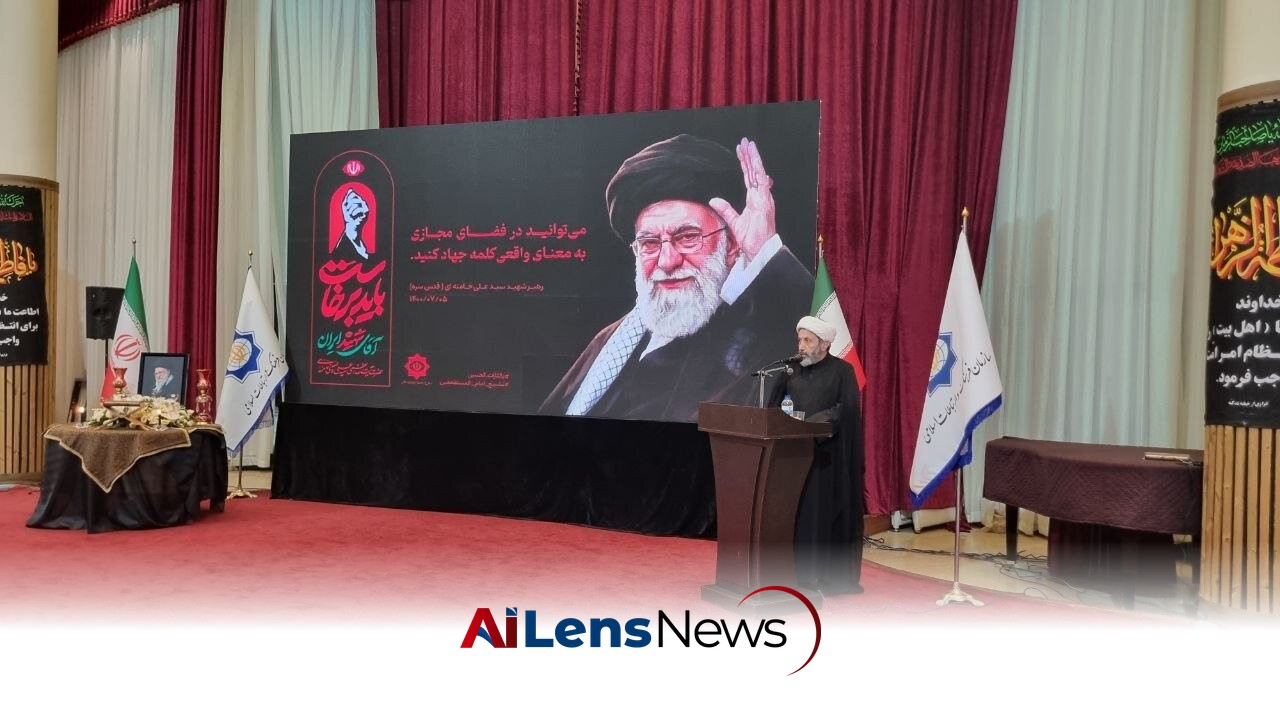


TEHRAN- Hojjatoleslam Mohammad-Mehdi Imanipour, head of Iran’s ICRO, hosted a gathering to counter distorted narratives and showcase Iran's authentic culture.
Tehran, Iran Jul 11, 2026 ALN: TEHRAN- To counter distorted narratives and showcase the authentic cultural and social landscape of the Islamic Republic of Iran, Hojjatoleslam Mohammad-Mehdi Imanipour, the head of Iran’s Islamic Culture and Relations Organization (ICRO), hosted a high-profile gathering titled "Tell the World About Iran" on Tuesday evening.
The event saw the participation of over 100 prominent influencers and media activists hailing from 27 different countries, marking a significant diplomatic effort to engage with digital content creators on a global scale. This engagement is particularly crucial in today’s media landscape, where information can be rapidly disseminated and sometimes manipulated, leading to misrepresentations of countries and their cultures.
Addressing the international delegates, Hojjatoleslam Imanipour opened the session by expressing gratitude to the participants, stating that the Iranian people would never forget the empathy shown during their times of hardship. He lauded the free-thinking nature of the guests, asserting that their commitment to speaking the truth constitutes a vital service to the global community. This acknowledgment of empathy suggests a desire for mutual understanding and respect, which has often been lacking in international relations, particularly in the context of Iran's complex history with the West.
Turning to the recent national mourning, Imanipour highlighted the significance of the funeral procession for the Martyred Leader of the Islamic Revolution, Ayatollah Seyyed Ali Khamenei. This event is emblematic of the deep-rooted cultural and religious sentiments that continue to shape Iranian identity and politics. He described the event as a "referendum," stating that the million-man marches signify the Iranian people's renewed vote of confidence in the Islamic Republic of Iran. Such large-scale demonstrations often serve as a barometer of public sentiment, reflecting the populace's allegiance to the prevailing political ideology and leadership.
Imanipour emphasized that the legacy and school of thought established by the Martyred Leader pose a direct challenge to hegemony-seeking powers, who consequently seek its destruction. This framing positions Iran not merely as a nation-state but as a representative of a broader ideological struggle against perceived imperialistic forces. The notion of hegemony here is critical, as it underscores the geopolitical tensions that have historically defined Iran's interactions with Western powers, particularly the United States.
In a sharp critique of Western foreign policy, the ICRO head asserted that the conflict between the United States and Iran is not merely about nuclear issues, proxies, or human rights, but is fundamentally a clash of civilizations and cultures. "The Americans are concerned that Iran challenges the American liberal-democratic system," he stated, adding that Iran is currently battling a campaign of "media terrorism" designed to distort the truth. This perspective reflects a broader narrative often employed by Iranian officials, which frames the U.S. as an adversary that seeks to undermine not only Iran’s political system but also its cultural and religious values.
Imanipour further urged the global community not to forget the legitimate hatred and opposition toward the Zionist regime. This statement touches on a contentious aspect of Iranian foreign policy, where support for Palestinian rights and opposition to Israel is a cornerstone of the Islamic Republic's ideological foundation. He noted that the primary message emanating from the recent funeral processions was one of "rising up," arguing that mere verbal condemnation of enemies is insufficient. This call to action reflects a desire for a more proactive stance in international relations, emphasizing the importance of solidarity among nations that share similar grievances against perceived injustices.
"Our war today is a war of truth against falsehood," Imanipour declared. He asserted that Iranians do not succumb to threats, but rather transform such challenges into opportunities. This sentiment of resilience is a recurring theme in Iranian rhetoric, particularly in the face of economic sanctions and diplomatic isolation. He concluded by stating that the blood of the Martyred Leader would create new opportunities for the nation, as Iran strives toward a new civilization rooted in the East and guided by religious teachings. This vision of a new civilization underscores Iran's aspiration to position itself as a leader in the region, advocating for an alternative model of governance that contrasts with Western liberalism.
The ICRO head closed his remarks by reaffirming Iran's commitment to interfaith dialogue and the value of communication between different religions, framing the initiative as part of a broader diplomatic strategy to enhance the country's "soft power" and foster intercultural dialogue in an era of digital polarization. In a world increasingly characterized by division and strife, such efforts at promoting dialogue can be seen as essential for building bridges between disparate cultures and fostering mutual respect. The emphasis on soft power reflects an understanding that cultural exchange and mutual understanding can often be more effective than military or economic coercion in achieving foreign policy objectives.
This gathering, therefore, is not merely an event but a strategic move by Iran to reshape its narrative on the global stage. By engaging with international media activists and influencers, Iran seeks to leverage their platforms to disseminate its perspectives and counter the prevailing narratives that often portray the country in a negative light. The implications of this initiative could be significant, as it may help to alter perceptions of Iran in the international community, potentially leading to a more nuanced understanding of its culture, politics, and society.
In conclusion, the ICRO's initiative to engage with global media activists highlights the importance of narrative in international relations. As countries navigate the complexities of the modern geopolitical landscape, the ability to convey one's realities and counter misinformation becomes increasingly crucial. Iran's efforts to showcase its rich cultural heritage and political ideology through such diplomatic endeavors may play a pivotal role in redefining its image and fostering a more favorable environment for dialogue and cooperation on the global stage.
To learn more about the latest developments in Heritage & History, stay updated with our exclusive reports and analyses on AiLensNews.

