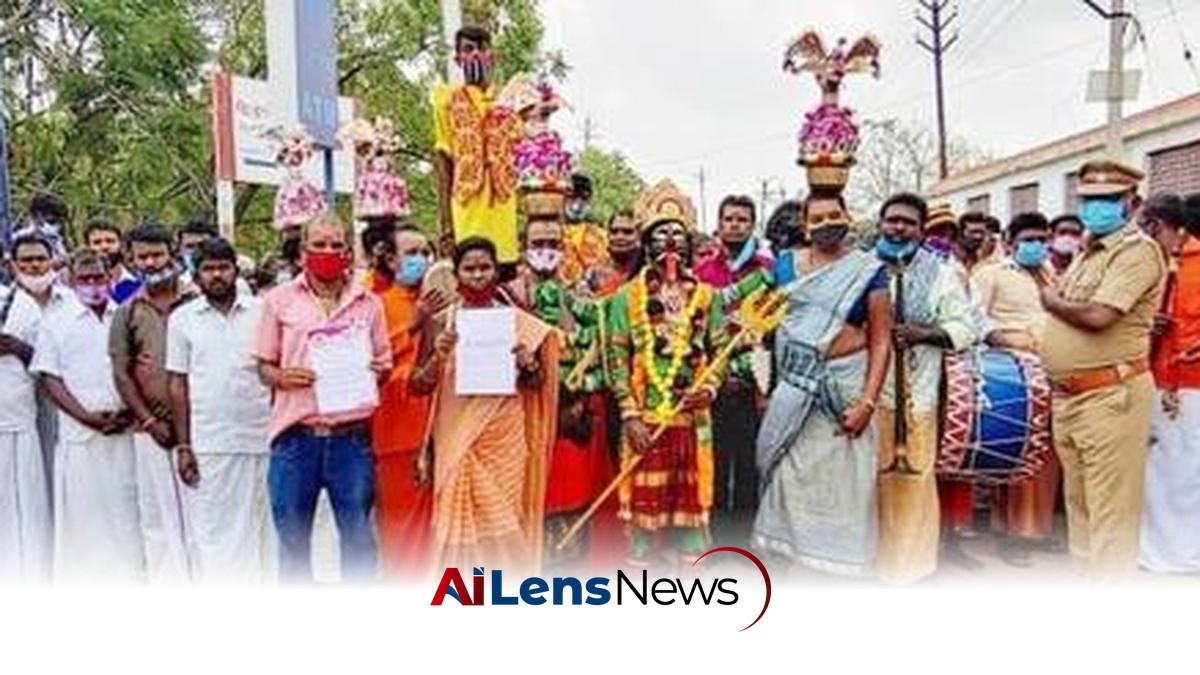


The ban on temple festivals due to COVID-19 has severely impacted the livelihoods of folk artistes in Virudhunagar, who rely on these events for income.
New Delhi, India Apr 12, 2021 ALN: Virudhunagar
The impact of the COVID-19 pandemic has reverberated across various sectors, and one of the groups that have been particularly hard hit is the community of folk artistes in Tamil Nadu. With the State Government implementing a ban on temple festivals due to the resurgence of COVID-19 cases during the second wave, many folk artistes have found their livelihoods severely compromised. The timing of the ban is especially detrimental as it coincides with the peak season for temple festivals, which traditionally takes place during the Tamil months of Masi, Panguni, Chithirai, and Vaikasi.
These months are crucial for folk artistes, who rely heavily on temple festivals for their income. K. Alagesan, the president of the Virudhunagar district Drama and Folk Artists Association, expressed the dismay felt by many in the community. He noted that many artistes were looking forward to this season as an opportunity to repay loans accumulated during the previous year's lockdown. The restrictions imposed by the government have thus come at a particularly challenging time, exacerbating the financial strain on these performers.
Folk artistes in Virudhunagar and across Tamil Nadu are known for their rich cultural contributions, which include performances that feature traditional musical instruments such as the thavil, nagaswaram, thappu, and villipattu. They also engage in various folk dances, including karagattam, mayilattam, oyilattam, and Raja Rani attam. These performances are not merely forms of entertainment; they are integral to the cultural fabric of the region and are often tied to religious and community celebrations. The significance of these festivals extends beyond the performances themselves; they foster a sense of community, belonging, and cultural identity among the people.
For many folk artistes, performing is not just a job; it is a way of life. Alagesan emphasized that this community knows no other profession, and their ability to support their families is directly linked to their performances. The ban on temple festivals has left many artistes without any means of income, leading some to resort to performing on the streets in an attempt to earn a living. This shift to street performances, however, does not provide a sustainable solution and often results in meager earnings. The informal nature of street performances also exposes these artistes to various risks, including lack of safety, inadequate audience, and the challenge of competing with other forms of entertainment.
Tragically, the financial pressures have led to dire consequences for some members of the community. Alagesan revealed that there have been instances where individuals, overwhelmed by the inability to repay loans and provide for their families, have taken their own lives. This highlights the severe emotional and psychological toll that the pandemic and subsequent restrictions have had on folk artistes, who are now grappling not only with financial instability but also with the loss of their identity and purpose. The intertwining of cultural expression and economic survival underscores the precarious position of these artistes, who face a dual crisis of livelihood and mental health.
In light of these challenges, Alagesan pointed out that the assistance provided by the government last year—₹ 1,000 from the Department of Art and Culture—was insufficient to address the losses incurred over an entire year. He argues that the government should consider allowing temple festivals to proceed with certain restrictions, such as permitting performances with 50% attendance. This would not only help to revive the livelihoods of folk artistes but also ensure that cultural traditions are preserved during these trying times. Alagesan's call for a balanced approach reflects a growing recognition that cultural activities are essential for community well-being, particularly during crises.
Furthermore, Alagesan has advocated for a more substantial financial support package for the folk artistes. He has submitted a memorandum to the Virudhunagar Collector, R. Kannan, requesting either the resumption of temple festivals under controlled conditions or an increase in financial assistance to ₹ 10,000 for each folk artist. Such measures could provide critical support to those struggling to make ends meet and help to stabilize the community economically. The request for increased financial assistance highlights the urgent need for government intervention tailored to the unique circumstances faced by folk artistes, who often lack access to conventional employment benefits.
In Virudhunagar district alone, there are approximately 4,000 folk artistes who depend on performances for their livelihood. The collective impact of the festival ban is not only felt by the artistes themselves but also by their families and the wider community that benefits from the cultural richness these performances bring. The loss of temple festivals means a loss of tradition, community engagement, and a vital source of cultural expression. The ripple effects of this ban extend beyond the immediate financial implications; they threaten the continuity of cultural practices that have been passed down through generations.
The situation of folk artistes in Tamil Nadu reflects broader trends seen across various sectors affected by the pandemic. Many industries have had to adapt to new realities, and the arts and culture sector is no exception. The ongoing challenges faced by folk artistes underscore the need for a comprehensive approach to support those whose livelihoods have been disrupted by the pandemic. This includes not only immediate financial assistance but also long-term strategies to ensure the sustainability of cultural practices and the artists who keep them alive. Policymakers are increasingly recognizing that the arts are not merely a luxury but a vital component of social and economic resilience.
As the situation evolves, the voices of folk artistes like K. Alagesan are crucial in advocating for their rights and needs. Their experiences shed light on the broader implications of the pandemic on cultural heritage and the importance of supporting the arts as a vital part of society. The resilience of the folk arts community will be tested in the coming months, but with the right support and recognition, there is hope for recovery and a return to the vibrant cultural celebrations that define Tamil Nadu's rich heritage. The future of folk arts in the region hinges on a collective effort to acknowledge and address the unique challenges faced by these artistes, ensuring that their contributions to culture and society are not lost in the shadows of the pandemic.
To learn more about the latest developments in Traditions & Festivals, stay updated with our exclusive reports and analyses on AiLensNews.

