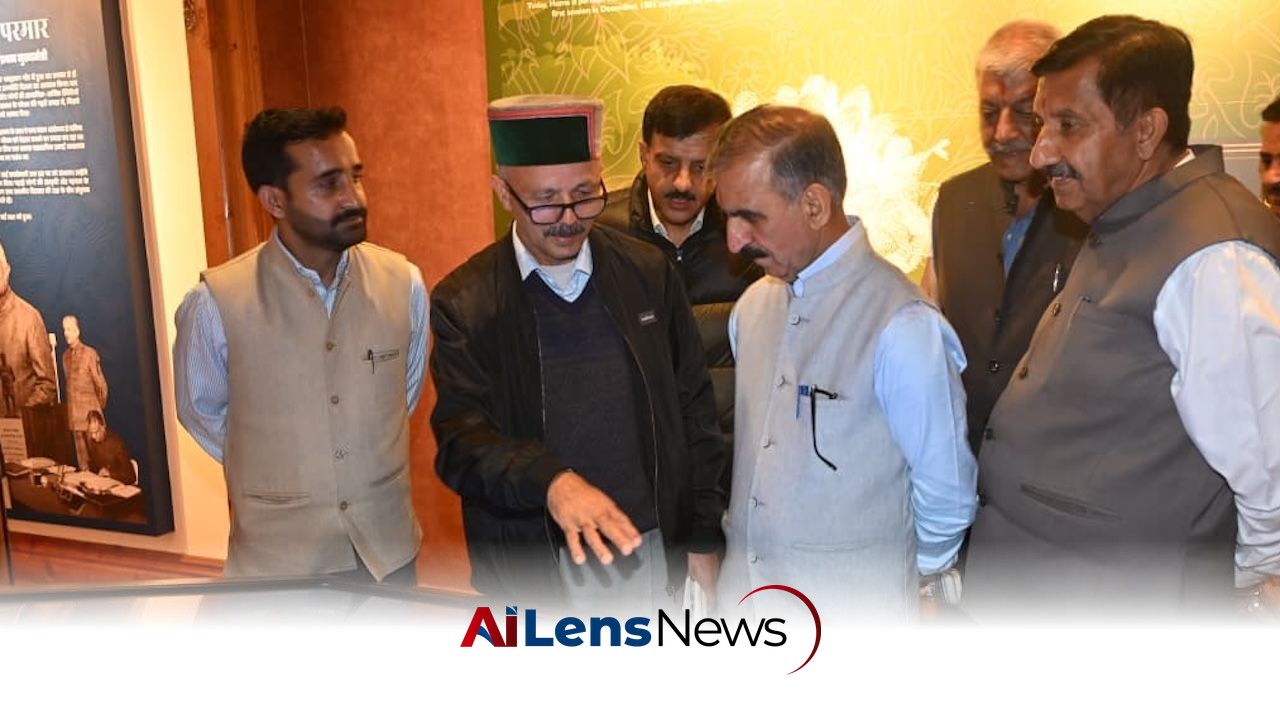


A new Digital Museum in Shimla was inaugurated by Chief Minister Sukhvinder Singh Sukhu, aiming to preserve Himachal Pradesh's rich cultural heritage through advanced technology.
New Delhi, India Jul 10, 2026 ALN: Shimla — A state-of-the-art Digital Museum at Bantony in Shimla was opened to the public on Friday, marking a significant step towards preserving and promoting the rich cultural and historical heritage of Himachal Pradesh through modern digital technology.
Chief Minister Sukhvinder Singh Sukhu inaugurated the museum and described the occasion as the beginning of a new chapter in the conservation and global promotion of the state’s heritage. He said Bantony occupies a special place in Shimla’s history, and the museum would help connect future generations with Himachal Pradesh’s rich cultural legacy.
Speaking on the occasion, the Chief Minister said the inauguration was not merely the opening of another institution but the beginning of a new era in heritage conservation. He emphasized that the digital museum would serve as a bridge between the past and the future by enabling visitors to experience the history and culture of Himachal Pradesh in an engaging and immersive manner.
Designed to appeal to visitors of all age groups, the museum employs advanced digital technologies such as high-resolution 3D scanning, virtual reality (VR), augmented reality (AR), interactive timelines, and immersive storytelling. These features allow visitors to explore the state’s diverse folk traditions, handicrafts, spiritual heritage, and the inspiring stories of freedom fighters through interactive displays and digital experiences.
The museum presents a comprehensive account of Shimla’s transformation from a Himalayan hill town into a city of historical significance. It showcases the architectural and cultural heritage of Himachal Pradesh, the lives and contributions of eminent personalities, the historic Kalka-Shimla Railway, the state’s journey since its formation, its vibrant art and cultural traditions, as well as its distinctive cuisine, which forms an important part of Himachal’s identity.
The Chief Minister expressed confidence that the Digital Museum would emerge as a landmark institution and a symbol of Himachal Pradesh’s rich cultural heritage. He stated that the museum would not only preserve the state’s invaluable history for future generations but also present it to a global audience through the effective use of cutting-edge digital technology.
The creation of the Digital Museum at Bantony is a reflection of a broader trend in heritage conservation, where technology is increasingly being utilized to enhance the visitor experience and to make cultural education more accessible. Digital museums are becoming popular worldwide as they allow for interactive engagement, which can be particularly appealing to younger audiences who are more accustomed to digital formats.
Himachal Pradesh, known for its stunning landscapes, rich traditions, and diverse cultures, has a long history that dates back centuries. The state has been influenced by various civilizations and has a unique blend of cultural practices, making it a significant part of India’s heritage. The Digital Museum aims to encapsulate this essence and provide a platform for both locals and tourists to appreciate the state's history in innovative ways.
One of the key highlights of the Digital Museum is its focus on local artisans and craftspeople. Himachal Pradesh is renowned for its handicrafts, including intricate woodwork, handwoven textiles, and traditional pottery. By showcasing these crafts in a digital format, the museum not only promotes these art forms but also supports local artisans by increasing their visibility and potential market reach.
Moreover, the museum's commitment to telling the stories of freedom fighters from Himachal Pradesh is particularly noteworthy. The state has a rich history of resistance and contribution to India's freedom struggle, and the museum provides an opportunity to honor those who fought for the country's independence. This aspect of the museum serves as an educational resource, inspiring visitors to learn about the sacrifices made by these individuals.
The use of virtual and augmented reality in the museum allows for a more immersive experience. For example, visitors may be able to don VR headsets to experience historical events as if they were present at that time, or use AR to see how traditional crafts are made or how historical sites looked in the past. This innovative approach not only makes learning more engaging but also helps in retaining information better than traditional methods.
In addition to showcasing cultural heritage, the Digital Museum also aims to promote tourism in the region. By attracting visitors from around the world, it is expected to boost the local economy and create job opportunities in tourism and related sectors. The Chief Minister mentioned that the museum would serve as a catalyst for economic development in Shimla and surrounding areas, encouraging investment in infrastructure and services that support tourism.
As the world becomes increasingly interconnected through technology, the importance of digital platforms for cultural preservation cannot be overstated. The Digital Museum at Bantony stands as a testament to how technology can be harnessed to foster a deeper understanding and appreciation of heritage. It serves not only as a repository of information but also as a vibrant space for community engagement, learning, and cultural exchange.
The implications of this initiative extend beyond just local or national boundaries. In a global context, the Digital Museum positions Himachal Pradesh as a participant in the worldwide conversation about heritage conservation and the role of technology in this field. As other regions look to innovate and find new ways to engage audiences, the success of this museum could serve as a model for similar projects elsewhere.
In conclusion, the Digital Museum at Bantony is not just a technological advancement but a cultural milestone for Himachal Pradesh. It represents a forward-thinking approach to heritage conservation, ensuring that the rich tapestry of the state's history is preserved and celebrated for generations to come. The museum is set to become a landmark institution, bridging the past with the future and inviting visitors to explore the unique stories that define Himachal Pradesh.
To learn more about the latest developments in Heritage & History, stay updated with our exclusive reports and analyses on AiLensNews.

