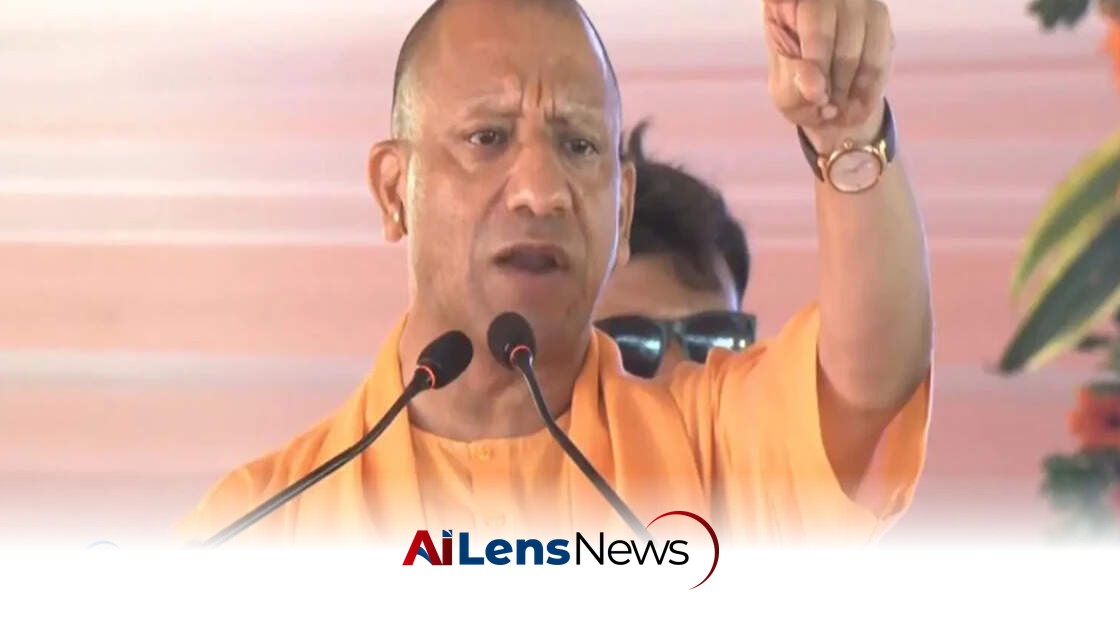


Uttar Pradesh Chief Minister Yogi Adityanath defends the Ram Temple Trust, stating that only eight individuals were implicated in a donation theft investigation, while criticizing opposition parties for their attacks.
New Delhi, India Jul 8, 2026 ALN: Chitrakoot (UP): Uttar Pradesh Chief Minister Yogi Adityanath recently defended the Shri Ram Janmabhoomi Teerth Kshetra Trust amid allegations of donation theft. He stated that the Special Investigation Team (SIT) found evidence against only eight individuals out of nearly 150 involved in counting donations, emphasizing that the entire Trust should not be defamed for the actions of a few.
During a public address after inaugurating projects worth over Rs 950 crore in Chitrakoot, Adityanath criticized the Congress and the Samajwadi Party for attempting to malign Ayodhya and insult the legacy of Lord Ram. He asserted that these opposition parties had become active only after the donation theft case surfaced, suggesting they were exploiting the situation for political gain.
Adityanath highlighted that the Trust itself had recommended the formation of the SIT to investigate the alleged theft. He noted that the investigation revealed evidence against six individuals directly involved in the theft, while two others were implicated in the conspiracy. Based on the SIT's findings, the Trust filed a First Information Report (FIR) and subsequent actions were taken against the accused.
The Shri Ram Janmabhoomi Teerth Kshetra Trust was established in 2020 following a Supreme Court ruling that paved the way for the construction of the Ram Temple in Ayodhya. This ruling was the culmination of a long-standing dispute over the site, which is believed to be the birthplace of Lord Ram, a revered figure in Hinduism. The Trust's formation was met with significant public interest, and it has since been responsible for managing donations and overseeing the construction of the temple, which is expected to be a significant pilgrimage site.
The allegations of donation theft have raised concerns among devotees and stakeholders involved in the temple's construction. The Trust has been under scrutiny for its financial management, particularly given the large sums of money donated by individuals and organizations in support of the temple's construction. Transparency and accountability are critical in such high-profile projects, and any hint of mismanagement can lead to a loss of public trust.
In his remarks, Adityanath questioned the justification for defaming the entire Trust when actions had already been taken against those accused. He stated, "When action has been taken against the accused, what is the justification for defaming the entire Trust, questioning Ayodhya and insulting the legacy of Lord Ram?" He accused the Congress and the Samajwadi Party of having a contract to attack India's faith.
This defense comes at a time when political tensions in Uttar Pradesh are high, particularly with the upcoming elections. The ruling Bharatiya Janata Party (BJP) has a vested interest in maintaining its image as the protector of Hindu interests, and any allegations that may undermine this narrative can be politically damaging. Opposition parties, on the other hand, may seek to capitalize on any missteps or controversies to gain ground in the political landscape.
The BJP has historically positioned itself as the party that champions Hindu nationalism, and the Ram Temple in Ayodhya is a central symbol of this ideology. The temple's construction is not merely a religious project; it also carries significant political weight, representing the culmination of decades of activism and mobilization by Hindu nationalist groups. Therefore, any allegations against the Trust can be interpreted as attacks against the broader Hindu identity that the BJP seeks to promote.
Adityanath urged devotees of Lord Ram and citizens who respect India's faith to remain vigilant. He emphasized that the alleged wrongdoing involved only a handful of individuals among the many engaged in the donation counting process. This narrative aims to reassure the public that the Trust remains committed to its mission and that the actions of a few should not tarnish the entire organization.
The public sentiment surrounding the Ram Temple is deeply intertwined with emotions of faith, nationalism, and identity. For many Hindus, the temple is not just a place of worship but a symbol of cultural pride and historical rectification. The construction of the temple has been viewed as a long-awaited fulfillment of a religious aspiration, making the Trust's integrity paramount in the eyes of its supporters.
In conclusion, the Chief Minister's defense of the Ram Temple Trust reflects a broader political narrative, as he seeks to rally support against perceived attacks from opposition parties while maintaining the integrity of the Trust and its mission. The allegations of donation theft have opened a dialogue about accountability and transparency within religious organizations, and the implications of this controversy may extend beyond the immediate political landscape, affecting the Trust's relationship with its supporters and the broader Hindu community. As the situation unfolds, it will be crucial to monitor how both the Trust and the political entities involved navigate this complex and sensitive issue.
The Ram Temple's significance extends beyond its religious context. The site in Ayodhya has been a focal point of Hindu-Muslim tensions in India for decades. The dispute over the land, which many Hindus believe to be the birthplace of Lord Ram, led to a violent confrontation in 1992 when the Babri Masjid, a mosque located on the site, was demolished by Hindu activists. This event marked a turning point in Indian politics, leading to widespread riots and a shift in the political landscape, with the BJP gaining considerable influence as a result.
The Supreme Court's ruling in 2019, which granted the land for the construction of the Ram Temple, was seen by many as a historic and symbolic victory for Hindu nationalists. The ruling not only resolved a long-standing legal dispute but also reinforced the BJP's narrative of restoring Hindu pride and identity. The establishment of the Trust was a key step in moving forward with the temple's construction, and it has since garnered immense public support, along with significant donations from devotees across the country.
The ongoing controversy surrounding the Trust and the allegations of donation theft come at a critical juncture for the BJP, particularly with elections on the horizon. The party has built much of its electoral strategy around the Ram Temple and Hindu nationalism, making it imperative for the leadership to navigate these allegations carefully. Failure to address the concerns raised by the public could potentially lead to a decline in support among its core voter base.
Moreover, the opposition parties are likely to leverage this controversy to question the BJP's governance and accountability. The Congress and Samajwadi Party may use this situation to rally their supporters by framing the BJP as corrupt and untrustworthy. This could create a more polarized political environment, where religious sentiments are further inflamed, and communal divisions deepened.
As the situation develops, the response from both the Trust and the political landscape will be crucial in shaping the future of the Ram Temple project and its implications for Hindu nationalism in India. The Trust's ability to maintain transparency and accountability will be vital in preserving the faith of its supporters and ensuring that the temple remains a symbol of unity rather than division. The broader implications of this controversy may resonate beyond the immediate context, influencing the dynamics of Indian politics and society for years to come.
To learn more about the latest developments in Corporate & Industry Insights, stay updated with our exclusive reports and analyses on AiLensNews.

