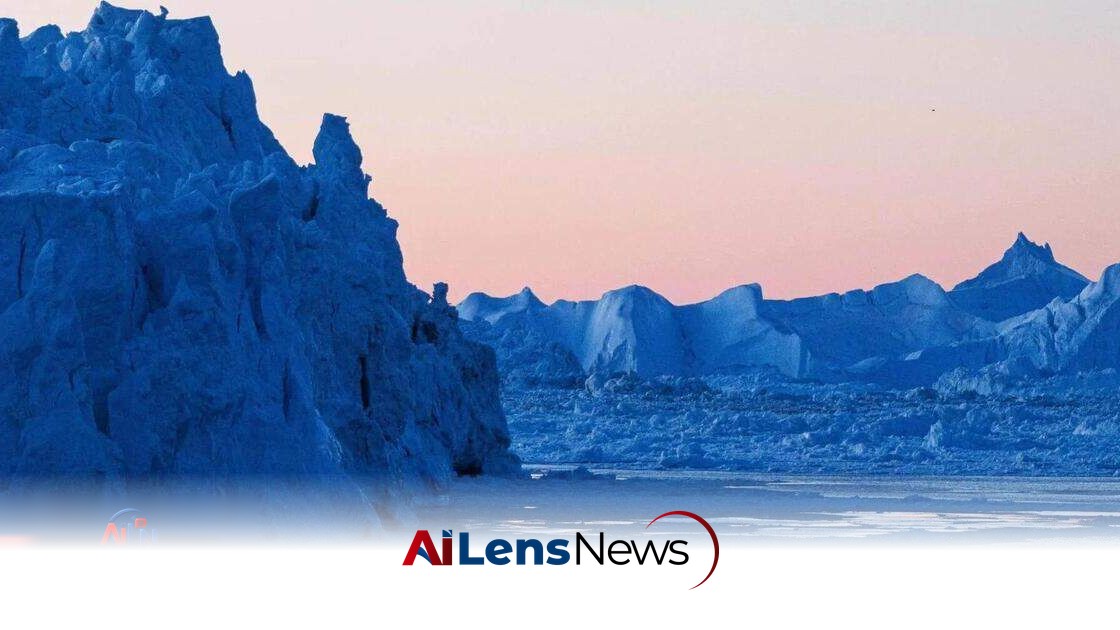


Greenland's strategic Arctic location is crucial for global security. President Trump's interest in the mineral-rich island raises concerns among NATO allies and European nations.
New Delhi, India Jul 8, 2026 ALN: Location, Location, Location: Greenland's position above the Arctic Circle makes the world's largest island a key part of security strategy. Its geographical significance is underscored by the fact that it is one of the last frontiers in terms of global geopolitics, particularly in the context of climate change and international relations. The island is not only strategically located between North America and Europe but also serves as a pivotal point for monitoring Arctic activities, making it an area of interest for various global powers.
Increasing international tensions, global warming, and the changing world economy have put Greenland at the heart of the debate over global trade and security. U.S. President Donald Trump has expressed a keen interest in ensuring that America controls this mineral-rich island, which guards the Arctic and North Atlantic approaches to North America, crucial for both military and commercial shipping routes.
Trump's repeated demands for the territory and threats to take it by force have rattled the NATO alliance and discomfited European allies who have long relied on the U.S. as a partner in their defense. This shift in rhetoric is particularly alarming given the historical context of U.S.-Denmark relations, which have generally been characterized by mutual respect and cooperation.
Greenland is a self-governing territory of Denmark, a longtime U.S. ally that has rejected Trump's overtures. The Danish government, along with Greenland's own administration, has made it clear that they view Greenland's future as a matter to be decided by its own people. This assertion of autonomy is significant, as it reflects a broader trend among indigenous populations worldwide to reclaim agency over their lands and resources.
The island, 80% of which lies above the Arctic Circle, is home to about 56,000 mostly Inuit people who have largely been ignored by the rest of the world. The Inuit population has its own cultural and historical context, often overshadowed by geopolitical interests. This raises ethical questions about the implications of foreign interest in Greenland, particularly from a humanitarian perspective.
Why Trump Wants Greenland: Trump has mulled territorial expansion via Greenland, Canada, and Venezuela during his second term. However, he often returns to Greenland, arguing that it is necessary for U.S. security to control the Arctic island. This perspective reflects a broader strategy to secure U.S. interests in a region that is becoming increasingly contested due to climate change and melting ice caps.
During a NATO summit, Trump stated, "Greenland is very important to the United States, but it's not important to Denmark. We need it for protection of the world, not just the United States." This statement highlights the U.S. administration's view that controlling Greenland would provide a strategic advantage in the face of perceived threats from other nations, particularly Russia and China. Earlier in his term, he did not rule out taking the island by military force to secure its "right, title, and ownership," although he has since said military options are off the table. This shift in rhetoric reflects the delicate balance of power and diplomacy that characterizes U.S. foreign policy.
Trump claims the U.S. needs Greenland to deter threats from Russia and China, and he has made repeated false claims about Chinese and Russian military forces lurking off the island's coastline. These assertions contribute to a narrative of fear that aims to justify aggressive foreign policy measures, but they also risk escalating tensions unnecessarily.
Greenland's Strategic Location: Greenland sits off the northeastern coast of Canada, with more than two-thirds of its territory lying within the Arctic Circle. This has made it crucial to the defense of North America since World War II, when the U.S. occupied Greenland to prevent it from falling into Nazi hands and to protect vital North Atlantic shipping lanes. The historical context of military occupation highlights the long-standing strategic importance of Greenland in U.S. military planning.
Following the Cold War, the Arctic was largely an area of international cooperation. However, climate change is thinning the Arctic ice, promising to create a northwest passage for international trade and reigniting competition with Russia, China, and other countries over access to the region's mineral resources. This shift from cooperation to competition raises questions about the future of international relations in the Arctic and the potential for conflict over resources.
Security Threats Prompt European Worries: In 2018, China declared itself a "near-Arctic state" to gain more influence in the region. China has also announced plans to build a "Polar Silk Road" as part of its global Belt and Road Initiative, which has created links with countries worldwide. This expansion of Chinese influence in the Arctic has alarmed Western nations, leading to concerns about the militarization of the region and the implications for global trade routes.
Then-U.S. Secretary of State Mike Pompeo rejected China's move, questioning whether the Arctic Ocean would transform into a new South China Sea, fraught with militarization and competing territorial claims. This perspective underscores the geopolitical stakes involved in Arctic governance and the potential for conflict over maritime rights and resources.
Meanwhile, Russia has sought to assert its influence over wide areas of the Arctic, competing with the U.S., Canada, Denmark, and Norway. Moscow has been boosting its military presence in the polar region, home to its Northern Fleet and a site where the Soviet Union tested nuclear weapons. The revival of military posturing in the Arctic reflects a broader trend of rearmament and territorial claims that could destabilize the region.
European leaders' concerns have heightened since Russia launched a war in Ukraine on February 24, 2022. Last year, Russian President Vladimir Putin noted that Moscow is worried about NATO's activities in the Arctic and will respond by strengthening its armed forces there, while also expressing a willingness for broader international cooperation in the region. This dual approach of aggression and diplomacy complicates the security landscape in the Arctic and poses challenges for NATO and its allies.
U.S. Military Presence in Greenland: The U.S. Department of Defense operates the remote Pituffik Space Base in northwestern Greenland, established after the U.S. and Denmark signed the Defense of Greenland Treaty in 1951. This base supports missile warning, missile defense, and space surveillance operations for the U.S. and NATO. The strategic significance of this base cannot be overstated, as it plays a crucial role in monitoring potential threats from above and below the Arctic ice.
Greenland also guards part of the GIUK (Greenland, Iceland, United Kingdom) Gap, where NATO monitors Russian naval movements in the North Atlantic. The GIUK Gap is a vital chokepoint for naval operations, making Greenland's geographical position even more critical for NATO's defense strategy.
Thomas Crosbie, an associate professor of military operations at the Royal Danish Defense College, stated that an American takeover wouldn't improve Washington's current security strategy. He noted, "The United States will gain no advantage if its flag is flying in Nuuk (Greenland's capital) versus the Greenlandic flag. There's no benefits to them because they already enjoy all of the advantages they want." This perspective challenges the narrative that U.S. control over Greenland would enhance security, suggesting that existing agreements and partnerships may be sufficient to meet strategic needs.
Denmark's parliament approved a bill last year to allow U.S. military bases on Danish soil, widening a previous military agreement made in 2023 with the Biden administration, which granted U.S. troops broad access to Danish air bases. This development indicates a shift in Denmark's military posture, reflecting the growing importance of Arctic security and the need for cooperation among allies.
Danish Foreign Minister Lars Lokke Rasmussen stated that Denmark could terminate the agreement if the U.S. attempts to annex all or part of Greenland. This conditionality highlights the delicate balance of power and the potential for diplomatic fallout if U.S. actions are perceived as overreaching.
Mineral Wealth Attracts Western Powers: Greenland is also a rich source of rare earth minerals, which are key components of cellphones, computers, batteries, and other high-tech gadgets expected to drive the world's economy in the coming decades. This has attracted the interest of the U.S. and other Western powers as they seek to reduce China's dominance in the market for these critical minerals. The competition for access to these resources is intensifying, as nations recognize the strategic importance of securing supply chains for emerging technologies.
However, the development of Greenland's mineral resources is challenging due to the island's harsh climate, and strict environmental controls have proved an additional hurdle for potential investors. The intersection of opportunity and environmental stewardship raises important questions about sustainable development in the Arctic, particularly in light of climate change and its impacts on indigenous communities.
In conclusion, the strategic importance of Greenland is multifaceted, encompassing military, , and environmental dimensions. As global powers vie for influence in the Arctic, the future of Greenland will likely continue to be a focal point in discussions about international security, resource management, and indigenous rights. The ongoing geopolitical dynamics underscore the need for a nuanced understanding of the complexities involved in Arctic governance and the implications for global stability.
To learn more about the latest developments in Corporate & Industry Insights, stay updated with our exclusive reports and analyses on AiLensNews.

