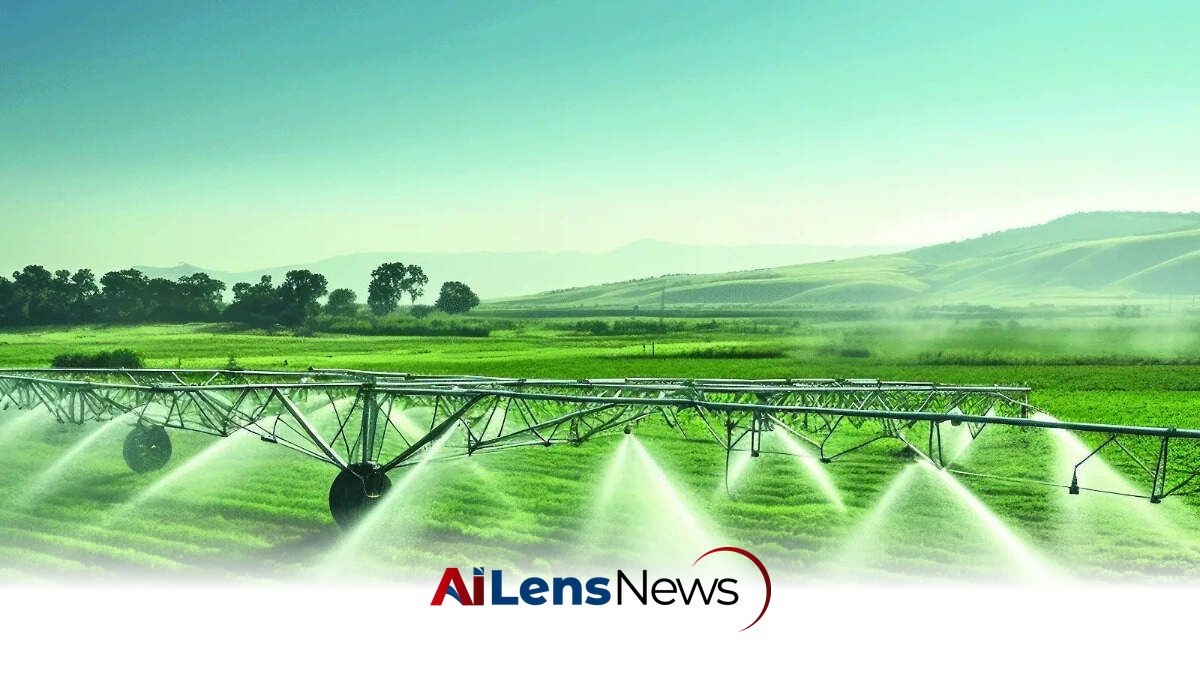


India faces significant losses from water scarcity and weak monsoons. Micro-irrigation offers substantial benefits for farmers, yet adoption remains low. Effective strategies are needed to bridge this gap.
New Delhi, India Jul 9, 2026 ALN: India's water crisis is intricately tied to its agricultural practices, presenting a formidable challenge that extends beyond mere resource management. The nation's reliance on agriculture, which consumes approximately 80% of its available freshwater, underscores the urgent need for innovative solutions in the face of climate change. Severe climatic events, particularly exacerbated by El Niño conditions, can disrupt monsoon patterns, leading to reduced agricultural output, heightened food inflation, and substantial losses that could accumulate to nearly $1 trillion (₹95.6 lakh crore) over time. As such, climate adaptation has transitioned from being an environmental priority to an essential strategy for ensuring food security and stability in India.
In response to these challenges, the Government of India has initiated a comprehensive plan aimed at expanding micro-irrigation across an additional 100 lakh hectares through the revamped PM Krishi Sinchayee Yojana (PMKSY). This initiative is timely, given the pressing need for sustainable water management practices. However, the successful implementation of this plan hinges on more than just increasing subsidies; it requires a concerted effort to address the critical issue of farmer adoption of micro-irrigation technologies.
A recent study conducted by the Council for Social Development (CSD) sheds light on the current state of micro-irrigation adoption in India. The study, which surveyed 500 farming households in the semi-arid regions of Nuh in Haryana and Alwar in Rajasthan, revealed significant benefits associated with micro-irrigation. Specifically, the findings indicated that micro-irrigation reduced wheat cultivation costs by 15%, increased net returns by nearly 20%, improved yields by about 11%, and saved up to 18 labor hours per acre during each irrigation cycle. These results highlight the potential of micro-irrigation not only to enhance agricultural productivity but also to alleviate the physical burden on farmers, particularly women, who reported reduced drudgery and more time available for income-generating activities.
Despite these compelling benefits, the study underscores a critical barrier to the widespread adoption of micro-irrigation: an adoption gap rather than a technology gap. While 60% of surveyed farmers had adopted water-saving technologies, this figure varied significantly between different farmer categories, with 87% adoption among large farmers compared to only 59% among smallholders. This disparity raises important questions about access, education, and the support systems in place for smaller farming operations.
The regression analysis conducted as part of the study identified several key factors that positively influenced the adoption of micro-irrigation technologies. These factors included educational attainment, access to extension services, participation in farmer organizations, access to digital information, financial support through schemes like PM-KISAN, and reliable electricity supply. Notably, participation in training programs was found to improve adoption rates by nearly 65%. However, a knowledge-attitude-practice (KAP) analysis revealed a concerning disconnect: while 72% of farmers were aware that micro-irrigation conserves water, less than 46% translated that knowledge into effective farming practices. This gap indicates that awareness alone is insufficient; practical support and sustained engagement are essential to facilitate behavioral change among farmers.
To address this adoption gap, the study employed an agent-based model to explore practical strategies for encouraging more farmers to embrace micro-irrigation. The simulations suggested that targeted awareness campaigns, peer learning opportunities among farmers, and field demonstrations could significantly enhance interest in micro-irrigation technologies. Furthermore, when these initiatives are coupled with modest improvements in farmers' incomes and financial support through subsidies, the potential for increased adoption becomes even more pronounced. The model estimated that among the 40% of farmers who had not yet adopted micro-irrigation, approximately 23% could express interest in the technology if they perceive sufficient benefits. Among these potential adopters, around 13% could feasibly implement the technology if financial barriers are addressed.
To facilitate a rapid increase in micro-irrigation adoption, the study proposes three low-cost policy shifts:
The KAP analysis suggests that mere access to knowledge or technology is insufficient to drive sustained changes in farming practices. Policymakers must develop strategies that assist farmers in translating positive knowledge and attitudes into consistent on-field practices. This necessitates the establishment of a robust grassroots support system for farmers, akin to the support mechanisms implemented in India's primary health delivery system.
Historically, India's Green Revolution was pivotal in addressing food security challenges. As the nation now faces the dual threats of water scarcity and climate change, the next revolution must focus on securing water resources. In this context, every drop of water saved through efficient irrigation practices is not just a conservation effort; it represents a significant opportunity for prosperity and resilience against climate variability. The successful implementation of micro-irrigation can serve as a model for sustainable agricultural practices that enhance productivity while safeguarding vital water resources for future generations.
As India navigates these complex challenges, the insights from the CSD study and the proposed policy shifts offer a pathway to greater adoption of micro-irrigation technologies. By fostering a culture of learning, support, and innovation among farmers, India can move towards a more sustainable agricultural future that prioritizes both water security and stability.
To learn more about the latest developments in Corporate & Industry Insights, stay updated with our exclusive reports and analyses on AiLensNews.

