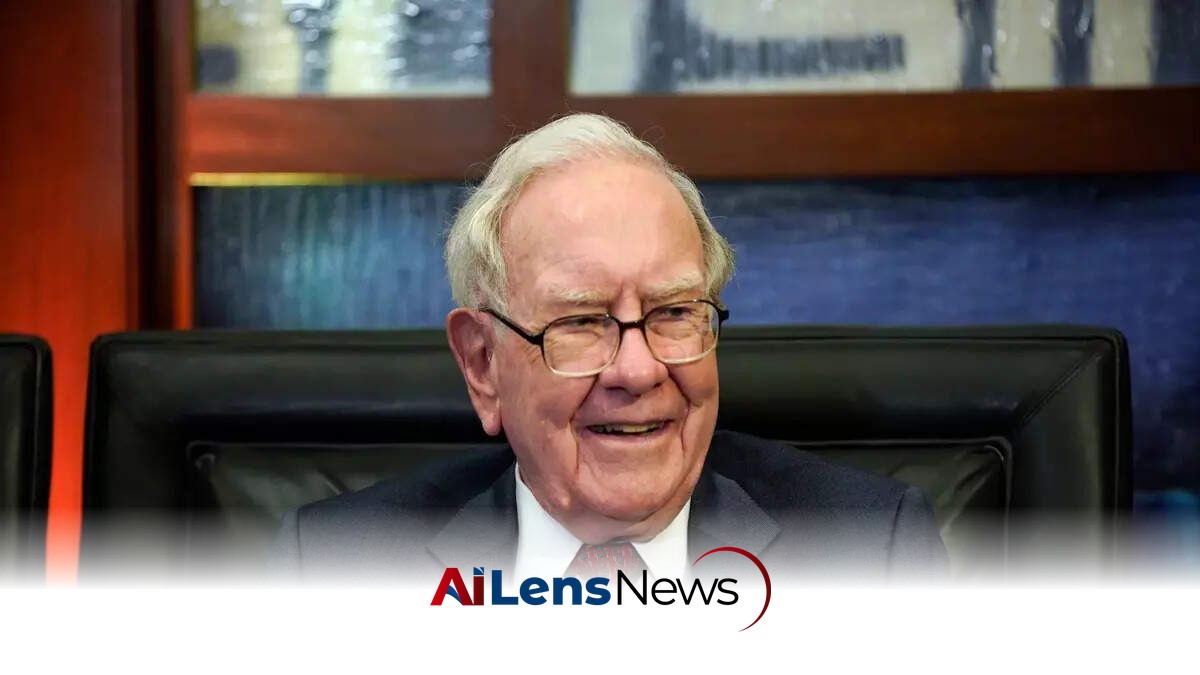


Warren Buffett reflects on his first stock purchase at age 11, sharing lessons on investment timing and the importance of patience in the market.
New Delhi, India Jul 5, 2026 ALN: When most people think of Warren Buffett, they picture timeless investing wisdom and decades of market-beating returns. However, very few know that the legendary investor bought his first stock at the age of 11, but regretted selling it soon, just like many common investors on the stock market today. Buffett's early experiences provide a fascinating glimpse into the mindset that shaped his future investment strategies and philosophies.
Warren Buffett, commonly referred to as the ‘Oracle of Omaha', was born on August 30, 1930, in Omaha, Nebraska. His upbringing played a significant role in his development as an investor. Buffett was raised in a household that valued education and hard work. His father, Howard Buffett, was a U.S. Congressman, and his mother, Leila, was a homemaker. This environment fostered a sense of curiosity and a strong work ethic in young Warren, which he would later apply to his investing career.
Buffett's interest in finance and investing was evident from an early age. He displayed an entrepreneurial spirit by selling chewing gum, Coca-Cola, and newspapers. By the age of 11, he had already begun to understand the mechanics of the stock market. He studied the market closely and learned about the companies in which he was interested. This early exposure laid the groundwork for his future success in value investing.
In 1942, shortly after the attack on Pearl Harbor during World War II, Buffett made his first significant investment. He purchased shares of the natural gas company Cities Service for $38 apiece. At that time, the United States was embroiled in a global conflict, which created a volatile environment. The uncertainty surrounding the war had a profound impact on the stock market, yet Buffett's youthful optimism led him to invest despite these challenges.
Buffett recalled, "I bought my first stock when I was 11 years old. It was the first quarter of 1942, shortly after Pearl Harbor. I spent $114.75," he said during an interview with Yahoo Finance in 2018. This initial investment marked the beginning of his lifelong journey in the world of finance. However, like many novice investors, Buffett soon experienced regret regarding his stock selection and timing.
After purchasing the shares, Buffett watched as the stock price fluctuated. Initially, it rose, but then it began to decline. Faced with uncertainty, he ultimately sold his shares for a modest profit. In hindsight, Buffett expressed regret about this decision, stating, "If I had put that $114 into the S&P 500 at that time, and reinvested the dividends, think of a figure as to what it would be worth today?" He estimated that the investment would have grown to approximately $400,000 today. This realization serves as a poignant reminder of the potential long-term gains that can be achieved through patience and holding onto investments.
Buffett's early experiences in the stock market were not just about financial loss; they were also foundational lessons in the importance of patience and informed decision-making. His reflections on this first investment highlight a critical aspect of investing: the necessity of a long-term perspective. Buffett has consistently advised investors to remain patient, regardless of geopolitical crises, recessions, or market volatility. His philosophy emphasizes that successful investing is often about waiting for the right opportunities and allowing investments to grow over time.
As Buffett matured, he honed his investment strategies and developed a keen understanding of value investing, a methodology that focuses on identifying undervalued companies with strong fundamentals. He studied under the legendary value investor Benjamin Graham while pursuing a business degree at Columbia University. Graham's teachings on value investing profoundly influenced Buffett's approach, encouraging him to look for stocks that were trading for less than their intrinsic value.
Buffett's investment acumen eventually led him to become the chairman and CEO of Berkshire Hathaway, a massive conglomerate that he transformed from a struggling textile firm into a global powerhouse. Under his leadership, Berkshire Hathaway acquired numerous companies across various industries, including insurance, retail, and energy. Buffett's ability to identify undervalued businesses and his disciplined long-term investment strategy have contributed to his reputation as one of the most successful investors in history.
Throughout his career, Buffett has shared his insights and investment philosophy through his annual letters to shareholders, which have become highly anticipated documents in the financial world. These letters often contain valuable lessons about investing, s, and the importance of ethical business practices. One of his most famous quotes, "The stock market is a device for transferring money from the impatient to the patient," encapsulates his belief in the need for a long-term perspective in investing.
Buffett's journey from a young investor to a financial icon is not just a personal success story; it serves as a source of inspiration for both novice and seasoned investors alike. His early experiences in the stock market highlight the importance of learning from mistakes and the value of patience in achieving long-term financial goals. Buffett's legacy is not only defined by his wealth but also by the principles he has instilled in countless investors around the world.
In conclusion, Warren Buffett's early investment experiences provide valuable insights into the foundational principles of investing. His journey underscores the importance of patience, informed decision-making, and a long-term perspective. As the investing landscape continues to evolve, Buffett's lessons remain relevant, reminding us that the key to successful investing lies not just in the choices we make, but in how we approach those choices over time. The story of his first stock purchase serves as a timeless reminder that investing is not merely about immediate gains, but about building wealth through careful consideration and perseverance.
To learn more about the latest developments in Corporate & Industry Insights, stay updated with our exclusive reports and analyses on AiLensNews.

