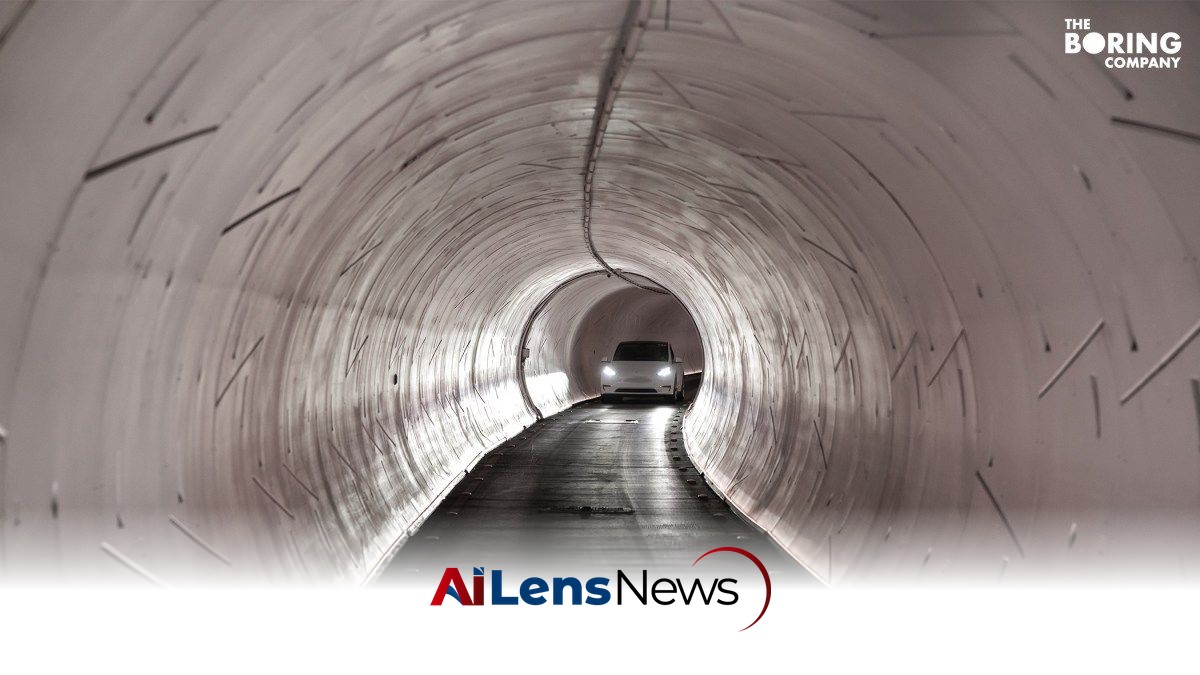


Elon Musk's tunneling startup, The Boring Company, is reportedly in talks to raise $4 billion, significantly increasing its valuation to $20 billion.
Washington DC, United States Jul 26, 2026 ALN: Elon Musk’s tunneling startup The Boring Company is in talks to raise a $4 billion funding round at a valuation of $20 billion, according to The Wall Street Journal.
The deal hasn’t closed and the terms could change, the WSJ says. At $20 billion, the valuation would be a significant increase from The Boring Company’s $5.7 billion valuation in 2022.
Founded in 2016, The Boring Company aims to reduce traffic congestion in urban areas through a network of underground tunnels. This concept is not entirely new, as the idea of tunneling to alleviate surface traffic has been explored by various engineers and urban planners for decades. However, The Boring Company's approach, which utilizes advanced tunneling technology and automation, seeks to make these projects more cost-effective and efficient. The company has made notable strides since its inception, particularly with its operations in Las Vegas, where it has constructed a system of tunnels designed to transport passengers in electric vehicles, specifically Teslas, between various destinations. This project, known as the Las Vegas Convention Center Loop, is a demonstration of the company's vision to create a more efficient transportation system beneath bustling cities.
While the Las Vegas tunnels have garnered attention for their innovative approach to urban transportation, the company has faced challenges as well. Reports indicate that tunnel workers have suffered serious injuries during construction, raising concerns about workplace safety and operational protocols. Safety in construction is a critical issue, particularly in high-risk environments like tunneling, where workers are exposed to various hazards. These incidents have prompted discussions about the need for stricter safety measures and better training for workers in the tunneling industry. Additionally, Nevada regulators highlighted that The Boring Company violated environmental regulations nearly 800 times, which has sparked discussions about the environmental impact of tunneling projects and the regulatory frameworks that govern such initiatives. These violations could potentially lead to fines or increased scrutiny from regulatory bodies, impacting the company's operations and future projects.
In addition to its work in Las Vegas, The Boring Company has ambitious plans to expand its tunnel networks to other cities. The startup has announced intentions to build systems in Nashville, Tennessee, and Dubai, United Arab Emirates. The Nashville project aims to alleviate traffic congestion in the city, which has seen rapid growth and an increase in vehicle traffic in recent years. This growth has put a strain on the existing transportation infrastructure, making innovative solutions like tunneling increasingly attractive. Similarly, the Dubai project is part of a broader effort to enhance the city's infrastructure and transportation options, aligning with the emirate's vision to be a global hub for innovation and technology. Dubai's focus on smart city initiatives makes it a prime candidate for The Boring Company's advanced tunneling solutions.
Beyond these two projects, The Boring Company has pitched potential tunneling projects in other major cities, including Baltimore, Maryland; Chicago, Illinois; and Los Angeles, California. Each of these cities faces unique transportation challenges, such as heavy traffic congestion, aging infrastructure, and limited public transit options. The Boring Company's solutions could provide innovative alternatives to traditional public transit systems, potentially transforming urban mobility. However, the success of these proposals will depend on securing funding, gaining regulatory approvals, and addressing public concerns regarding safety and environmental impact. Public perception and community support are crucial for the success of such large-scale infrastructure projects, and community engagement will be essential as The Boring Company seeks to expand its operations.
The Boring Company originated as a spin-off from SpaceX in 2018, reflecting Elon Musk's broader vision for enhancing urban mobility and addressing transportation issues exacerbated by increasing urban populations. Musk's reputation for innovation and disruption in industries such as automotive and aerospace has positioned The Boring Company as a potential game-changer in the field of urban transportation. His entrepreneurial spirit and willingness to tackle complex problems have attracted significant attention and investment in The Boring Company, despite the challenges it faces.
The recent news of a potential $4 billion funding round is significant, as it would enable The Boring Company to accelerate its expansion plans and invest in research and development. The proposed valuation of $20 billion represents a substantial increase and reflects investor confidence in the company's vision and potential. Such a valuation could also attract more talent and partnerships, further enhancing the company's capabilities and reach. However, the deal has not yet closed, and changes to the terms are possible. Investors will likely be closely scrutinizing the company's operational challenges, including safety concerns and regulatory compliance, as they consider their investment. The Boring Company's ability to navigate these issues effectively will be critical to its long-term success and growth.
In the broader context, the interest in funding for The Boring Company reflects a growing trend in the transportation sector towards innovative solutions that leverage technology to address urban mobility challenges. As cities around the world grapple with congestion, pollution, and the need for sustainable transportation options, companies like The Boring Company are at the forefront of developing new approaches that could reshape how people move within urban environments. The shift towards more sustainable and efficient transportation solutions is becoming increasingly urgent as urban populations continue to grow and climate change concerns mount.
Moreover, the implications of successful tunneling projects extend beyond mere transportation improvements. They could influence urban planning and development, as cities may need to rethink infrastructure layouts and zoning laws to accommodate underground transportation systems. This shift could lead to more integrated urban environments where transportation is seamlessly connected to residential and commercial areas, potentially enhancing the quality of life for city dwellers. The potential for reduced surface traffic and improved air quality could also contribute to healthier urban living conditions.
As The Boring Company continues to evolve, its progress will be monitored closely by industry experts, urban planners, and investors alike. The outcome of the funding discussions, along with the company's ability to address its operational challenges and regulatory hurdles, will play a crucial role in determining its future trajectory and impact on urban transportation. The success or failure of The Boring Company's projects could set precedents for future tunneling initiatives and influence how cities approach their transportation challenges.
In conclusion, Elon Musk's The Boring Company is positioning itself for significant growth with its plans to raise $4 billion at a $20 billion valuation. While the company has made notable advancements in tunneling technology and urban transportation solutions, it must navigate various challenges, including safety concerns and regulatory compliance, to realize its ambitious vision. The potential expansion into new markets and the increasing interest from investors underscore the evolving landscape of urban mobility and the role that innovative companies like The Boring Company may play in shaping the future of transportation. As cities look for solutions to their transportation woes, the effectiveness and safety of The Boring Company's projects will be critical in determining their viability and acceptance within urban communities.
To learn more about the latest developments in Financial Literacy, stay updated with our exclusive reports and analyses on AiLensNews.

