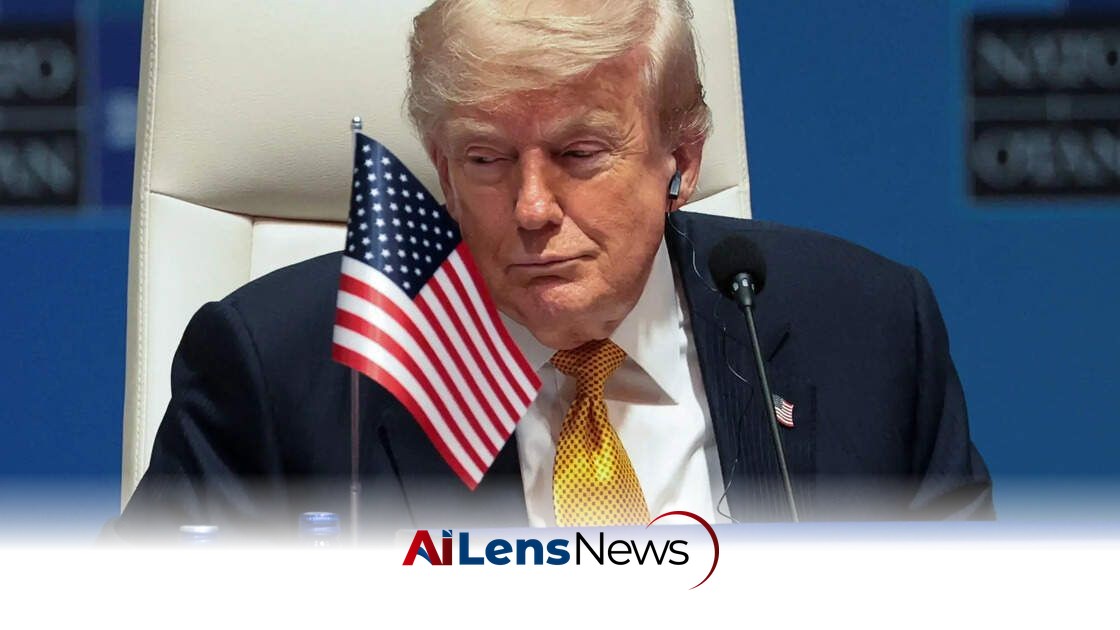


The Office of the Director of National Intelligence faces scrutiny amid political appointments and turmoil. Concerns rise over expertise and politicization of intelligence powers.
New Delhi, India Jul 9, 2026 ALN: As the White House continues to disrupt the highest echelons of American espionage, questions that have lingered for 25 years about the Office of the Director of National Intelligence (ODNI) have resurfaced. Do we need it all, or could we get rid of it? Should it be large or small? Should it be superior or auxiliary to the 18 other spy agencies of the United States? Moreover, how can we ensure that any Director of National Intelligence does not misuse the office’s extensive surveillance capabilities for political purposes instead of safeguarding American lives?
The ongoing turmoil at ODNI is a direct consequence of Donald Trump’s approach to the intelligence community. Particularly in his second term, Trump has appointed individuals to serve as DNI who lack national-security expertise but seem eager to wield their power to support his personal grievances.
Initially, Tulsi Gabbard was appointed, and she took pride in reducing the ODNI's size by about 40%, leaving it with just over 1,000 staff members. This number is somewhat ambiguous, as many personnel are on secondment from other agencies. Gabbard pressured experts to validate rather than challenge Trump’s biases, dismissing analysts who contradicted his views, particularly regarding Venezuela. She also diverted resources to support Trump’s conspiracy theories about the 2020 presidential election, even participating in an FBI raid at an election center near Atlanta. She has since left for personal reasons.
Next, Trump appointed Bill Pulte, who is even less qualified and more sycophantic. A vocal supporter on social media, Pulte has used his previous roles in the administration to make frivolous allegations of mortgage fraud against Trump’s political adversaries. As an acting DNI, Pulte does not require Senate confirmation, which he likely would not receive, given the widespread disapproval of his selection, even among Republicans.
Despite his limited tenure, Pulte is already executing Trump’s agenda, having dismissed numerous experts, including prominent figures like Andrew Byers and Will Ruger, who were responsible for the National Intelligence Council. Trump has praised Pulte as “a very smart guy” and suggested that he may selectively declassify documents to support narratives about the 2020 elections that align with Trump’s views.
Following Pulte, Jay Clayton is next in line for Senate confirmation to succeed him. Although Clayton lacks national-security qualifications, his background as a former securities lawyer and high-profile prosecutor makes him more acceptable to Republicans compared to Pulte. However, Trump has intertwined Clayton’s confirmation process with other legislative matters, leaving his timeline uncertain.
These appointments reflect Trump’s disdain for the ODNI, which he perceives as a prime example of the “deep state” that hindered him during his first term and now requires either taming or dismantling. The successive reductions in staff resonate with a pre-existing critique from the political right, which views the ODNI as an unnecessary bureaucratic layer. Tom Cotton, the Republican chair of the Senate Intelligence Committee, has advocated for reducing the ODNI’s staff to about 650, a size small enough to be “drowned in the bathtub.”
To gain insight into these critiques and the current upheaval, I consulted previous DNIs. John Negroponte, the first DNI appointed in 2005, explained that the creation of the ODNI in 2004 was a response to the intelligence failures exemplified by the September 11 attacks and the erroneous belief that Iraq possessed weapons of mass destruction. The lesson learned from 9/11 was that the attacks might have been prevented had various agencies shared and connected their intelligence more effectively. Thus, the ODNI was established to eliminate bureaucratic barriers, as the CIA director at the time was deemed insufficiently neutral.
Negroponte emphasized that the WMD fiasco taught the importance of not approving intelligence that is grossly inaccurate, leading to national embarrassment. The effectiveness of the ODNI in fulfilling these mandates over the past two decades is a matter of debate. Dennis Blair, who served as DNI during the Obama administration, noted that the intelligence community became so overwhelmed by information-sharing regarding terrorist threats post-9/11 that analysts faced information overload. However, with respect to other threats from nations like North Korea, Iran, China, and Russia, agencies still tended to protect their own interests.
Blair articulated that the structure of the ODNI was cooperative rather than directive, indicating a need for a strong DNI to prioritize national security issues. This perspective suggests that the ODNI has historically lacked sufficient power rather than possessing too much. Conversely, some narratives have emerged claiming that the organization is excessively large and bloated, which Blair attributes to “CIA influence operations.”
While I generally support streamlining bureaucratic structures, I questioned Blair about the feasibility of abolishing the ODNI. He countered that this would leave the 18 other organizations without a clear reporting structure, effectively reverting oversight to CIA directors, who had previously demonstrated their inability to manage effectively before 9/11.
Blair believes that the ODNI is not only beneficial for the United States but should also be adopted by other nations, such as Britain and Israel, which typically separate intelligence collection and analysis functions. However, increasing the power of a DNI also raises the risk of potential abuse if an administration chooses to politicize the office, as Trump is currently doing.
This risk has always existed, but it would not vanish with the elimination of the ODNI. Concerns about the potential for spy agencies to evolve into secret police have persisted since before the establishment of the FBI and CIA. The solution lies in fostering a culture of professionalism and integrity within the intelligence community. Unfortunately, the Trump administration appears to be moving in the opposite direction. The consequence of appointing “ignorant, inexperienced, non-serious people” to leadership positions is the heightened risk of overlooking significant threats. Blair expressed concern that the situation is deteriorating, hoping it does not take another catastrophic event like 9/11 to underscore the necessity of a competent spy chief.
Negroponte reiterated that it is ultimately the responsibility of the president and Congress to shape the intelligence community according to their vision. However, he criticized the Trump administration for “almost intentionally setting the ODNI up for failure” by appointing unqualified individuals and treating intelligence as a trivial matter. If Trump or Cotton, the head of the CIA, or anyone else wishes to abolish the ODNI, Negroponte challenged them to approach Congress and seek its dissolution.
In an ideal scenario, America would engage in a public debate on this issue. Ultimately, the nation may conclude that a strong, professional, and apolitical ODNI is more crucial than ever. With nations like North Korea and China expanding their nuclear arsenals, and Russia threatening to use them, the current global landscape is too perilous to navigate without reliable and accurate intelligence.
To learn more about the latest developments in Corporate & Industry Insights, stay updated with our exclusive reports and analyses on AiLensNews.

