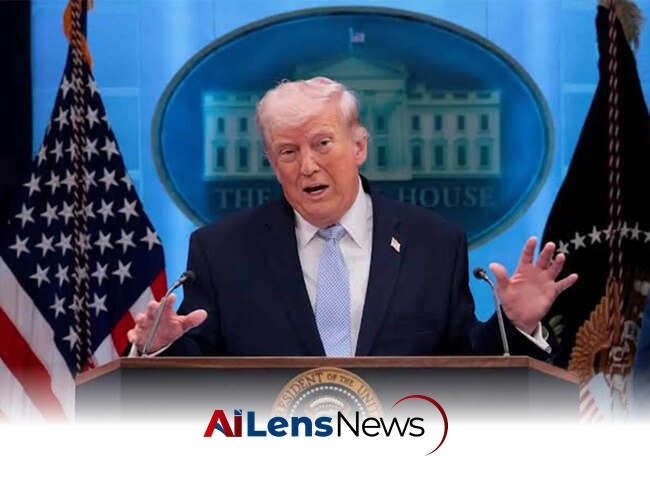


US President Donald Trump hailed the progress on Wednesday of indirect talks between the United States and Iran in Qatar, as the sides aimed to push forward negotiations and quell tensions following exchanges of fire.
New Delhi, India Jul 2, 2026 ALN: Doha: US President Donald Trump hailed the progress on Wednesday of indirect talks between the United States and Iran in Qatar, as the sides aimed to push forward negotiations and quell tensions following exchanges of fire. The ongoing discussions mark a significant moment in a long-standing and complex relationship that has been characterized by hostility and confrontation.
The US leader said there had been "very good meetings" in Doha after an early dispute over the format threatened to overshadow discussions. Iran insisted there would be no direct negotiations between the sides in the Qatari capital on the two parties' memorandum of understanding aimed at ending the Middle East war, which broke out with US-Israeli strikes on Iran in late February. This conflict has roots in decades of geopolitical tension, particularly surrounding Iran's nuclear ambitions and its support for various militant groups in the region.
"As far as things are going, the denuclearisation of Iran is moving along well," Trump told reporters as he prepared to board his Qatar-gifted Air Force One plane. "We hit them very hard... but we're getting along very well." Trump's comments reflect a dual strategy of pressure and diplomacy, a hallmark of his administration's approach to foreign policy in the Middle East.
The memorandum of understanding, brokered by Qatar and Pakistan, culminated in a summit last month in Lucerne, Switzerland. It includes a 60-day ceasefire pausing the war, the reopening of the blockaded Strait of Hormuz, and a timeframe for a final deal to permanently end the conflict and reach an agreement on Iran's nuclear programme. The Strait of Hormuz is a critical waterway for global oil transportation, making stability in the region a priority for many nations.
Earlier, a diplomat, speaking on condition of anonymity to discuss the sensitive talks, confirmed negotiations were under way in Doha with Qatari and Pakistani mediators. The involvement of Qatar and Pakistan highlights the role of regional powers in facilitating dialogue, particularly in a context where direct communication between the US and Iran has been fraught with challenges.
The discussions, being held at a lower level and focused on the details of the MOU, were to "build on the progress made at the Lake Lucerne Summit", the diplomat told AFP. Tehran denied an earlier claim by Trump that there would be direct talks in Doha. This discrepancy in public messaging underscores the complexities and sensitivities surrounding the negotiations, as both sides navigate domestic and international pressures.
Iranian foreign ministry spokesman Esmaeil Baqaei said the Iranian delegation would be led by Deputy Foreign Minister Kazem Gharibabadi, but added the officials "have no plans for negotiations with the American side at any level over the coming days". This statement reflects Iran's cautious approach, likely influenced by its past experiences with negotiations that did not yield favorable outcomes.
US envoys Jared Kushner and Steve Witkoff were not taking part in the technical talks, the anonymous diplomat told AFP, after they met with Qatar's Prime Minister Sheikh Mohammed bin Abdulrahman Al Thani on Tuesday. Qatar's foreign ministry said the trio discussed "the ongoing talks" between the US and Iran "within the framework of the memorandum of understanding", as well as developments in Lebanon. The inclusion of Lebanon in discussions indicates the interconnected nature of regional conflicts and the need for a comprehensive approach to peace in the area.
On Wednesday, the office of Qatar's emir also said the two US envoys had met with Qatari ruler Sheikh Tamim bin Hamad Al Thani. Anna Jacobs, non-resident fellow at the Arab Gulf States Institute, told AFP it was "very early in the negotiation process and battles are being fought privately and publicly". This suggests that while talks are ongoing, significant hurdles remain, including the need to reconcile differing priorities and expectations from both sides.
HA Hellyer, an analyst at the Royal United Services Institute in London, noted a "lack of transparency" surrounding the talks with both sides "sending very different public messages". This lack of clarity can lead to misunderstandings and could hinder the progress of negotiations. It also highlights the broader challenge of trust-building in a relationship that has been marred by decades of animosity.
Since the signing of the US-Iran deal last month, both sides have exchanged fire in the Gulf, with Tehran targeting a commercial ship it said had deviated from its approved route through the Strait of Hormuz. US Central Command responded by saying it had attacked 10 Iranian military targets. This cycle of retaliation underscores the fragility of the ceasefire and the potential for renewed conflict if diplomatic efforts falter.
Iran then hit back with strikes against US bases in Kuwait and Bahrain, which both condemned Tehran for the attacks. Iran's chief negotiator Mohammad Bagher Ghalibaf said Tuesday that "when a war of this magnitude comes to an end... it is inevitable that there will be implementation challenges, incidents and differences of opinion, especially where parties such as the Israeli regime are concerned". Ghalibaf's comments highlight the complexities of post-conflict negotiations, particularly in a region where multiple actors have vested interests.
He said the Iranian delegation in Doha would be focused on the implementation of clauses in the deal related to the strait and fighting in Lebanon. "Naturally, the Islamic republic is committed to ensuring that the agreement is implemented, and the enemy, the United States and its ally, must also fulfil their commitments," he said. This statement reflects Iran's insistence on reciprocity in the implementation of the agreement, a critical factor for ensuring compliance from both parties.
The exchanges of fire appear to have calmed in the days leading up to the talks in Qatar. On the Lebanon front, fighting between Israel and Hezbollah has been relatively quiet. This temporary lull may provide an opportunity for negotiators to focus on resolving outstanding issues without the immediate threat of escalation.
Tehran has insisted any deal should include an end to the parallel conflict in Lebanon and a withdrawal of Israeli troops from its south, part of which they have occupied. The inclusion of Lebanon in the negotiations reflects the broader regional dynamics at play, as conflicts in one area often have spillover effects in others. The resolution of these intertwined issues is crucial for achieving lasting peace in the region.
To learn more about the latest developments in Corporate & Industry Insights, stay updated with our exclusive reports and analyses on AiLensNews.

