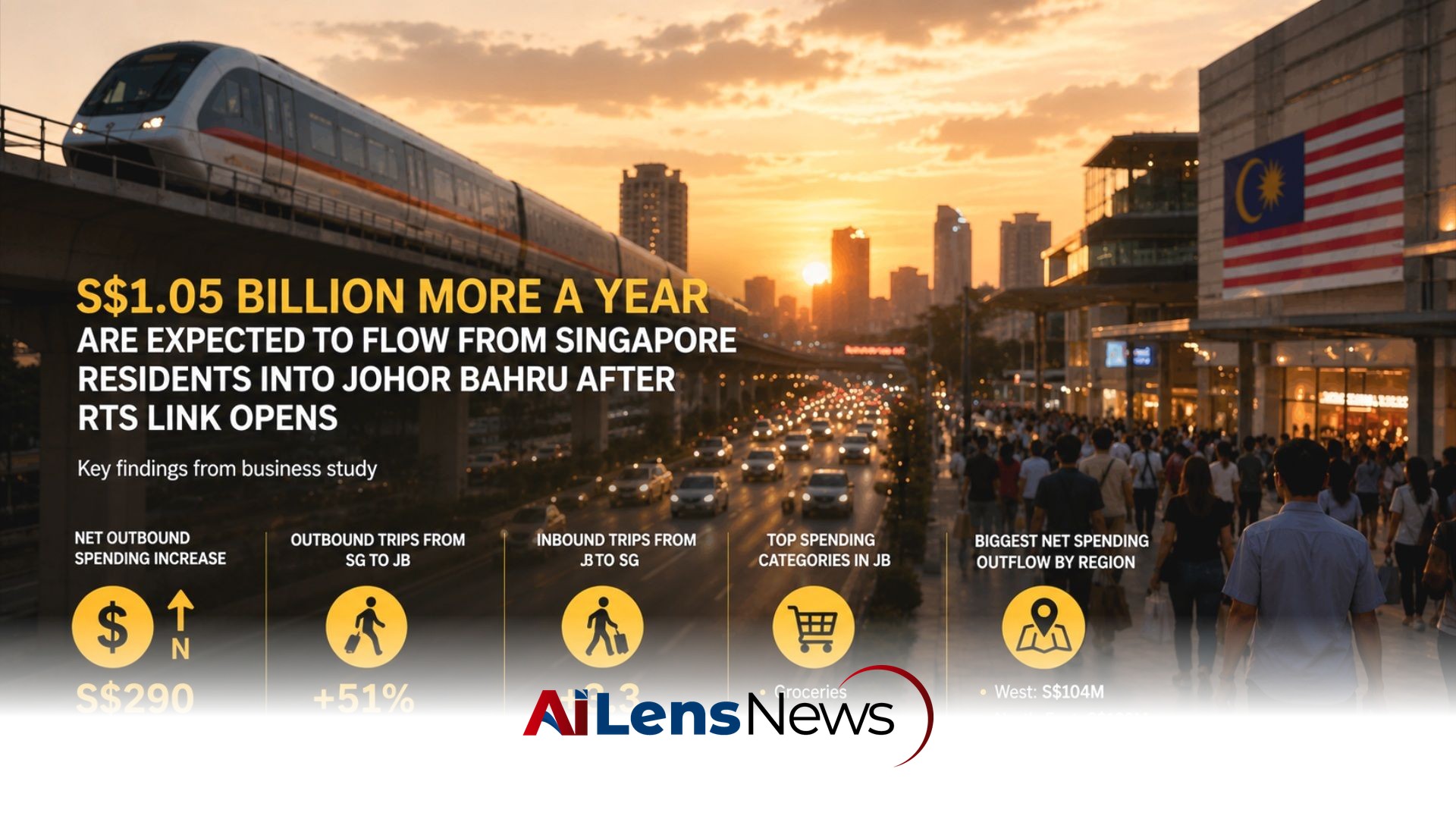


A new study predicts that the RTS Link will significantly increase spending by Singapore residents in Johor Bahru, reshaping shopping habits and local business dynamics.
Singapore, Singapore Jul 17, 2026 ALN: Singapore residents are expected to spend an extra S$1.05 billion a year in Johor Bahru (JB) after the Johor Bahru-Singapore Rapid Transit System (RTS) Link opens in January 2027, according to a new business study. This projected increase in spending marks a significant shift in consumer behavior and highlights the growing interconnectedness between Singapore and its neighboring Malaysian state of Johor.
The RTS Link, designed to facilitate smoother travel between the two locations, is anticipated to have a profound impact on various sectors, including retail, tourism, and hospitality. The study, commissioned by the Singapore Business Federation (SBF), the Restaurant Association of Singapore, and the Singapore Retailers Association, examined how the RTS Link could change shopping habits, tourism, and business competition across the Causeway, Channel NewsAsia (CNA) reported on July 16.
Researchers estimate outbound trips from Singapore to Johor Bahru will rise by 51 percent, adding an estimated 11.2 million round-trip journeys each year. This surge in travel is expected to be driven by a combination of factors, including lower prices for everyday goods and a growing interest in cross-border leisure activities. Travel in the opposite direction is also expected to grow, with another 3.3 million trips from Johor Bahru into Singapore annually. This reciprocal increase in travel suggests a robust exchange of consumer spending that could benefit both economies.
The findings were based on surveys of approximately 1,700 Singapore consumers and 400 Johor Bahru consumers conducted in March, alongside historical credit card spending data and government statistics. The comprehensive nature of the study provides a detailed look at the anticipated shifts in consumer behavior as the RTS Link nears completion.
According to the study, groceries are expected to account for the largest share of additional spending in Johor Bahru. The allure of lower prices for essential items such as food, household goods, and personal care products is a significant factor driving this trend. Drug stores, dining establishments, and beauty services follow closely behind in terms of spending categories. Businesses involved in the study indicated that the existing price differential across the border is already influencing consumer choices, particularly for everyday essentials. They believe that the RTS Link will only enhance this trend, making trips to Johor Bahru more convenient and appealing.
The study also predicts that Singapore’s non-central regions will feel the most significant impact from this shift in spending. The western region is expected to record the largest net spending outflow at S$104 million, followed by the north-east at S$103 million, the north at S$82 million, and the east at S$25 million. This pattern suggests that residents in these areas may be more inclined to seek out the cost savings available in Johor Bahru.
Conversely, Central Singapore could benefit more from visitors coming from Johor Bahru. Higher-end shopping, entertainment, hotels, and dining experiences are expected to attract much of the extra spending from Malaysian visitors, indicating a potential boon for the local economy in these sectors.
In light of these anticipated changes, Singapore Business Federation chief executive officer Kok Ping Soon emphasized that while the RTS Link presents opportunities to draw more visitors, it also intensifies competition for Singapore retailers and food businesses. The influx of Singaporeans seeking lower prices in Johor Bahru could force local businesses to rethink their strategies. Rather than merely trying to match lower prices, many firms believe they will need to distinguish themselves through improved service, unique experiences, and innovative products that customers cannot easily find elsewhere.
The study also highlighted the challenges that many firms, particularly small and medium-sized enterprises, are currently facing. Issues such as labor shortages, rising rents, and increasing operating costs have already placed significant pressure on these businesses. Many have expressed the need for additional support to adapt to the stronger cross-border competition that the RTS Link will bring.
In response to the findings of the study, the three industry groups involved have suggested several measures aimed at helping businesses remain competitive in the evolving landscape. One key recommendation is to expand support for retail and food businesses that are most exposed to cross-border spending, including groceries, pharmacies, restaurants, and cafés. This support could take various forms, including financial assistance or targeted marketing efforts to bolster local businesses.
Additionally, the groups have recommended enhancing Singapore’s tourism appeal by encouraging visitors to stay longer through a variety of initiatives. This could include hosting more events, entertainment options, cultural performances, and strengthening the night-time economy. By making Singapore a more attractive destination, the hope is that the city-state can retain a portion of the spending that might otherwise flow to Johor Bahru.
To assist businesses in adjusting to the new competitive environment, the groups have proposed temporary property tax relief during significant upgrading works, as well as more flexible deployment of foreign workers across related business operations. These measures aim to ease the burden on businesses as they navigate the challenges posed by increased cross-border competition.
The recommendations have been shared with government agencies and the RTS Link task force for further discussion, according to Mr. Kok. The collaboration between industry groups and government bodies is crucial as they seek to develop strategies that will support local businesses while simultaneously capitalizing on the opportunities presented by the RTS Link.
The RTS Link is poised to make crossing the Causeway faster and easier, which is good news for travelers seeking convenience. However, this increased ease of travel also means that Singapore businesses will need to work harder to provide compelling reasons for consumers to spend locally. Price remains a significant factor in consumer decision-making, yet the study suggests that good service, innovative ideas, and memorable experiences are equally important in retaining customer loyalty.
As the RTS Link approaches its opening date, the implications for both Singapore and Johor Bahru are becoming increasingly clear. The anticipated surge in cross-border travel and spending has the potential to reshape the economic landscape of the region, fostering greater interdependence between the two areas. Businesses on both sides of the Causeway will need to adapt to these changes, leveraging their unique strengths to attract consumers in a competitive marketplace.
In conclusion, the RTS Link represents a significant development in the relationship between Singapore and Johor Bahru. With the potential for increased spending and travel, it highlights the importance of strategic planning and collaboration among businesses and government agencies to ensure that both regions can thrive in this new era of connectivity. The future will require innovation, adaptability, and a commitment to delivering exceptional value to consumers, ensuring that the benefits of the RTS Link are maximized for all stakeholders involved.
To learn more about the latest developments in Corporate & Industry Insights, stay updated with our exclusive reports and analyses on AiLensNews.

