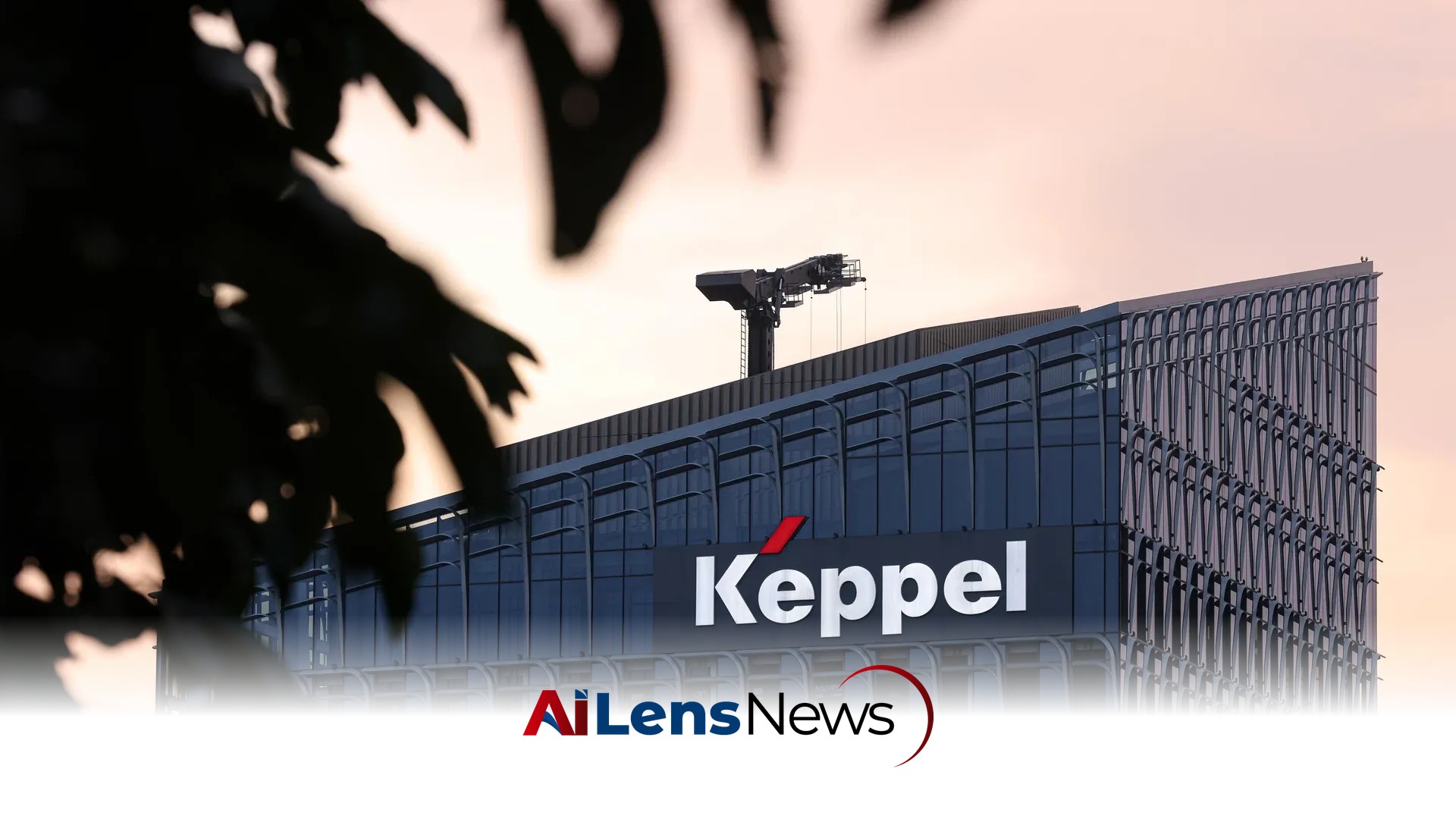


Keppel's net profit falls to S$155 million, impacted by legacy rig impairments and M1 deal fallout, despite a 24.6% rise in group revenue.
Singapore, Singapore Jul 30, 2026 ALN: [SINGAPORE] Asset manager Keppel has reported a significant decline in its net profit for the first half of the year, with a 59% drop translating to S$155 million for the period ending June 30, compared to S$378 million during the same timeframe last year. This decline has raised concerns among investors and market analysts regarding the company's financial health and strategic direction.
The sharp decrease in net profit is attributed primarily to substantial losses in Keppel's non-core portfolio, which recorded a net loss of S$375 million. This downturn was exacerbated by S$165 million in impairments related to legacy rig assets. These impairments include recycled foreign currency translation losses, interest costs tied to legacy rigs, and adjustments for depreciation and amortization following the termination of the sale of M1 Telco to Simba in May. Such impairments reflect ongoing challenges in the offshore and marine sector, which has been grappling with overcapacity and reduced demand in recent years.
Despite the profit drop, Keppel's overall revenue saw a notable increase of 24.6%, reaching S$3.8 billion, driven by robust growth in its infrastructure and connectivity divisions. This revenue increase indicates that while certain segments of the business are underperforming, others are thriving, showcasing the diverse portfolio that Keppel manages.
Focusing on its core operations, which the company refers to as "New Keppel," the asset manager reported a 25% rise in net profit to S$530 million, up from S$424 million the previous year. This growth was bolstered by higher contributions from sponsor stakes and co-investments, as well as the commercial operations of the Keppel Sakra Cogen Plant, which has been a significant asset in their energy portfolio. The performance of the core business suggests that Keppel is successfully pivoting towards more sustainable and profitable operations, despite the challenges faced in its non-core areas.
In the real estate segment, Keppel experienced a reversal of fortune, reporting a net loss of S$19 million compared to a net profit of S$98 million in the previous year. Revenue for this segment increased by 2% to S$97 million, but the drop in profit can be largely attributed to a loss from a dividend in-specie of Keppel Reit units. If this anomaly were excluded, the segment would have reported a profit of S$32 million, indicating that the underlying real estate operations may still hold potential for recovery.
The connectivity segment, on the other hand, demonstrated impressive growth, with revenue soaring by 93% to S$682 million and net profit increasing by 54% to S$77 million. This growth was supported by secured customer commitments for the Bifrost Cable System fibre pairs, which are expected to enhance Keppel's connectivity offerings in the region. Additionally, higher contributions from Keppel DC Reit have also played a role in this segment's success, highlighting the increasing demand for data centers and digital infrastructure.
In light of the financial results, Keppel declared an interim cash dividend of S$0.15 per share for the first half of 2026, maintaining the same level as the previous year. This decision to keep the dividend steady may be seen as a positive signal to investors, indicating that the company remains committed to returning value to its shareholders despite the challenges faced. Furthermore, Keppel is continuing its S$500 million share buyback program, having repurchased 34.2 million shares for a total of S$356 million since July 2025. This buyback initiative is part of Keppel's strategy to enhance shareholder returns and may also reflect management's confidence in the company's long-term prospects.
As part of its strategy to streamline operations and enhance profitability, Keppel has embarked on an asset-light strategy, which has seen the company carry out approximately S$1.7 billion in asset monetization year-to-date in 2026. This figure is on track to meet their full-year target of S$2 billion to S$3 billion in asset sales. The company's non-core portfolio currently holds a gross asset value of S$13.7 billion, which Keppel aims to significantly monetize by 2030. This includes a clear pathway to monetize up to 10 legacy offshore rigs for approximately S$3.7 billion through the newly established Keppel Offshore Fund. This strategic move is critical as it allows Keppel to focus on its core competencies while reducing the financial burden associated with maintaining underperforming assets.
In addition to asset monetization, Keppel is also focusing on an internal turnaround for M1, its telecommunications subsidiary, while exploring opportunities for broader consolidation within the telco industry. This comes in the wake of the terminated sale of M1 to Simba in May, which was seen as a setback for the company. Keppel has expressed its belief that consolidation is necessary for Singapore's telecommunications sector, citing that operators that have undergone consolidation typically experience a 10 to 15 percent uplift in average revenue per user, leading to more sustainable market conditions. This insight reflects a broader trend in the telecommunications industry, where consolidation is often pursued to enhance competitive positioning and operational efficiencies.
In the wake of these financial results, Keppel's shares experienced a modest increase, rising 2.9% or S$0.34 to close at S$12 on Wednesday. This uptick may indicate that investors are cautiously optimistic about the company's future direction, particularly in light of the robust performance in its core business segments and ongoing efforts to enhance shareholder value through dividends and share buybacks. However, the challenges posed by legacy assets and the need for a successful turnaround in the telecommunications sector remain critical factors that will influence Keppel's performance in the coming quarters.
Overall, while Keppel's first-half results reflect significant challenges, particularly in its non-core portfolio, the company's strategic initiatives and strong performance in core operations suggest a potential pathway for recovery and growth. Investors and analysts will be closely monitoring the company's progress in asset monetization, operational turnaround, and market positioning as these factors will be pivotal in determining Keppel's future profitability and market standing.
To learn more about the latest developments in Financial Literacy, stay updated with our exclusive reports and analyses on AiLensNews.

