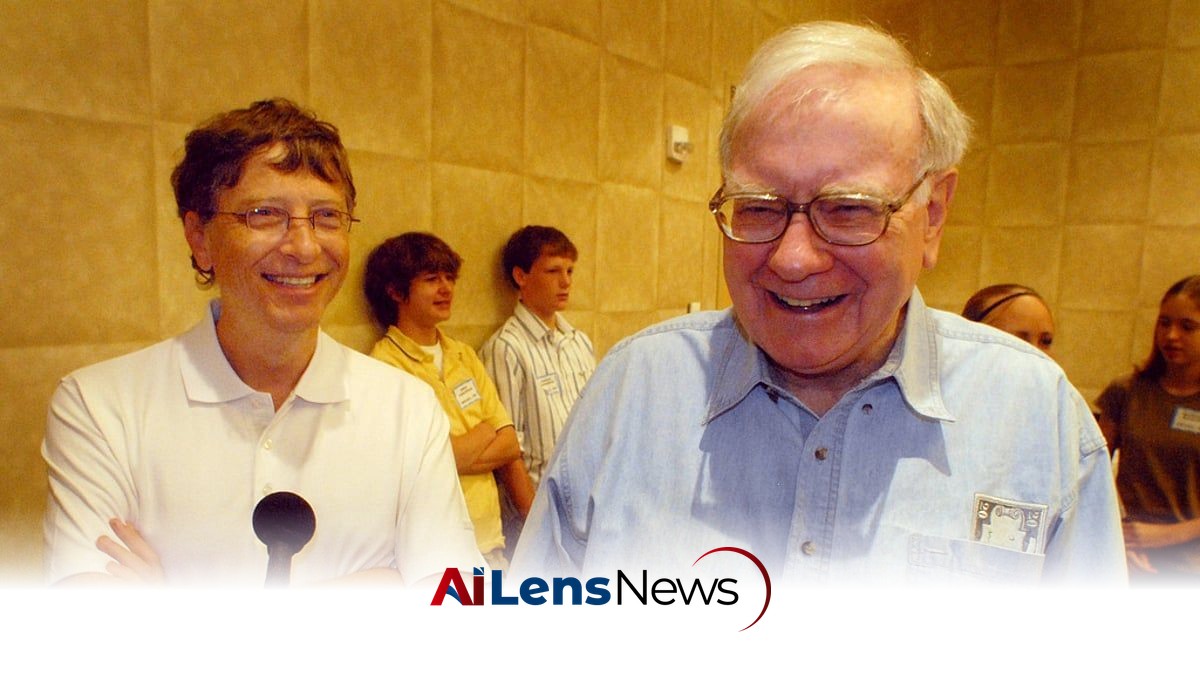


Warren Buffett clarifies his charitable decisions regarding the Gates Foundation, emphasizing his children's readiness over Bill Gates' past associations.
Riyadh, Saudi Arabia Jul 16, 2026 ALN: OMAHA, Nebraska: Billionaire Warren Buffett stated on Wednesday that his choice to exclude the Gates Foundation from his charitable donations is more about his belief in his children's readiness to manage his fortune than Bill Gates' connections to convicted sex offender Jeffrey Epstein.
Buffett told CNBC that Gates' association with Epstein was “distasteful,” but the 95-year-old investor suggested that Gates' actions weren't much different from mistakes he himself had made over the years in hiring the wrong person or in choosing friends. “No one bats a thousand in the business of choosing people,” Buffett remarked on CNBC.
Buffett mentioned that he “read a great deal since Jan. 1 in terms of what happened with Bill and Epstein. And I have read his remarks to Congress given under oath, and I read the cross-examination.” This indicates that Buffett has taken a deep interest in understanding the complexities of Gates' relationship with Epstein, which has been a topic of significant public scrutiny. The nature of Epstein's crimes and his connections to high-profile individuals have led to widespread discussions about accountability and ethical considerations in personal and professional networks.
He noted that Gates eventually severed his relationship with Epstein, a move that many viewed as necessary given the severity of Epstein's offenses. This severing of ties is a crucial aspect of the narrative surrounding Gates, as it reflects a recognition of the potential harm caused by associating with someone of Epstein's notoriety.
Buffett indicated that Gates was not surprised by his decision to eventually donate all of his $140 billion of Berkshire Hathaway stock to foundations associated with his family and his three children: Howard, Susie, and Peter. This decision underscores Buffett's desire to ensure that his wealth is managed by those he trusts and who he believes are capable of making sound philanthropic decisions.
Recently, Gates visited Omaha and spent several hours discussing matters with Buffett. The two had not communicated much since further details about Gates and Epstein emerged when the federal government began releasing files from the Epstein investigation. This lack of communication highlights the tension that can arise in personal relationships when serious allegations and controversies are involved.
Gates has stated that he only met with Epstein in hopes of raising money for charitable causes, asserting he was unaware of Epstein's ongoing crimes. This defense has been met with skepticism by some, as it raises questions about judgment and the due diligence expected from individuals in Gates' position. The fallout from this association has had implications not only for Gates personally but also for the broader philanthropic community, which often relies on the integrity and public perception of its leaders.
Epstein, accused of sexually abusing numerous underage girls, was found dead in a Manhattan federal facility in August 2019, with his death ruled a suicide by New York City’s medical examiner. His death has been the subject of numerous conspiracy theories and discussions about the criminal justice system's handling of high-profile cases, particularly those involving powerful individuals.
Buffett announced in 2024 his intention to cease donations to the Gates Foundation after his death, allowing his three children to decide how to allocate the remainder of his fortune. This decision reflects a broader trend among wealthy individuals who are increasingly focusing on family-led philanthropic efforts rather than established foundations, which can sometimes become bureaucratic and less responsive to immediate needs.
The Gates Foundation did not immediately respond following Buffett's interview on Wednesday, but a day earlier, the foundation expressed gratitude for Buffett's contributions exceeding $47 billion since 2006. The Gates Foundation aims to close in 2045 after distributing the remainder of Gates' fortune. This timeline for the foundation's closure reflects both a commitment to addressing global issues and the recognition that effective philanthropy requires adaptability and responsiveness to changing circumstances.
Buffett expressed his desire for his own funds to be distributed even more rapidly than previously indicated: by the end of 2034. To achieve this, he will need to significantly increase his annual donations to over $17 billion. This ambitious goal is indicative of Buffett's proactive approach to philanthropy and his belief in the importance of addressing pressing global challenges without delay.
Currently, he contributes approximately $6 billion to the Susan Thompson Buffett Foundation and the foundations managed by his children: the Sherwood Foundation, the Howard G. Buffett Foundation, and the Novo Foundation. The majority of these funds are directed to the foundation named in honor of his late wife, which may soon become one of the largest organizations of its kind globally. This emphasis on family foundations highlights a shift towards more personalized and values-driven philanthropy.
Buffett traditionally makes additional gifts to his family foundations around Thanksgiving each year. This practice not only serves to bolster the financial resources of these foundations but also reinforces the importance of family values and shared philanthropic goals.
He has indicated that after his passing, a new foundation will be established to distribute the remainder of his shares, requiring unanimous agreement from his children on donation decisions. He aims for his children to make these choices before they pass away, noting that his eldest daughter will be nearly 81 in eight years. This approach underscores Buffett's commitment to ensuring that his legacy is managed in a manner that aligns with his values and beliefs.
Buffett's donations may impact his successor's support. The accelerated timeline for Buffett's plan to distribute his fortune over the next eight years, rather than over the ten years following his death, implies that his successor at Berkshire Hathaway, Greg Abel, may not benefit from the support of Buffett's family as the company's largest shareholder for as long as initially anticipated. This shift could lead to changes in the company's strategic direction and governance, as new leadership navigates the implications of a reduced financial influence from the Buffett family.
Nevertheless, Buffett expressed confidence that Abel is the right person to lead the conglomerate he built, stating, “that becomes more evident by the day.” This endorsement reflects Buffett's long-term vision for Berkshire Hathaway and his belief in the continuity of its leadership principles.
However, Buffett noted that Berkshire's significant investment in Google's parent company, which has appreciated considerably over the past year, was initiated by him and not by Abel, although Abel did agree to it. This distinction is important as it highlights the ongoing influence of Buffett's investment philosophy on the company's strategies, even as leadership transitions occur.
Just last month, Berkshire committed to investing an additional $10 billion in Alphabet after previously tripling its stake in the company. This investment strategy not only demonstrates Buffett's confidence in the tech sector but also reflects a broader trend of institutional investors increasingly recognizing the value of technology companies in driving economic growth.
To learn more about the latest developments in Corporate & Industry Insights, stay updated with our exclusive reports and analyses on AiLensNews.

