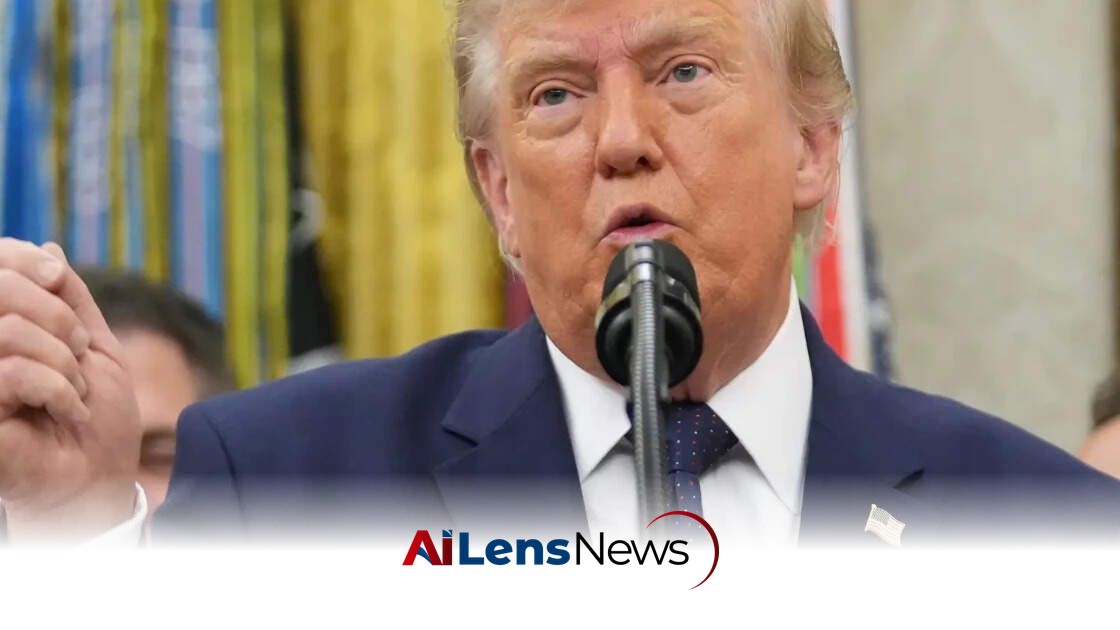


Donald Trump claims both Vladimir Putin and Volodymyr Zelensky desire to conclude the ongoing Ukraine conflict, highlighting his discussions with both leaders.
New Delhi, India Jul 6, 2026 ALN: Washington: US President Donald Trump stated on Monday that both Russia's Vladimir Putin and Ukraine's Volodymyr Zelensky want to bring an end to their ongoing war. This assertion comes as Moscow has launched a new wave of attacks on Kyiv, resulting in the deaths of at least 18 individuals. The conflict, which has now entered its fifth year, has led to significant geopolitical tensions and humanitarian crises, drawing international attention and prompting various diplomatic efforts.
During a press interaction at the White House, Trump emphasized, "President Putin wants it to end. I will tell you that very strongly. Good call. And President Zelensky actually wants it to end now, and we're going to be going to NATO, and we're going to be talking about it." Trump's remarks came at a time when the situation on the ground in Ukraine remains dire, with ongoing military confrontations and civilian casualties continuing to rise.
Trump's comments followed separate calls he held with both leaders over the weekend, where they discussed the potential for ending the war. The conflict began in 2014 when Russia annexed Crimea, leading to a series of military engagements in eastern Ukraine. Since then, the war has claimed thousands of lives and displaced millions, creating a complex humanitarian crisis. The international community has largely condemned Russia's actions, resulting in a series of sanctions against Moscow and support for Ukraine from Western nations.
While addressing the Russia-Ukraine conflict, Trump reiterated his claim of having successfully ended eight wars in the past, including the one between India and Pakistan, which he suggested could have escalated to nuclear confrontation. His assertion raises questions about the nature of conflict resolution in international relations and the role of diplomacy in preventing wars from escalating further.
"I ended eight wars, and this (Ukraine) was, in my opinion, going to be an easier one because I know both heads -- I didn't know most of the heads. I did India, I did Pakistan, I did others that could have been a really bad one, nuclear," Trump stated. This claim reflects Trump's broader narrative of his foreign policy approach, which has often emphasized personal diplomacy and direct engagement with world leaders.
He elaborated on the India-Pakistan conflict, saying, "That was going to be nuclear. It could have, as per the Prime Minister of Pakistan, killed 40 million. Forty million people would have been killed, maybe 50 million. They had shot down 11 planes. It was raging. For four days, and I got it stopped." Trump's description of the situation highlights the high stakes involved in regional conflicts, particularly in areas where nuclear capabilities exist, underscoring the need for careful diplomatic intervention.
Trump expressed optimism regarding the Ukraine situation, suggesting that progress is being made toward a resolution. "And I did that, but this (Ukraine) is one that I think we're getting much closer than people realize," he added. This optimism, however, must be tempered with the understanding of the complexities surrounding the Ukraine conflict, including the entrenched positions of both Russia and Ukraine, as well as the interests of other global powers.
In the context of NATO, Trump raised the question of whether the alliance should be restructured to focus more on European issues, hinting at his vision for reshaping the organization. NATO has been a critical player in the response to the Ukraine crisis, with member states providing military and humanitarian assistance to Ukraine while also imposing sanctions on Russia. Trump's suggestion for restructuring NATO reflects a broader debate about the future of the alliance and its role in addressing contemporary security challenges.
India has consistently denied any claims of third-party intervention during its conflict with Pakistan, asserting that any agreements on ceasefire were reached through direct military discussions. The historical context of the India-Pakistan conflict is essential to understanding the complexities of regional security dynamics in South Asia. The two nations have fought multiple wars since their independence in 1947, and the Kashmir issue remains a contentious point that complicates peace efforts.
India's Operation Sindoor, launched on May 7 last year, targeted terror infrastructure in Pakistan and Pakistan-occupied Kashmir in response to an attack that resulted in civilian casualties. This operation underscores the ongoing tensions between India and Pakistan, highlighting the challenges of achieving lasting peace in a region marked by historical grievances and military confrontations.
As the situation in Ukraine continues to evolve, Trump's remarks highlight the complexities and ongoing diplomatic efforts surrounding the conflict. The desire for peace expressed by both Putin and Zelensky is complicated by the realities on the ground, including the ongoing military engagements and the humanitarian crisis facing millions of Ukrainians. The international community's response to the conflict, including sanctions against Russia and support for Ukraine, will continue to play a pivotal role in shaping the trajectory of the war.
Moreover, the implications of Trump's comments extend beyond the immediate context of the Ukraine conflict. They raise important questions about the effectiveness of personal diplomacy in resolving international disputes and the role of the United States in global conflict resolution. As the world watches the developments in Ukraine, the potential for a negotiated settlement remains uncertain, and the stakes for regional and global security are high.
In conclusion, while Trump's assertion that both leaders wish to end the war may reflect a desire for peace, the path to achieving that goal remains fraught with challenges. The ongoing violence, the humanitarian crisis, and the geopolitical implications of the conflict necessitate a nuanced understanding of the dynamics at play. As diplomatic efforts continue, the international community must remain vigilant in its support for a peaceful resolution that respects Ukraine's sovereignty and addresses the underlying issues that have fueled the conflict.
To learn more about the latest developments in Corporate & Industry Insights, stay updated with our exclusive reports and analyses on AiLensNews.

