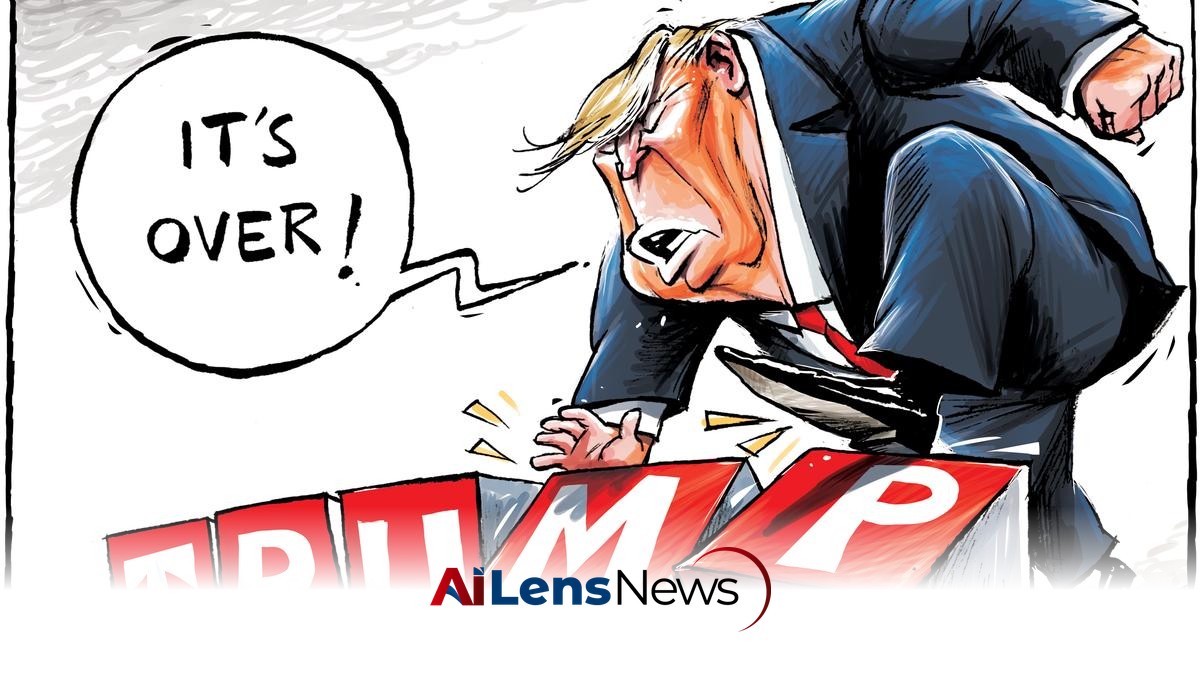


A satirical take on the implications of the Trump-Iran deal, illustrated by Soumyadip Sinha.
New Delhi, India Jul 10, 2026 ALN: In a striking cartoon published on July 9, 2026, artist Soumyadip Sinha captures the tumultuous landscape of international relations, particularly focusing on the controversial Trump-Iran deal. The illustration depicts a frustrated former President Donald Trump, symbolically represented as he steps on blocks labeled 'TRUMP' with the caption, 'It's over!'
This artwork serves as a commentary on the perceived failures and challenges surrounding the diplomatic agreement, which has faced criticism from various quarters since its inception. The cartoonist's choice to portray Trump in this manner highlights the ongoing debates about the effectiveness of his administration's foreign policy decisions. The Trump-Iran deal, officially known as the Joint Comprehensive Plan of Action (JCPOA), was initially designed to limit Iran's nuclear capabilities in exchange for the lifting of economic sanctions. However, since its announcement, the agreement has been a focal point of contention in U.S. politics and international relations.
To understand the significance of Sinha's cartoon, it is essential to look at the historical context of U.S.-Iran relations. The relationship between the two nations has been fraught with tension since the 1979 Iranian Revolution, which resulted in the overthrow of the Shah and the establishment of an Islamic Republic. The U.S. embassy hostage crisis that followed further soured relations, leading to decades of sanctions and military confrontations. The Trump administration's approach to Iran marked a significant shift from previous diplomatic efforts, particularly those made during the Obama administration, which culminated in the JCPOA in 2015.
Since the U.S. withdrawal from the JCPOA in 2018 under Trump's directive, relations between the two countries have deteriorated sharply. The re-imposition of sanctions by the Trump administration aimed to cripple Iran's economy, but many critics argue that this strategy has instead led to increased hostility and an escalation of tensions in the region. The cartoon reflects this sentiment, encapsulating a moment of frustration not just for Trump, but for various stakeholders in the international community who have witnessed the fallout of these policies.
The JCPOA was intended to prevent Iran from developing nuclear weapons while allowing for international monitoring of its nuclear facilities. In exchange, Iran would receive relief from economic sanctions that had severely impacted its economy. However, the Trump administration argued that the deal was flawed, claiming it did not adequately address Iran's ballistic missile program or its regional activities, which were viewed as destabilizing. This perspective led to the U.S. exiting the agreement, a move that was met with widespread criticism from allies and adversaries alike.
As the world watches the evolving dynamics between the United States and Iran, Sinha's cartoon resonates with audiences who are keenly aware of the implications of such deals on global stability. The illustration not only reflects the artist's perspective but also invites viewers to consider the broader consequences of political decisions. The ongoing debates surrounding the effectiveness of the Trump-Iran deal have raised critical questions about the role of diplomacy in resolving conflicts and the potential for future negotiations.
In recent years, the Trump-Iran deal has sparked discussions about nuclear proliferation, economic sanctions, and regional security. Critics argue that the agreement has not achieved its intended goals, while supporters maintain that it has opened avenues for dialogue. The complexities of these discussions are compounded by the actions of other nations in the region, including Israel and Saudi Arabia, who have their own vested interests in the outcome of U.S.-Iran relations. Israel, in particular, has been vocal in its opposition to the JCPOA, citing concerns over Iran's nuclear ambitions and its support for militant groups in the region.
Furthermore, the implications of the deal extend beyond the Middle East. The global community has been closely monitoring Iran's nuclear activities, as any advancements in this area could have far-reaching consequences for international security. The fear of a nuclear-armed Iran has prompted discussions among world powers about the necessity of renewed negotiations or alternative strategies to contain Iran's ambitions. The potential for a nuclear arms race in the region remains a significant concern, with neighboring countries potentially seeking their own nuclear capabilities in response.
As we delve deeper into the complexities of international diplomacy, Sinha's cartoon serves as a reminder of the power of political satire in shaping public discourse. It encourages viewers to engage critically with the narratives presented by leaders and the media. The use of satire as a tool for political commentary has a long history, often providing insights into public sentiment and highlighting the absurdities of political situations. Satire can serve as a means of resistance, allowing individuals to express dissent and critique those in power.
Moreover, the cartoon also reflects a broader trend in how political figures are depicted in media and art. The portrayal of leaders in a critical light often serves to galvanize public opinion and can influence political outcomes. In the case of Trump, who has been a polarizing figure in American politics, artistic representations can serve as a means of resistance or affirmation, depending on the viewer's perspective. The representation of political figures in art can also shape collective memory, influencing how history is recorded and understood.
In conclusion, the cartoon from July 9, 2026, encapsulates the ongoing tensions and challenges in U.S.-Iran relations, offering a poignant reflection on the state of global politics. It serves not only as a critique of the Trump administration's approach to foreign policy but also as a call to action for audiences to remain engaged and informed about the complexities of international diplomacy. As the geopolitical landscape continues to evolve, the lessons learned from the Trump-Iran deal will likely inform future negotiations and the broader discourse around nuclear non-proliferation and regional stability. The ongoing debate surrounding the effectiveness of sanctions, the role of diplomacy, and the implications of military actions will continue to shape the narrative of U.S.-Iran relations for years to come, making it a pivotal issue in global politics.
To learn more about the latest developments in Corporate & Industry Insights, stay updated with our exclusive reports and analyses on AiLensNews.

