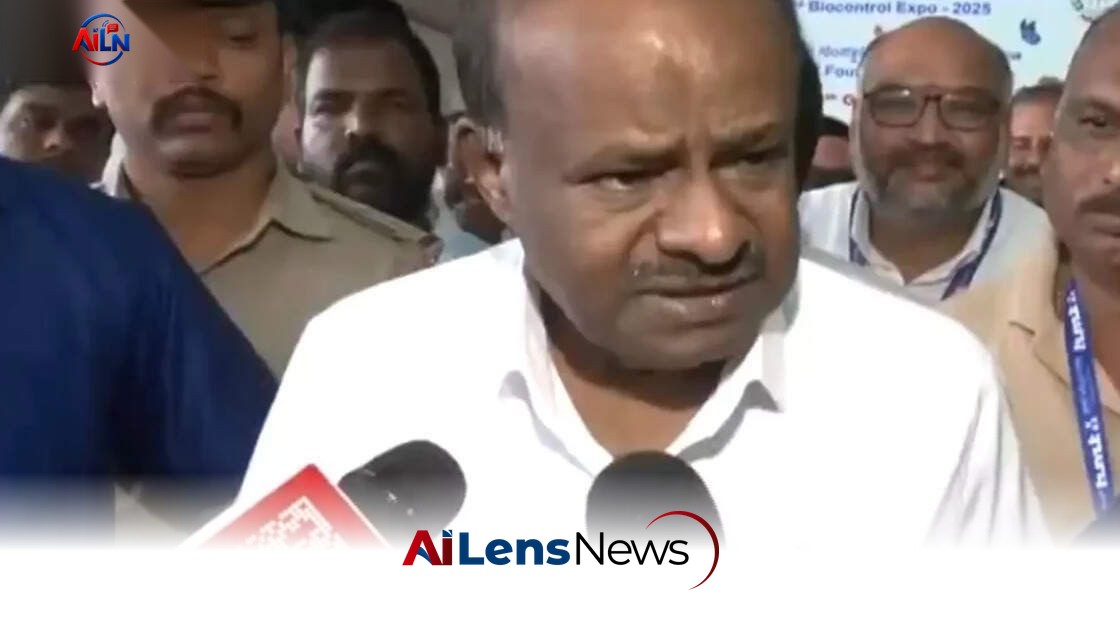


Union Minister HD Kumaraswamy accuses the Karnataka government of obstructing HMT's revival by claiming its land, coinciding with a special revival package.
New Delhi, India Jul 6, 2026 ALN: Bengaluru: Union Minister for Heavy Industries and Steel HD Kumaraswamy has raised serious concerns regarding the Karnataka government's actions that he claims are hindering the revival of HMT, a public sector undertaking. During a recent press conference, Kumaraswamy alleged that the state government is using the forest department to create obstacles just as a special revival package is nearing finalization.
The Hindustan Machine Tools Limited (HMT), established in 1953, has been a significant player in India's manufacturing sector, particularly known for producing machinery and equipment for various industries, including defense, aerospace, and automotive. Over the decades, HMT has contributed substantially to the Indian economy, becoming synonymous with quality manufacturing and technological innovation. However, the company has faced numerous challenges, including financial difficulties, which have led to its decline. The government has recognized the need for a revival plan to restore HMT to its former glory, which is crucial not only for the employees but also for the broader industrial ecosystem in the region.
Kumaraswamy specifically questioned the timing of a notice issued by the Bengaluru Urban deputy conservator of forests (DCF), which directed HMT to surrender approximately 430 acres of land identified as forest land. He emphasized that this matter is currently pending before the court, stating, "Issuing such a notice and fixing a deadline at this stage amounts to interference with judicial proceedings." This statement underscores the legal complexities surrounding land use and environmental regulations that often complicate industrial operations in India. He assured that HMT would challenge the order in a court of law, indicating a potential legal battle that could further delay the revival efforts.
The minister, who represents Mandya in the Lok Sabha, has been actively working to secure a special package for HMT, which has been struggling financially. He mentioned that discussions regarding the proposal are scheduled for the following week. "Just when the package was close to being announced, the state government got such a notice issued," he alleged, underlining the belief that the state government's actions are politically motivated to derail the revival process. This assertion raises questions about the interplay of politics and industrial policy in Karnataka, where local government actions can significantly impact public sector enterprises.
In his remarks, Kumaraswamy further claimed that the land in question has been valued at nearly Rs 15,000 crore and accused vested interests of eyeing the property. This assertion raises concerns about land use and the potential for corruption, as valuable land owned by public sector enterprises often attracts the attention of private developers and real estate interests. The historical context of land acquisition in India reveals a pattern where public assets are often at risk of being privatized or misappropriated, especially in regions where industrial land is scarce. Kumaraswamy criticized previous governments for allowing large-scale sale and development of HMT land, asserting that he had halted further sales during his tenure as chief minister in 2006. "I was determined that HMT land should not fall into the hands of land grabbers or the real-estate mafia," he stated, reflecting a commitment to protecting public assets from exploitation.
Highlighting the significance of HMT, Kumaraswamy noted that it remains a crucial manufacturer of machinery for various sectors, including defense, space, and research, and continues to enjoy demand in both domestic and international markets. The revival of HMT is not only vital for the employees and their families but also for the broader economy, as it contributes to job creation, technological advancement, and the strengthening of the manufacturing sector. The revival plan, therefore, is not merely an necessity; it is also a matter of national importance, especially in the context of India's push towards self-reliance and 'Make in India' initiatives.
Kumaraswamy expressed confidence in the revival of HMT under the leadership of Prime Minister Modi, stating, "No one can stop us," and reassured employees that they need not be anxious over the state government's actions. This statement reflects a broader narrative of optimism that often accompanies government initiatives aimed at reviving public sector enterprises. However, the real challenge lies in translating this optimism into actionable policies that can effectively address the operational and financial hurdles faced by HMT.
Additionally, Kumaraswamy criticized the Congress government for creating hurdles for other central public sector initiatives, including efforts to strengthen the Kudremukh Iron Ore Company. This critique points to a broader conflict between state and central government efforts in promoting public sector enterprises, which has implications for industrial policy and development in Karnataka. The tensions between state and central authorities can often lead to fragmented policies that hinder the potential for cohesive industrial growth. He contrasted Karnataka's approach with that of neighboring Andhra Pradesh, which he claimed works more closely with the Centre to attract industrial investments and revival packages. This contrast raises questions about the effectiveness of state policies and their alignment with national objectives, especially in a competitive landscape where states vie for industrial investments.
"If the State Government itself creates a hostile environment, how will industries come to Karnataka?" he questioned, emphasizing the need for collaboration between state and central governments to foster a conducive environment for industrial growth. The relationship between state and central governments is crucial in determining the success of industrial policies, and Kumaraswamy's comments reflect the frustrations that can arise when these relationships are strained. The implications of such tensions extend beyond HMT, affecting the overall industrial climate in Karnataka, which has historically been a hub for manufacturing and technology.
In conclusion, Kumaraswamy's accusations against the Karnataka government highlight the ongoing tensions surrounding the revival of HMT and the broader implications for industrial investments in the state. As discussions on the special revival package continue, the outcome remains to be seen. The future of HMT and similar public sector undertakings will likely depend not only on financial support but also on the political will to create an environment conducive to industrial growth. The situation underscores the complexities of managing public sector enterprises in a rapidly changing landscape, where collaboration and strategic planning are essential for success. The stakes are high, as the revival of HMT could serve as a template for other public sector enterprises facing similar challenges, thereby shaping the future of manufacturing in India.
To learn more about the latest developments in Corporate & Industry Insights, stay updated with our exclusive reports and analyses on AiLensNews.

